Nostalgia is a terrible business plan.
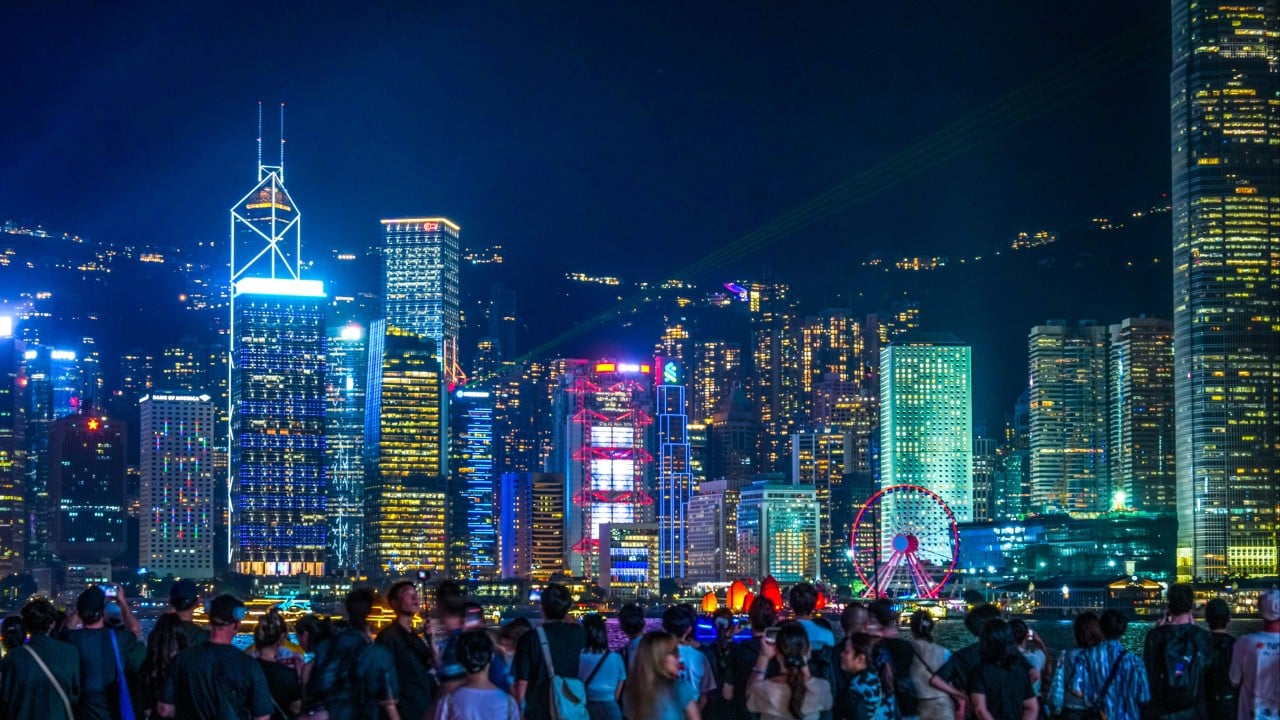
For over twenty years, millions of tourists stood along the Tsim Sha Tsui promenade at 8:00 PM sharp, phones raised, waiting for magic. What they got was a synchronized, underwhelming flicker of rooftop neon and weak green lasers bouncing off Victoria Harbour haze. Everyone in the hospitality trade knew the secret. Locals ignored it. Repeat visitors mocked it. Yet the city kept running the tape because turning off a Guinness World Record holder felt like admitting defeat.
Now, the announcement is official. Hong Kong is retiring A Symphony of Lights and replacing it with an expanded, multi-district WinterFest celebration.
The travel press is eating it up. Every mainstream outlet is framing this pivot as a bold stroke of urban reinvention. They claim spreading seasonal festivities across different neighborhoods will revitalize the city's nightlife, boost retail spending, and modernize Hong Kong’s brand for a post-pandemic traveler.
That consensus is lazy. Worse, it completely misunderstands why tourists actually spend money in a city.
Retiring a dead attraction does not automatically create a live economy. By trading a single, centralized nightly anchor for a sprawling, temporary seasonal festival, Hong Kong is risking a classic destination-marketing blunder. They are mistaking geographic dispersion for economic yield.
The Myth of the "Spread-Out" Tourist
The core thesis behind the new WinterFest strategy sounds brilliant in a boardroom. If you put light installations, pop-up markets, and festive programming in multiple districts rather than just Central and Tsim Sha Tsui, visitors will explore more of the city. More neighborhoods visited equals more restaurants booked and more shops patronized.
Except human beings do not travel like water flowing evenly across a flat table.
I have watched destination marketing organizations from Europe to Southeast Asia blow millions on "dispersion strategies." They build lovely pop-up installations in secondary neighborhoods, print glossy maps, and pray that foot traffic follows. It almost never works at scale. Why? Because travelers operate on strict time budgets and high friction costs.
When a visitor flies ten hours to Hong Kong, their itinerary is already choked with high-priority anchors: Victoria Peak, the Star Ferry, Temple Street, dim sum in Sham Shui Po, shopping in Causeway Bay. Asking that traveler to hop on the MTR to a secondary district just to look at a temporary Christmas tree or a municipal light projection misunderstands opportunity cost.
Tourists do not travel for municipal decorations. They travel for cultural friction—the distinct, unrepeatable sensory texture of a place that cannot be replicated in Singapore, Tokyo, or London.
A generic winter festival, no matter how many districts it spans, is fundamentally placeless. Put giant illuminated ornaments in Kowloon Park or along the Wan Chai waterfront, and you have created a nice backdrop for an Instagram story. You have not created a reason to book a flight. Worse, you have diluted your marketing firepower across a dozen small activations instead of concentrating it on one undeniable, world-class spectacle.
Why A Symphony of Lights Actually Failed
To fix a problem, you have to diagnose the right disease. The media narrative suggests A Symphony of Lights died because it was centralized and old.
Wrong. Centralization was its only redeeming quality.
Think about the logistics of running a tourism economy. Every night at 8:00 PM, A Symphony of Lights accomplished something nearly impossible in modern urban planning: it reliably herded tens of thousands of high-spending visitors onto two specific strips of waterfront at the exact same minute. For hoteliers in Tsim Sha Tsui, bar owners in Central, and ferry operators on the harbour, that predictability was pure gold. You could staff for it. You could price dinner seatings around it. You could build entire tour packages on top of that single ten-minute window.
The show failed because of capital starvation, not geography.
When it launched in 2004, synchronized architectural lighting across dozens of skyscrapers was genuinely novel. By 2014, drone swarms, projection mapping, and kinetic architecture had rendered static building lasers obsolete. Hong Kong treated the show like a finished monument rather than a live entertainment product that required relentless capital reinvestment. Instead of spending serious money to turn Victoria Harbour into the greatest permanent multimedia theater on Earth—think Singapore’s Marina Bay light and water spectacles, or the Sphere in Las Vegas—the city let it rot into a screensaver.
Killing the show instead of upgrading the hardware is like burning down a stadium with the best location in town because the scoreboard broke.
The Seasonal Trap in a Year-Round Market
Look closely at the replacement strategy. You are trading a 365-day nightly anchor for a seasonal winter festival.
Even an expanded WinterFest is, by definition, chained to the calendar. Christmas and New Year’s celebrations capture Q4 and early Q1. What happens in May? What happens during the humid, sweltering stretches of August when international arrivals naturally dip and local hotels are begging for occupancy?
In hospitality economics, seasonality is the enemy of margin. High-performing destinations obsess over "shoulder season" smoothing—building permanent infrastructure that generates steady demand on a random Tuesday in October.
Imagine a scenario where a mid-tier hotel near the harbour loses its reliable evening foot traffic for nine months of the year so that a handful of districts can enjoy a six-week spike in December. The math does not work. You cannot pay year-round commercial rents in Hong Kong—some of the highest on the planet—on seasonal festival footfall.
What Visitors Actually Want (And What They Ignore)
When travelers search for things to do in Hong Kong at night, their underlying intent is rarely "Where can I see festive municipal lighting?" Their real questions are much simpler and far more transactional:
- Is the waterfront worth visiting at night now that the light show is ending? Yes, because the natural skyline of Victoria Harbour remains arguably the greatest urban architectural vista in the world. The buildings themselves are the show; they never needed cheap lasers to justify the Star Ferry ride.
- Will spreading WinterFest across multiple districts make Hong Kong feel more lively? Temporarily, yes. For locals and regional weekenders from the Greater Bay Area, neighborhood pop-ups offer pleasant novelty. For long-haul international tourists, dispersed installations mostly create confusion and transit fatigue.
- Does Hong Kong need a replacement nightly harbour show? Not if it is going to be another committee-designed light display. If the harbour goes dark, it should stay dark until the city is willing to fund something truly audacious—like world-class kinetic water architecture or permanent projection mapping that rivals teamLab in Tokyo.
The Uncomfortable Truth About Hong Kong's Nightlife
Let’s address the elephant in the room that tourism press releases carefully step around. People are not skipping Hong Kong’s evening economy because of a tired laser show. They are pulling back because of value-to-price compression.
Over the last few years, structural shifts have hammered the city's after-dark appeal:
- The Northbound Exodus: Every Friday night, hundreds of thousands of Hong Kong residents cross the border into Shenzhen. Why? Because for half the price of a mediocre dinner in Lan Kwai Fong, they get massive dining halls, pristine service, late-night entertainment, and zero attitude.
- Operational Friction: Post-2020 labor shortages in Hong Kong’s food and beverage sector have left many kitchens closing at 9:30 PM. You cannot build a vibrant nighttime festival economy if the restaurants around the installations turn off their fryers before the crowd finishes taking photos.
- Homogenized Retail: Walking through major commercial zones in Tsim Sha Tsui or Causeway Bay feels identical to walking through a luxury mall in Dubai or Shanghai. The same twenty global conglomerates own every corner. When your streetscape loses its weird, chaotic, independent edge, hanging fairy lights over the sidewalk will not bring back the magic.
Urbanists like Jane Jacobs warned decades ago that you cannot manufacture street life from the top down. True urban vitality comes from dense, messy, mixed-use ecosystems where small operators can afford to take risks. When commercial landlords keep ground-floor rents artificially inflated rather than cutting deals with independent chefs, late-night vinyl bars, and bizarre local boutiques, no amount of government festival programming can paper over the sterility.
Where the Contrarian Strategy Hits a Wall
To be completely fair, defending the old centralized model has glaring flaws. Keeping A Symphony of Lights alive in its zombie state was actively damaging Hong Kong’s brand. When a first-time visitor reads hype about a "world-famous light show," stands in the humidity for twenty minutes, and sees a glorified PowerPoint presentation on the side of an office tower, they feel cheated. Bad expectations create worse word-of-mouth than having no show at all.
Furthermore, a multi-district festival does solve one acute political and economic headache: over-concentration of complaints. By spreading budgets and installations across different neighborhoods, district councils get to claim a win, local merchants outside the prime harbourfront feel included, and crowd-control bottlenecks at the Tsim Sha Tsui waterfront become easier to manage. For regional day-trippers arriving via the High Speed Rail from Guangzhou or Shenzhen, fresh seasonal photo spots give them a concrete excuse to cross the border for a weekend.
Those are real tactical wins. They are just not a long-term strategic cure.
How Hong Kong Should Actually Spend the Money
If you want to disrupt the stagnation of a mature global city, stop acting like an event planner and start acting like a venture capitalist for street culture.
First, kill the idea of replacing the light show with another light show. Victoria Harbour does not need artificial illumination; it needs activation on the water. Turn the harbour into a floating cultural corridor. Subsidize permanent, architecturally daring floating night markets, anchored jazz barges, and late-night open-air cinema piers where people actually linger, eat, and spend money for three hours instead of standing on concrete for ten minutes.
Second, weaponize rent subsidies instead of decoration budgets. Take the tens of millions earmarked for temporary WinterFest props and use it to underwrite two-year, below-market leases for independent, late-night hospitality concepts in underutilized pockets of Sheung Wan, Sham Shui Po, and Yau Ma Tei. Give young chefs and weird artists cheap space and extended liquor licenses until 3:00 AM. Tourists will find them within forty-eight hours on TikTok and Xiaohongshu without a single dollar spent on tourism billboards.
Third, embrace radical contrast. Stop trying to out-shine Shenzhen or out-organize Singapore. You will lose both fights. Hong Kong’s unfair advantage has always been its intoxicating collision of hyper-dense cyberpunk skyscrapers and gritty, neon-drenched alleyway street food. Lean into the chaos. Protect the dai pai dongs. Fast-track permits for night bazaars that smell like sizzling garlic and roasted chestnuts, not sterile corporate sponsorships.
Stop Decorating the City
A Symphony of Lights deserved to die. It was an artifact of an era when cities believed that slapping corporate logos and green lasers onto skyscrapers constituted culture.
Replacing it with an expanded WinterFest feels like progress only because it involves movement. New lights. New neighborhoods. New press releases.
Do not fall for the motion. Festive decorations are makeup, not medicine. Until Hong Kong fixes the structural cost of doing business after dark and gives travelers authentic, year-round reasons to stay out past midnight, turning off the harbour lasers just leaves everyone standing in the dark.