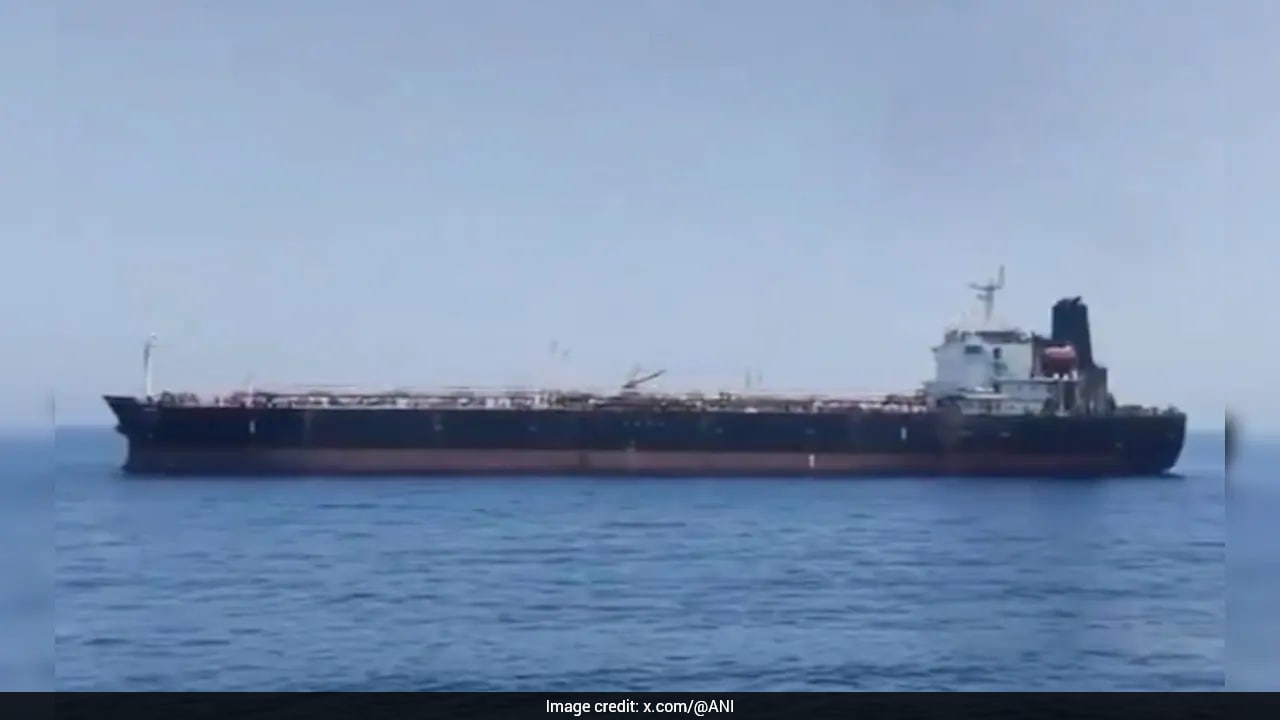
The physical destruction or disabling of a commercial merchant vessel by a state military forces a fundamental recalibration of maritime risk architecture. When a US Navy F/A-18 Super Hornet launched from the USS Abraham Lincoln (CVN 72) deployed a precision-guided munition against the Palau-flagged merchant tanker MT Marivex in the Gulf of Oman, it signaled a shift from economic deterrence to kinetic enforcement. This intervention highlights the mechanical vulnerabilities of modern commercial shipping when subjected to targeted military strikes and exposes the friction points between unilateral sanction blockades and global labor supply chains.
The tactical objective of the strike was not the destruction of the vessel’s cargo-carrying capacity, but rather the immediate termination of its propulsion and navigation capabilities. US Central Command (CENTCOM) confirmed the kinetic engagement targeted the vessel’s engineering and steering spaces. This specific targeting methodology reflects a calculated operational framework designed to minimize catastrophic environmental contamination while maximizing strategic denial.
The Anatomy of Engineering Subsystem Targeting
Targeting a vessel’s steering gear and propulsion machinery exploits a critical single point of failure in maritime architecture. Commercial tankers are engineered with structural redundancies for standard operational wear, but they lack armor or kinetic defensive systems.
[Kinetic Impact] -> [Breach of Aft Engineering Spaces]
                          │
                          ├─> [Destruction of Hydraulic Steering Actuators] ──> Absolute Loss of Directional Control
                          │
                          ├─> [Rupture of Main Engine Crankcase/Fuel Lines] ──> Thermal Ignition (Class B Fire)
                          │
                          └─> [Compromise of Aft Hull Plating / Stern Seal] ──> Catastrophic Ingress of Water
The engineering and steering compartments of a mid-sized merchant vessel are clustered in the aft section, directly beneath the superstructure. Penetration of this zone by a precision munition yields three immediate mechanical failures:
- Loss of Directional Control: The destruction of hydraulic steering gear actuators or the rudder stock renders the vessel unable to navigate, turning it into a drifting hazard in high-traffic corridors.
- Thermal Ignition: The engine room contains high-temperature machinery, pressurized fuel lines, and lubricating oils. A kinetic impact inevitably causes the vaporization and ignition of these fluids, leading to rapidly spreading Class B fires that overwhelm standard fixed carbon dioxide ($CO_2$) or water-mist suppression systems.
- Progressive Flooding: Damage to the stern seal, sea chests, or lower hull plating introduces water directly into the largest open compartment of the ship. Once the engine room floods completely, the vessel loses all auxiliary electrical power, disabling bilge pumps and accelerating structural compromise.
Distress communications from the MT Marivex confirmed this exact failure cascade, with crew reports indicating an active engine room fire and structural breaches below the waterline.
Sanction Evasion Tactics and the Friction of Detection
The interdiction of the MT Marivex follows an established operational pattern utilized by the "dark fleet"—a network of vessels operating outside mainstream maritime insurance, classification, and regulatory frameworks to transport sanctioned commodities. The tracking history of the vessel, which previously operated under the name Arihant and was designated by the US Office of Foreign Assets Control (OFAC), outlines the limits of passive monitoring systems.
Automated Identification System Manipulation
The primary mechanism for tracking global shipping is the Automated Identification System (AIS). To evade detection, non-compliant vessels employ two main tactics:
- AIS Transponder Disconnection: Manually cutting power to the transponder creates data gaps, masking the exact point of loading or discharge. The MT Marivex repeatedly disabled its AIS signals while navigating near the Omani coast.
- Geographic Spoofing: Altering transmitted coordinates to show a false position in safe waters while the vessel physically transits restricted zones.
The limitation of AIS manipulation is that it creates an obvious anomaly for military-grade maritime domain awareness systems. Synthetic Aperture Radar (SAR) satellites, high-altitude long-endurance (HALE) unmanned aerial vehicles, and naval surface vessels easily cross-reference physical radar returns against active AIS broadcasts. A dark target—a vessel reflecting radar waves but transmitting no AIS signature—instantly becomes a priority for military interdiction.
Territorial Sea Exploitation
The MT Marivex attempted to utilize Omani territorial waters to shield itself from US naval units operating in international waters. Under the United Nations Convention on the Law of the Sea (UNCLOS), foreign vessels enjoy the right of innocent passage through a state's territorial sea. However, this right is conditional on the passage being continuous and expeditious, and not prejudicial to the peace, good order, or security of the coastal state.
By utilizing sovereign waters to bypass a blockade, the vessel created a complex jurisdictional conflict. The US deployment of air-launched munitions within or immediately adjacent to these waters indicates that kinetic enforcement parameters now supersede traditional maritime legal protections for blacklisted hulls.
The Asymmetry of Maritime Human Capital
A critical vulnerability in the enforcement of global maritime blockades is the asymmetry between a vessel's ownership structure and the nationality of its crew. The MT Marivex was flagged in Palau, owned by a sanctioned entity, and operated under a suspected false Madagascar registry flag. Yet, its entire 24-person crew consisted of Indian seafarers.
India provides roughly 10% of the global seafaring workforce. The intersection of military blockade enforcement and international labor creates severe diplomatic and operational friction points:
- Contractual Opacity: Seafarers frequently find employment via third-party crewing agencies that interface with shell companies. Crew members often lack visibility into the ultimate beneficial ownership (UBO) or the active OFAC sanctions status of the hull they are assigned to command.
- The Operational Dilemma: Once at sea, the crew cannot legally or physically mutiny or alter the vessel's destination without explicit instructions from the ship manager. When caught between military orders from an interdicting naval force and contractual obligations from the ship's operators, the crew faces severe physical risk.
- Diplomatic Strains: The use of kinetic force against a vessel carrying citizens of a neutral state creates diplomatic conflict. India's formal protest and the summoning of the US Deputy Chief of Mission underscore the political costs generated when kinetic blockade enforcement directly threatens third-party nationals.
Operational Realities and Risk Projections
The shift from economic sanctions to active kinetic interdiction alters the risk premium for global maritime trade. Shippers can no longer treat OFAC blacklisting as a purely financial or administrative risk.
Commercial operators must expect strict enforcement protocols in the Gulf of Oman and the Strait of Hormuz. Naval forces enforcing blockades will prioritize disabling strikes over boarding actions when dealing with non-compliant vessels that refuse to alter course. This operational posture minimizes the risk of close-quarters combat for military personnel but significantly increases the probability of structural loss and crew casualties on target vessels.
For maritime logistics firms, the critical vulnerability lies in the lack of transparency within dark fleet ownership networks. Continued employment of crews on vessels with ambiguous registration histories, frequent name changes, or historical port calls to sanctioned hubs carries an immediate risk of total hull loss. Operators must implement real-time UBO verification and continuous route-risk assessments. Relying on standard flags of convenience or passive legal compliance no longer offers protection against targeted precision munitions.


