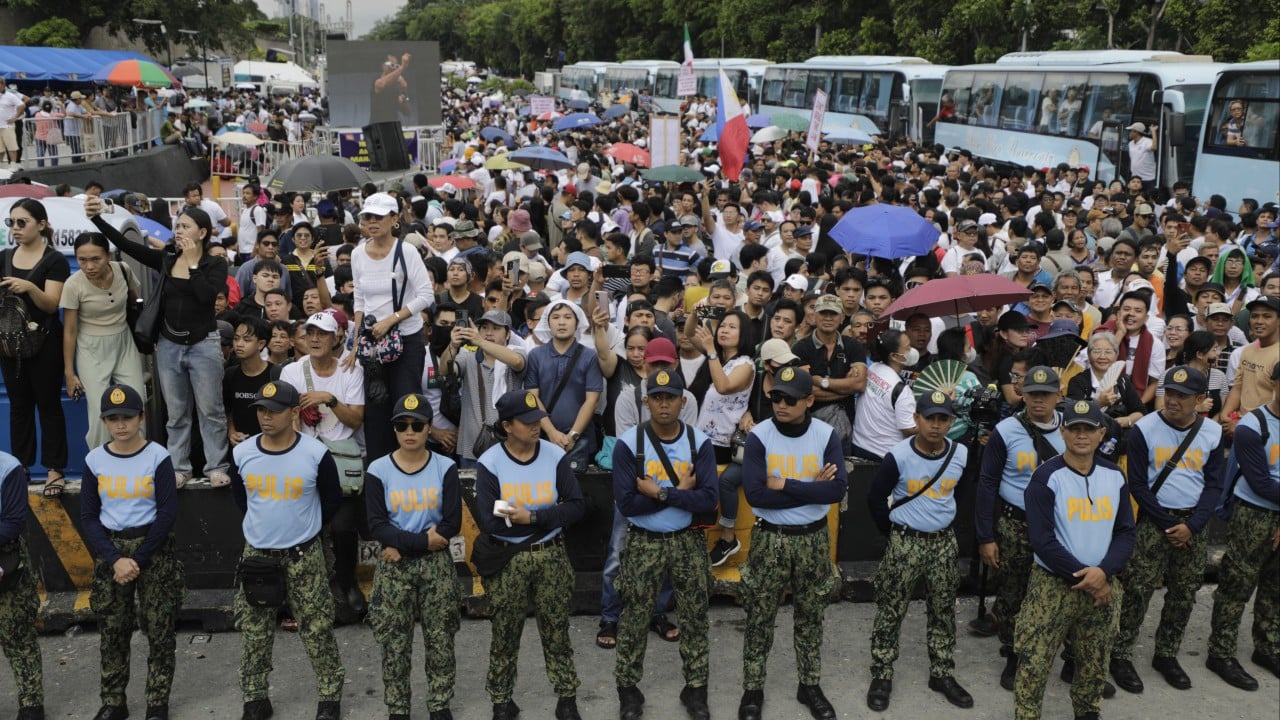
The pre-dawn air in Davao heavy with moisture does not stir. Outside the sprawling compound walls, the hum of the city is a distant threat. Inside, thousands of people are waiting. They are not waiting for a political rally, nor are they waiting for a conventional protest. They are waiting because they believe their salvation is tied to a man who claims to own the universe.
Power in the Philippines is rarely a matter of simple governance. It is a intricate dance of bloodlines, regional loyalty, and divine mandate. When President Ferdinand Marcos Jr. took office, the alliance that brought him to power seemed impenetrable. It was a marriage of the country’s two most formidable political dynasties: the Marcoses of the north and the Dutertes of the south. But alliances built on convenience inevitably fracture under the weight of ambition.
Now, the fault lines are splitting wide open, and the epicenter of the tremor is a religious group caught in the crosshairs of an international investigation.
Apollo Quiboloy is not your average preacher. He is the self-proclaimed "Appointed Son of God," the leader of the Kingdom of Jesus Christ, The Name Above Every Name. For decades, his influence grew from a small congregation into a global media empire. His followers do not just listen to his sermons; they build his kingdom with a devotion that defies secular logic. To outsiders, the compound in Davao is a fortress of opacity. To the faithful, it is the center of the world.
But the secular world has come knocking, and it carries handcuffs.
The United States Federal Bureau of Investigation has placed Quiboloy on its most-wanted list. The charges are severe: sex trafficking of children, sex trafficking by force, fraud, and bulk cash smuggling. For years, these accusations hovered in the background, dismissed by his followers as persecution. But when the Philippine government, under the Marcos administration, began to signal that it might cooperate with international bodies and enforce local warrants, the defensive walls went up. Literally and figuratively.
Consider the stakes for an ordinary believer.
Imagine a woman who has spent the last ten years selling rice cakes on the streets of Manila, sending every spare peso to the Kingdom. She believes, with every fiber of her being, that her eternal soul depends on the protection of the Appointed Son. When the police arrive at the compound gates, she does not see law enforcement upholding justice. She sees the devil trying to extinguish the light. This emotional reality is what the political analysts miss when they talk about legal maneuvers and constitutional boundaries. The conflict is not just legal. It is cosmic.
The immediate trigger for the current standoff is a Senate investigation into the alleged abuses within the sect. Senator Risa Hontiveros, leading the committee on women and children, issued a subpoena for Quiboloy to face his accusers. He refused. He claimed his human rights would be violated by a "trial by publicity."
Then came the defiance.
The Kingdom’s leadership issued a list of conditions for the senator’s probe, effectively demanding that a sovereign government negotiate the terms of its own laws with a private entity. They demanded a guarantee against arbitrary arrest. They demanded a halt to what they termed a witch hunt. It was a direct challenge to the authority of the state, a declaration that inside the Kingdom, the rules of the Republic do not apply.
President Marcos finds himself in a delicate position. To back down is to show weakness, to signal that certain individuals are above the law if they command enough votes or religious fervor. To push forward with force risks turning Quiboloy into a martyr, sparking unrest among millions of fiercely loyal devotees. The ghosts of the past loom large here. The Philippines has a long history of religious movements clashing with the state, often ending in bloodshed.
The political subtext is impossible to ignore. Quiboloy is a close ally and spiritual adviser to former President Rodrigo Duterte. The Duterte family still commands immense loyalty in the south. By moving against Quiboloy, the Marcos administration is indirectly striking at the heart of the Duterte power base. It is a high-stakes game of chess where the pieces are human lives and national stability.
Walk through the streets of Davao today, and you can feel the tension. It is in the way people look at police patrols. It is in the whispered conversations in the markets. The city is torn between its pride as the home of the movement and the growing realization that a storm is coming.
The law is a cold instrument. It demands compliance, evidence, and submission to the court. But faith is warm, irrational, and fiercely protective. When the state attempts to dismantle a kingdom built on faith, the result is never a clean legal resolution. It is a messy, protracted struggle for the soul of a community.
The gates of the Davao compound remain closed. The followers continue to pray, their voices rising in unison against the encroaching authority of Manila. The government insists that no one is above the law, that justice must be served regardless of spiritual stature.
But as the sun sets over the Mindanao Sea, casting long shadows across the fortress walls, the reality becomes clear. This is no longer just a legal dispute over a senator's probe. It is a battle of wills between two distinct forms of power, and neither side shows any intention of backing down.


