The coffee gets cold while the bill sits next to it, unfolded.
Across living rooms from Ohio to the suburbs of Phoenix, the rhythm of daily life is dictated by arithmetic that refuses to balance. A gallon of milk costs a little more than it did last year. Insurance premiums arrive in thick envelopes with numbers that trigger a sudden tightness in the chest. Rent creeps upward like an incoming tide, slow and impossible to negotiate with. These are the quiet anxieties that wake people up at three in the morning, staring at the ceiling and wondering how the margin between working hard and falling behind got so thin.
Yet, turn on the television or scroll through a phone, and the conversation belongs to a different theater entirely.
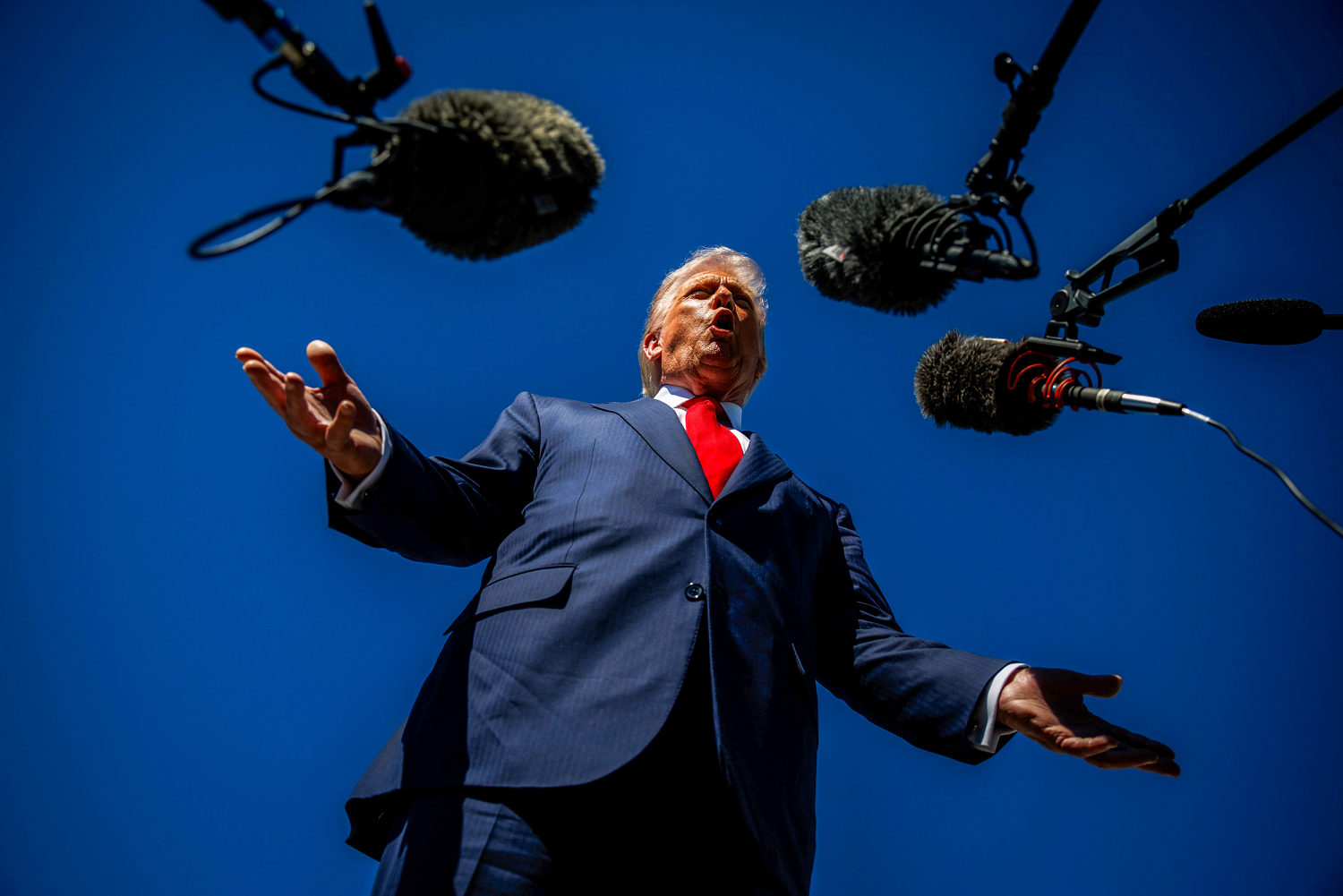
At the center of that theater stands Donald Trump. His voice fills the room, demanding attention, commanding headlines, and pulling the entire political ecosystem into his orbit. Every day brings a new controversy, a fresh clash with reporters, a provocative post on social media, or a fiery speech about the state of the media. The press corps leans in, capturing every syllable, turning the camera back on the speaker, and locking the public in a continuous loop of reaction and counter-reaction.
It is loud. It is absorbing. And for the Republican party, it is a massive, glittering distraction.
Consider what happens when the news cycle runs entirely on media grievances. When a campaign rally spends forty-five minutes dissecting the perceived bias of a national newspaper anchor, the applause is deafening in the arena. But back in that quiet kitchen, the grocery bill remains unpaid by political outrage. The cost of insulin does not drop because a cable news segment dissected a morning press briefing.
Political parties survive on momentum, but they win elections on relevance. When the loudest megaphone in the room is permanently pointed at the press box, the everyday financial realities of American families are crowded out of the spotlight.
To understand why this dynamic persists, we have to look past the political theater and examine the mechanics of modern attention. Conflict sells. A direct attack on a media institution generates instant engagement, sharp shares, and fierce loyalty. It creates an immediate us-versus-them dynamic that satisfies a deep psychological craving for a fight.
But governance and campaigning are two different disciplines. Winning over a skeptical independent voter in a rust-belt town requires talking about jobs, inflation, and the cost of living. It requires tangible answers to difficult questions. When the microphone is consumed by media critique, those answers are swallowed by the static.
Imagine a hypothetical small-business owner named Sarah, running a hardware store in a mid-sized Midwestern town. Sarah does not care about cable news ratings. She cares about supply chain costs, payroll taxes, and whether her regular customers have enough disposable income to fix a broken pipe instead of patching it with duct tape. When she hears politicians spending days on end fighting with journalists, she does not feel defended. She feels forgotten.
That feeling is dangerous for any political coalition trying to build a durable majority.
The core issue is not whether media bias exists or whether political figures have a right to criticize the press. The issue is opportunity cost. Every hour spent debating a journalist is an hour not spent explaining how a specific economic policy will lower the price of gas or stabilize housing markets. Every headline dominated by press friction is a headline stolen from pocketbook issues.
Voters are remarkably pragmatic, even when they are frustrated. They understand that the world is complicated, and they do not expect magic solutions overnight. What they do expect, however, is focus. They want to know that the people asking for their votes see what they see when they look at their bank statements.
When the focus drifts away from the economy, a vacuum opens. And in politics, vacuums are rarely left empty for long. Opponents step into that space with their own narratives, pointing to the noise on the screen and asking a very simple question: Are they talking about you, or are they talking about themselves?
The path forward requires a deliberate shift in gravity. It demands stepping away from the podium drama and returning to the ground level, where the real stakes live. The politicians who recognize this tension—who can look past the cameras, ignore the flashing red lights of media feuds, and speak directly to the financial heartbeat of the country—will capture something far more valuable than a trending hashtag.
They will capture trust.
And long after the noise of the studio fades, that is the only currency that truly matters.


