The headlines are screaming about a "successful interception" by Kuwaiti forces during the third day of Iran’s retaliatory strikes. They want you to believe in a neat, orderly shield of air defenses protecting the oil-rich Gulf from a swarm of hostile drones. They want you to feel the comforting embrace of multi-billion dollar Patriot batteries and localized radar sweeps.
They are lying to you. Also making headlines in related news: The Kinetic Deficit Dynamics of Pakistan Afghanistan Cross Border Conflict.
The "interception" narrative is a comfort blanket for investors and a PR win for defense contractors, but it misses the tectonic shift in modern warfare. While the press focuses on the kinetic "pop" of a drone being hit in the sky, they ignore the reality that the drones have already won the economic and psychological battle before they even reach Kuwaiti airspace. We are watching 1980s doctrine try to fight a 2020s swarm, and the math is horrifying.
The Attrition Trap Nobody Mentions
I have spent years looking at the logistics of "denial of access." Here is the dirty secret of air defense: it is a race to bankruptcy. Additional details on this are explored by The Washington Post.
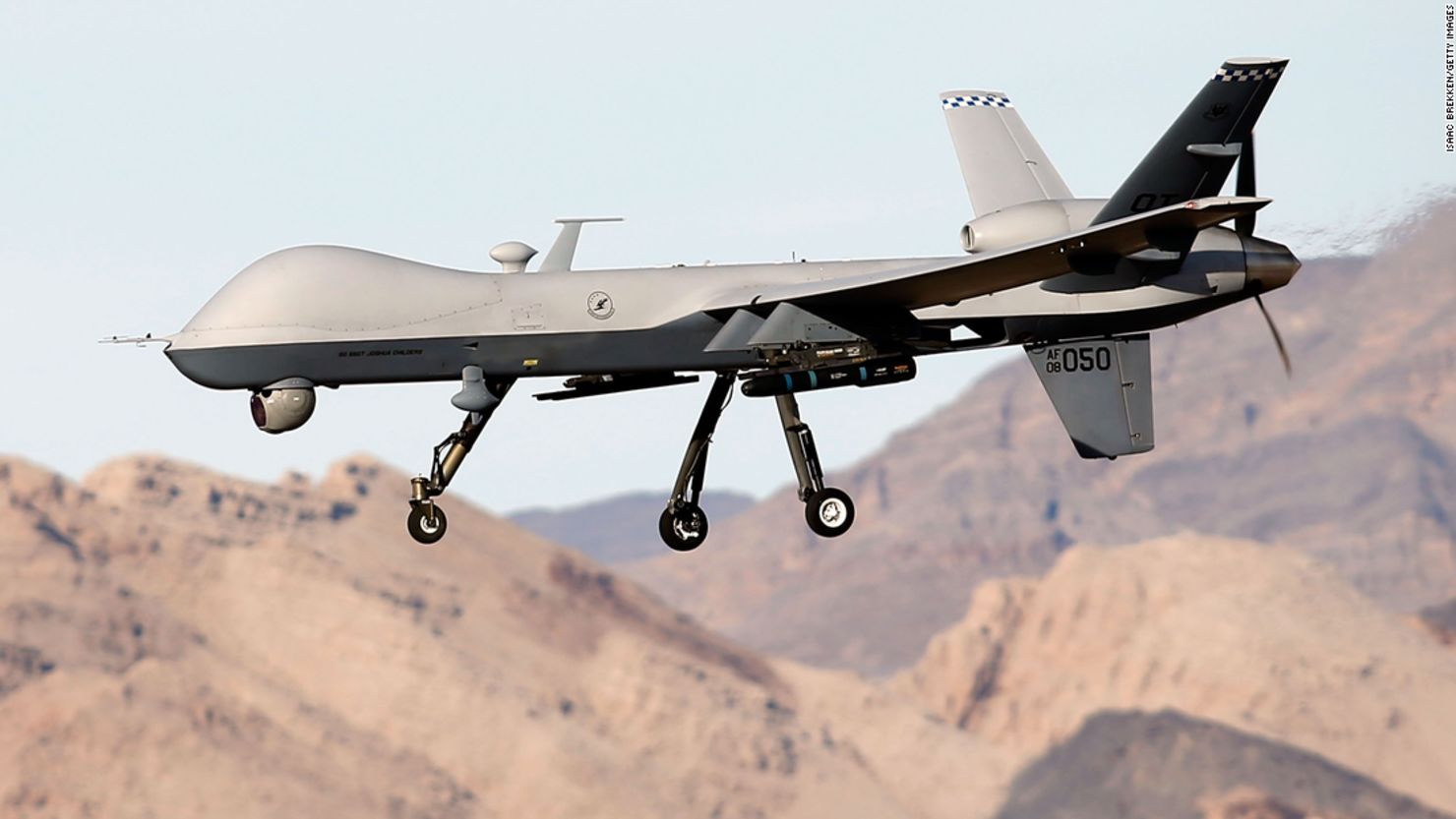
The drones being launched in these regional exchanges—likely variants of the Shahed family or localized copies—cost somewhere between $20,000 and $50,000. They are made of lawnmower engines, carbon fiber, and consumer-grade GPS components. They are flying bricks with wings.
To "intercept" these, Kuwait and its allies are firing interceptors that cost between $2 million and $4 million per shot.
- Cost of Attack: $50,000
- Cost of Defense: $3,000,000
- The Math: The defender spends 60 times more than the attacker.
When the media reports a "successful defense," they are actually reporting a massive financial hemorrhage. If an adversary launches 100 drones, and you shoot them all down, you haven't won. You have just burned $300 million to stop $5 million worth of junk. This isn't defense; it's a slow-motion economic suicide pact. The "hostile drones" aren't just looking for a target; they are looking for your budget.
The Illusion of Sovereignty in the Electromagnetic Age
The competitor reports make it sound like Kuwait is an isolated island of security. This is a fundamental misunderstanding of how regional integrated air and missile defense (IAMD) actually works.
Kuwait’s sensors are tied into a data-link architecture that includes U.S. Navy assets in the Persian Gulf, Saudi radar arrays, and likely high-altitude surveillance from Al Udeid. When an "interception" happens over Kuwait, it is rarely a sovereign action. It is a cog in a massive, Western-led machine.
The danger here is the false sense of security. If the U.S. shifts its "pivot to Asia" and pulls back its carrier strike groups or Aegis-equipped destroyers, the "shield" over Kuwait evaporates. The local hardware—while expensive—cannot handle the volume of a true saturation attack without the massive data-processing backbone provided by the Pentagon.
Stop asking "Did Kuwait shoot it down?" Start asking "Who was holding Kuwait's hand when they pulled the trigger?"
Why "Intercepted" Often Means "Target Achieved"
We need to talk about the "debris field" problem. In the Gulf’s densely packed industrial zones, shooting down a drone is not the same as neutralizing the threat.
If a drone is intercepted over a desalination plant or a refinery—like the Shuaiba complex—the falling wreckage, unspent fuel, and the kinetic energy of the interceptor itself can cause nearly as much damage as a direct hit. In many cases, the "hostile" drone’s mission is simply to force an engagement over a sensitive area.
I’ve seen classified assessments of "successful" intercepts where the resulting fire from falling debris took a facility offline for three weeks. The insurance companies don't care if the drone was "intercepted" or "hit." They care about the $100 million in lost production.
The media’s obsession with the "hit" ignores the "effect." If the oil stops flowing because of a "successful" shoot-down, the attacker still achieved their strategic goal: market volatility and infrastructure degradation.
The Saturation Reality Check
The "third day of strikes" implies a cadence that current defense systems are not designed to handle. A Patriot battery has a limited number of "ready-to-fire" canisters. Once those are spent, the reload time is measured in hours, not minutes.
Imagine a scenario where an attacker uses a "Leapfrog" tactic:
- Wave 1: 20 cheap decoys to force the defense to empty their tubes.
- Wave 2: 10 real threats while the crews are frantically reloading.
The current reporting treats each day of strikes as an isolated event. It isn't. It is an endurance test. The attacker has a warehouse full of drones. The defender has a finite supply of high-end missiles that take years to manufacture. We are seeing a "just-in-time" supply chain for defense meeting a "mass-produced" supply chain for offense.
The Sovereignty of the Skies is a Ghost
People keep asking: "Is Kuwait safe?"
It’s the wrong question. In the age of loitering munitions, "safety" is a variable of cost, not capability.
The industry is obsessed with "Hard Kill" (shooting things down). We should be obsessed with "Soft Kill" (electronic warfare, jamming, and spoofing). But soft kill doesn't make for good headlines. You can't show a video of a drone losing its GPS lock and crashing harmlessly into the sea. You can show a massive explosion in the sky from a $3 million missile.
We are addicted to the optics of the explosion, and that addiction is making us vulnerable.
The truth is that the "hostile drones" are a distraction. They are a way to probe radar signatures, test response times, and bleed the treasury dry. Every time a Kuwaiti official stands up and brags about an interception, the planners in Tehran or elsewhere are taking notes. They aren't mourning a lost drone; they are calibrating their next, more efficient strike.
The era of the impenetrable sky is over. The era of the "unavoidable tax" of drone warfare has begun. You aren't watching a defense; you're watching a liquidation sale of regional stability.
Get used to the buzzing. It’s the sound of the new status quo.