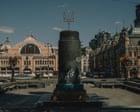
The empty plinth on Taras Shevchenko Boulevard has sat vacant for over a decade. Scrawled with graffiti and daubed in white paint, it remains a stark scar from the December night in 2013 when protesters pulled down Kyiv's giant bronze Vladimir Lenin and smashed it to pieces with sledgehammers. That empty concrete block tells a story. It represents a violent break with an imperial past that Ukrainians are still actively dismantling.
Now, President Volodymyr Zelenskyy wants to fill that space. His proposal to erect a monument to Ivan Mazepa—a 17th-century Cossack military leader who broke away from Moscow—has reignited fierce conversations about national identity, historical memory, and the ongoing process of decolonization.
You see, monuments aren't just blocks of stone. They are physical declarations of who a society values and what history it chooses to honor. When a country tears down a dictator and replaces him with a national figure, it is rewriting its own cultural narrative from the ground up.
The Ghost of the Soviet Past
For decades, Soviet monuments functioned as ideological anchors. They were planted deliberately across Ukrainian cities to enforce a singular, Moscow-centric narrative. Lenin statues weren't works of art; they were symbols of total domination. Citizens who lived through those years often describe them with raw candor. As one Kyiv resident bluntly put it, the man was an enemy of humanity itself.
When the Maidan revolution erupted, toppling those statues became a visceral necessity. It wasn't random vandalism. It was a rejection of authoritarian control.
The removal of Soviet symbols picked up speed after Russia seized Crimea in 2014, and the full-scale invasion in 2022 turned this cultural cleanup into an absolute urgency. Streets named after Russian poets and revolutionaries are disappearing. Soviet stars are being stripped off public architecture. Ukraine is aggressively removing the layers of Russian imperial paint that covered its true history for generations.
Why Ivan Mazepa Matters Now
Enter Ivan Mazepa. If you look at Russian imperial history textbooks, Mazepa is painted as the ultimate traitor. He was the hetman, or head, of Cossack Ukraine, who spent years balancing the delicate and dangerous politics between Moscow and rival regional powers. In 1708, when Peter the Great failed to protect Ukrainian lands from invading Swedish forces, Mazepa made a definitive pivot. He broke his alliance with Moscow and fought for independence.
For that act of defiance, the Russian Orthodox Church anathematized him—a curse that officially remained in place for centuries. Russian literature and propaganda spent generations cementing his image as a villain.
Zelenskyy's recent push to place Mazepa on the old Lenin plinth aims to shatter that lingering imperial myth. Standing near a bust of Mazepa at the Kyiv Pechersk Lavra, Zelenskyy made his stance clear, stating that where Lenin fell, Mazepa will stand firm. It is a deliberate reclamation of a complicated historical figure who chose Ukrainian sovereignty over Russian vassalage.
The Complicated Reality of Historical Heroes
Not everyone thinks dropping a Cossack chief onto the central boulevard is a straightforward win. Cultural historians and local residents point out that history is rarely clean. Mazepa was an elite aristocrat, a patron of the arts, and a cunning politician who spent years cooperating with the very tsar he eventually fought.
Some urban preservationists also question whether that specific spot—steeped in tragedy and heavy wartime history—is the right stage for a hero's memorial. Discussions around public spaces in Kyiv right now are intense. People want representation, but they also want accuracy. They want to avoid replacing one form of rigid Soviet monumental propaganda with a simplistic, uncritical mythology of their own.
Yet, that debate is precisely the point. A healthy democracy argues about its symbols in broad daylight. Under Soviet rule, you didn't get a vote on who stood on the pedestal. Today, Ukrainians are actively debating the texture of their own past, deciding street by street and plinth by plinth who gets to watch over their capital.
The empty concrete on Shevchenko Boulevard won't stay empty forever. Whether it eventually hosts Mazepa or another symbol of indigenous resilience, the transition away from Lenin marks a permanent shift. The old empire's anchors are gone, and Kyiv is writing its own future without looking back at Moscow for permission.