Three dollars. That is what it costs to buy a coffee in a rushed morning line, or a plastic bag of stale buns at a church bake sale, or a small piece of Northern Song dynasty history sitting on a folding table in New York.
Held.
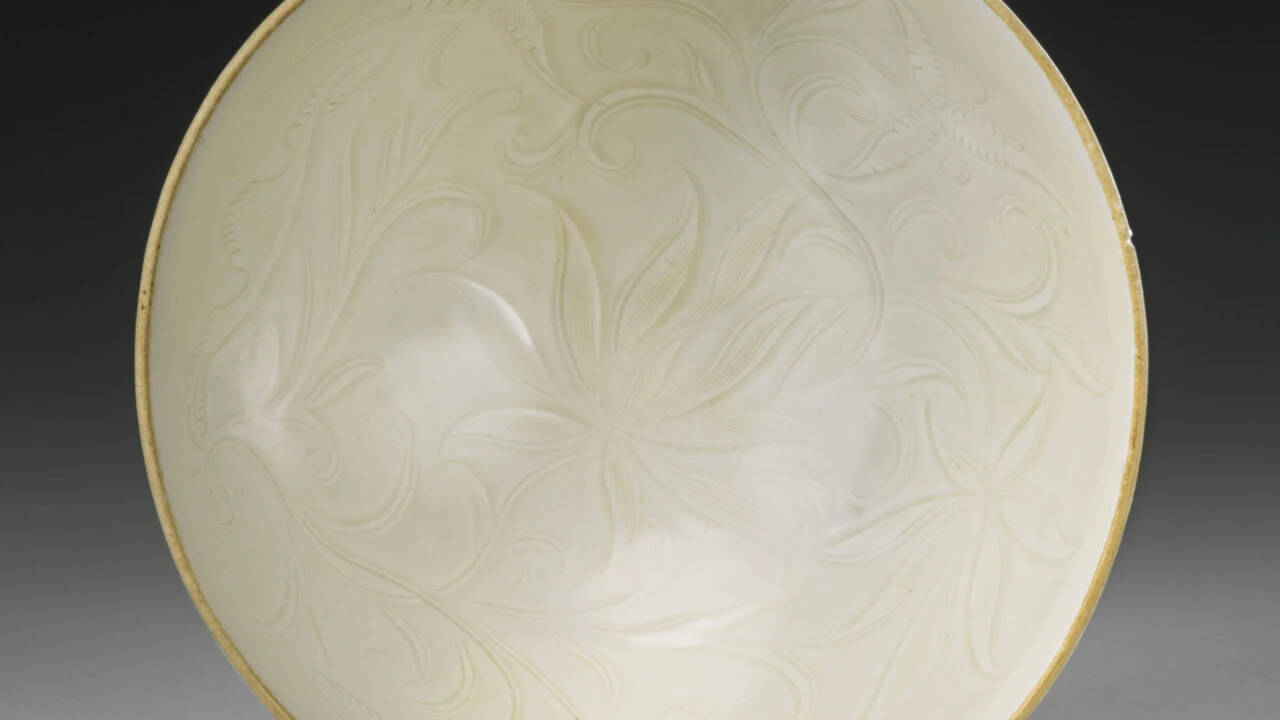
That is the first thing anyone notices when they lift a thousand-year-old Ding ware bowl out of dusty cardboard. It weighs almost nothing, yet the glaze feels cool and oily like river stone rubbed smooth by centuries of thumbs. For years, a five-inch white porcelain bowl with delicate incised motifs sat quietly in a New York home after being picked up at a yard sale for three dollars—only to cross the auction block at Sotheby's and bring roughly $2.2 million after fees.
I have spent enough Saturday mornings standing over damp driveways, sorting through boxes of scratched vinyl, cracked stoneware, and tangled extension cords to know how easily value disguises itself as clutter. Sunlight hits a rim at just the right angle. Dust softens a mark. A label is missing, or written in fading marker on a piece of masking tape that could mean anything or nothing at all. You look at an object, you guess what it is worth to you right now, and you walk away feeling clever if you save a buck or two.
Yet the real drama of that New York yard sale bowl does not live in the hammer price alone. It lives in the quiet tension between what an object is and what we see—between the patient hands of a potter working under imperial kilns nearly a millennium ago and the hurried eyes of a modern buyer scanning for a bargain before rain starts falling on the lawn.
The Quiet Weight of an Unmarked Rim
When people hear about a three-dollar bowl turning into a $2.2 million payout, their first instinct is to picture a hidden treasure map, a secret vault, or a dramatic showdown between a clueless seller and a ruthless shark. Real life is usually quieter, stranger, and far more human.
Consider a hypothetical scenario—purely invented to show how ordinary moments carry invisible weight—of two neighbors named Clara and David at a suburban tag sale. Clara is clearing out boxes left behind after a family move; she wants space in the garage and cash for groceries. David is an amateur picker who loves old ceramics because his grandmother kept chipped teacups in a glass cabinet. He picks up a plain, shallow dish with no bright colors, no gold trim, and no obvious signature on the bottom. Three dollars feels fair for something that might hold keys on an entryway table.
If David never sends photographs to a specialist, that dish stays a key catcher until it breaks or gets packed into another box. What if he does send photos? Suddenly, a quiet Tuesday afternoon turns into a slow-motion shift in perspective. Experts examine the foot ring, the ivory-white tone of the glaze, the subtle carving visible beneath the surface, and the provenance clues that link a modest-looking object to a specific historical period.
You might wonder how an unassuming white bowl could outshine flashy antiques covered in gilt and paint. That is one of the trickiest parts of old ceramics: restraint often signals mastery. A potter who can shape thin clay, fire it cleanly, and let light pool gently inside carved lines does not need to shout. Modern eyes, trained by loud advertisements and bright packaging, often walk right past whisper-quiet craftsmanship.
Let us use a metaphor here to make that blind spot clearer. Imagine walking through a crowded train station where everyone is yelling into phones, and someone across the platform speaks in a clear, steady voice. If you are only listening for volume, you miss the person saying something true. Most yard sale shopping happens at train-station volume. We scan for shiny, obvious, or familiar shapes, and we tune out anything that looks too plain to matter.
There is a real vulnerability in admitting how easy it is to get this wrong. Even seasoned collectors and dealers miss pieces, misread marks, or hesitate when an item sits outside their comfort zone. Sometimes a bowl is genuine and extraordinary. Sometimes it is a later reproduction, or damaged just enough to cut its value sharply, or simply a nice piece of household ware worth twenty dollars rather than two million. Uncertainty is the price of admission whenever you deal with things older than living memory.
Why Provenance and Patience Change Everything
A dramatic auction number makes a great headline, yet headlines rarely explain the slow work that separates a lucky find from a realized sale. Auctions are theaters of attention, not magic wands. Before a rare piece of Asian art or antique porcelain reaches international bidders willing to compete into the millions, someone has to ask the right questions, verify authenticity, document history, and wait for the right moment and audience.
Think about what happens to a piece of history before it reaches that stage. Maybe it crossed oceans in a trunk decades ago. Maybe it sat on a shelf while kids grew up, moved out, and left boxes behind. When an owner finally looks closer, the most valuable move is rarely rushing to sell to the first person who knocks on the door.
Why do so many people sell too fast or throw things away without checking? Usually, it is not greed or carelessness—it is fatigue. Moving houses is exhausting. Grief after losing a relative makes sorting through plates and boxes feel heavy and emotional. When you are tired or grieving, a simple three-dollar price tag feels mercifully easy. You do not want a research project; you want your Saturday back.
Still, there is a middle ground between turning every yard sale into a forensic investigation and tossing everything into a donation bin blindfolded. You do not need a degree in art history to slow down for thirty seconds when an object feels unusually light, finely finished, or strangely old.
Notice how objects hold stories even when nobody is watching. A yard sale is not just a pile of castoffs; it is a temporary crossroads where private histories meet public chance. One person's everyday object is another person's obsession, and sometimes a bridge back to a vanished world.
What That Three-Dollar Bowl Asks of Us
When a story like the New Yorker's bowl circulates, people often ask how to spot a hidden gem themselves, or whether lightning could ever strike their own garage. Those questions are natural, yet they sometimes miss a deeper question sitting right beside them: what do we value when we are not looking at a price tag?
Most of us live surrounded by disposable things. We buy cheap mugs, replace phones every couple of years, and treat physical objects as temporary props in a busy life. Then a thousand-year-old bowl shows up for the price of a snack, survives centuries of human upheaval, and reminds us that care, skill, and time leave fingerprints that do not easily fade.
You do not need a million-dollar windfall to feel the pull of that story. You only need to pause the next time your hand hovers over something small, plain, and strangely enduring—and ask what it has survived to get here.
A single white bowl, resting on felt under bright auction lights, carrying a thousand years of quiet grace inside a three-dollar beginning.