The federal prison camp at Montgomery, Alabama, does not look like a place where empires crumble. There are no soaring gun towers, no bleak concrete monoliths blocking out the southern sky. It sits on the grounds of Maxwell Air Force Base, quiet, manicured, almost serene. But to the men sent there, the manicured lawns are an illusion. Prison is prison. The air tastes of confinement, no matter how soft the grass is underfoot.
Chris Collins knew that taste. For nearly two months, the former New York Congressman had been walking those grounds, stripped of his tailored suits, his congressional pin, and his freedom. He was inmate number 26115-055.
Then, with a stroke of a pen on a Tuesday evening in December, the gates swung open.
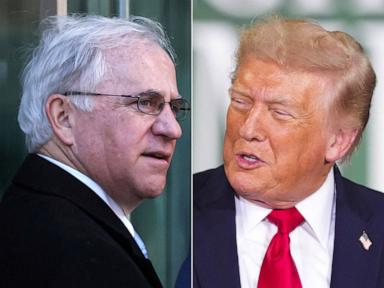
President Donald Trump issued a full pardon to Collins, wiping clean a twenty-six month sentence for insider trading and lying to the FBI. In an instant, a disgraced politician became a free man. The news flashes that followed were predictable, cold, and transactional. They spoke of political alliances, court dockets, and the mechanics of executive power.
But focus only on the legal machinery, and you miss the real story. You miss the fragile anatomy of human loyalty, the intoxicating lure of a secret, and the brutal reality of what happens when the people who make our laws decide they are above them.
The Picnic on the Lawn
To understand why a presidential pardon feels like a tear in the fabric of justice, you have to go back to a sunny afternoon in June 2017.
Picture a congressional picnic on the White House lawn. The air is thick with the smell of barbecue and the low hum of political small talk. Senators and representatives mingle, clinking glasses, basking in the ultimate validation of American power. Among them is Chris Collins, a staunch ally of the president, a man who built his reputation on hard-nosed business acumen.
But Collins was not just a lawmaker. He was also the largest shareholder and a board member of an Australian biotech company called Innate Immunotherapeutics. The company’s entire future hinged on a single experimental drug designed to treat secondary progressive multiple sclerosis. For families suffering from the devastating effects of MS, this drug was a beacon of hope. For Collins and his inner circle, it was a financial goldmine waiting to erupt.
Then, a smartphone buzzed in the congressman’s pocket.
It was an email from the company’s chief executive. The clinical trials had failed. Completely. The drug was useless.
In the medical world, this was a tragedy for patient health. In the financial world, it was an incoming missile. The stock was about to plummet into oblivion.
Consider the choice facing the man on the lawn. As a corporate insider, he was bound by law to keep that information secret until it was public. As a congressman, he was bound by an oath to uphold the laws of the land.
Instead, he walked to a quieter corner of the lawn and dialed his son, Cameron.
The Gravity of the Secret
We often think of white-collar crime as victimless, a bloodless game played on computer screens by men in expensive shoes. It isn't.
When an insider leaks a secret, they are not beating the system; they are shifting the losses onto someone else. Think of it like a game of musical chairs, but the person running the game secretly stops the music and whispers to his family exactly when to sit down. Everyone else is left standing, holding an empty bag.
Collins told his son the ship was sinking. Cameron, in turn, passed the word to his fiancée’s father, Stephen Zarsky, as well as several others. Over the next two days, before the public had any idea the drug had failed, this select group dumped more than a million shares of Innate Immunotherapeutics stock.
They avoided $765,000 in losses.
Who absorbed those losses? It was the retail investors. The ordinary people who bought those shares believing in the promise of a medical breakthrough. Teachers, firefighters, retirees who looked at the public data and thought they were investing in a brighter future. Every dollar the Collins family saved was a dollar stolen from an unsuspecting stranger's retirement account.
The betrayal was not just financial; it was institutional. The American public is constantly asked to trust that the market is fair, that the rules apply to the powerful just as they apply to the powerless. When a lawmaker uses a White House event to orchestrate a stock dump, that trust shatters.
The Collapse of a Congressman
The law has a long memory, and the FBI has even longer ledger sheets.
When the truth came out, the descent was swift. Collins initially protested his innocence, calling the charges "meritless" with the practiced indignation of a veteran politician. He even ran for re-election while under indictment, winning another term from voters who wanted to believe his denials.
But the evidence was an anchor dragging him down. The phone records, the timing of the stock sales, the text messages—they left no room for spin.
In October 2019, Collins stood in a federal courtroom in Manhattan. The bravado was gone. He wept openly as he pleaded guilty to conspiracy to commit securities fraud and making false statements to law enforcement.
"I violated my core values," he told the judge, his voice cracking. "I am swallowed by remorse."
He resigned from Congress in disgrace. A few months later, he was sentenced to over two years in prison. His son Cameron pleaded guilty too, sentenced to probation and community service. The cost of that phone call on the White House lawn had come due, and it cost Chris Collins his reputation, his career, and his liberty.
The Pen of Absolute Power
Then came the pardon.
The U.S. Constitution grants the president the nearly limitless power to forgive federal crimes. It is an ancient prerogative, a relic of kingship meant to act as a safety valve for justice, a way to correct judicial overreach or show mercy where the law is too rigid.
But mercy is a heavy thing. When it is handed out to political loyalists, it feels less like justice and more like a privilege reserved for the well-connected.
The White House statement accompanying the pardon noted that the request was supported by numerous members of Congress. It emphasized Collins’s legacy of public service. It argued that his conviction was based on a "hyper-technical" interpretation of insider trading laws.
Hyper-technical.
Tell that to the investor who lost their savings because they didn't have a congressman for a father. Tell that to the small-time drug offender serving a decade in a maximum-security facility without the benefit of powerful friends in Washington.
The pardon did not just release Chris Collins from his physical cell. It erased the legal consequences of his choices. It sent a resonant, undeniable message through the halls of power: if you are loyal enough, and important enough, the rules can be rewritten.
The Ghost in the System
What lingers after the headlines fade is the quiet erosion of belief.
Every time an insider trading scandal is brushed away by executive clemency, it leaves a scar on the collective psyche. It reinforces the cynical, corrosive suspicion that the system is rigged, that justice is a sliding scale where the wealthy can always buy, or negotiate, a different outcome.
Chris Collins returned home to his family, leaving the quiet lawns of Montgomery behind. He is no longer inmate 26115-055. He is a free man, his record wiped clean by presidential decree.
But out in the world, the investors who bought his failing stock are still broke. The public trust is still fractured. The laws are still on the books, waiting for the next person who doesn't have the president's phone number to break them.
The gates of the prison camp closed behind Chris Collins, but the question remains hanging in the heavy southern air, unanswered and profound: who pardons the faith we lost in the system?