Legislative paralysis is rarely an accident of timing; it is the predictable outcome of competing strategic incentives converging on an institutional bottleneck. When the Senate leadership maneuvers to block measures concerning congressional asset management and data center energy externalities ahead of an electoral cycle, observers frequently misdiagnose the event as a simple failure of political will. A rigorous examination of the underlying mechanics reveals a different reality: these procedural blocks function as risk-mitigation strategies designed to protect institutional stakeholders from asymmetric exposure. By deconstructing the economic and political cost functions of these blocked initiatives, one can map the structural incentives that dictate why legislative bodies routinely defer substantive reform.
To understand the mechanics of the blocked stock trading restrictions—often framed around proposals originating from House-passed initiatives—we must analyze the structural alignment between legislative access to non-public information and personal portfolio optimization. Proponents of bans argue that equity ownership by elected officials creates an unavoidable conflict of interest, eroding public trust. Conversely, the institutional resistance is governed by an internal cost-benefit calculation where the primary cost is the forfeiture of legal, albeit ethically fraught, wealth-accumulation channels, while the primary benefit of passage is diffuse public goodwill that rarely translates into localized electoral security.
The rationale deployed by opposing factions—specifically the assertion that proposed restrictions are either too weak to effect real change or too broad to be enforceable—acts as a tactical smokescreen. In practice, legislative bodies operate under a high friction threshold where any comprehensive compliance framework threatens to impose severe administrative and privacy costs on members and their immediate families. The strategic choice to sink the bill rather than amend it reflects an unwillingness to establish a legal precedent for internal transparency that could later be weaponized by political opponents.
Concurrently, the blockage of infrastructure bills targeting the explosive growth of artificial intelligence data centers and their associated utility strains exposes a parallel structural failure. Modern data centers represent a localized economic boon through construction and tax revenues, matched by systemic liabilities in the form of grid destabilization and hyper-inflationary energy costs for residential ratepayers. When legislative attempts are made to force data center operators to internalize these infrastructure costs, regional and national lawmakers face a fractured stakeholder matrix.
The economic trade-offs governing this dynamic can be categorized through three operational constraints:
- The Grid Capacity Threshold: The physical limits of regional transmission organizations to absorb sudden industrial load spikes without risking brownouts.
- The Cost Shifting Gradient: The mathematical reality where utility capital expenditures required for industrial expansion are directly absorbed by retail ratepayer rate hikes.
- The Electoral Feedback Loop: The short-term political reward of attracting high-tech capital investment versus the long-term political penalty of inflating household utility bills.
By shelving legislation designed to shift infrastructure financing burdens back onto technology operators, the Senate preserved the status quo, insulating industrial expansion from regulatory friction while externalizing the cost onto the consumer base. This decision highlights a broader systemic vulnerability: legislative frameworks are structurally ill-equipped to price externalities that scale faster than the statutory amendment process.
The convergence of these two blocked initiatives—stock trading oversight and industrial energy regulation—illustrates a unified operational principle. When legislative bodies approach an electoral horizon, the institutional priority shifts from optimization to risk minimization. Controversial measures that impose immediate behavioral changes or alienate powerful capital donors are systematically filtered out through procedural maneuvers.
To forecast legislative behavior in subsequent sessions, analysts must abandon moral frameworks and instead track structural exposure. Real reform will not emerge from normative appeals to transparency or fairness; it will occur only when the political cost of inaction decisively surpasses the administrative and personal costs of compliance. Until that equilibrium shifts, structural gridlock will remain the default output of legislative engineering.
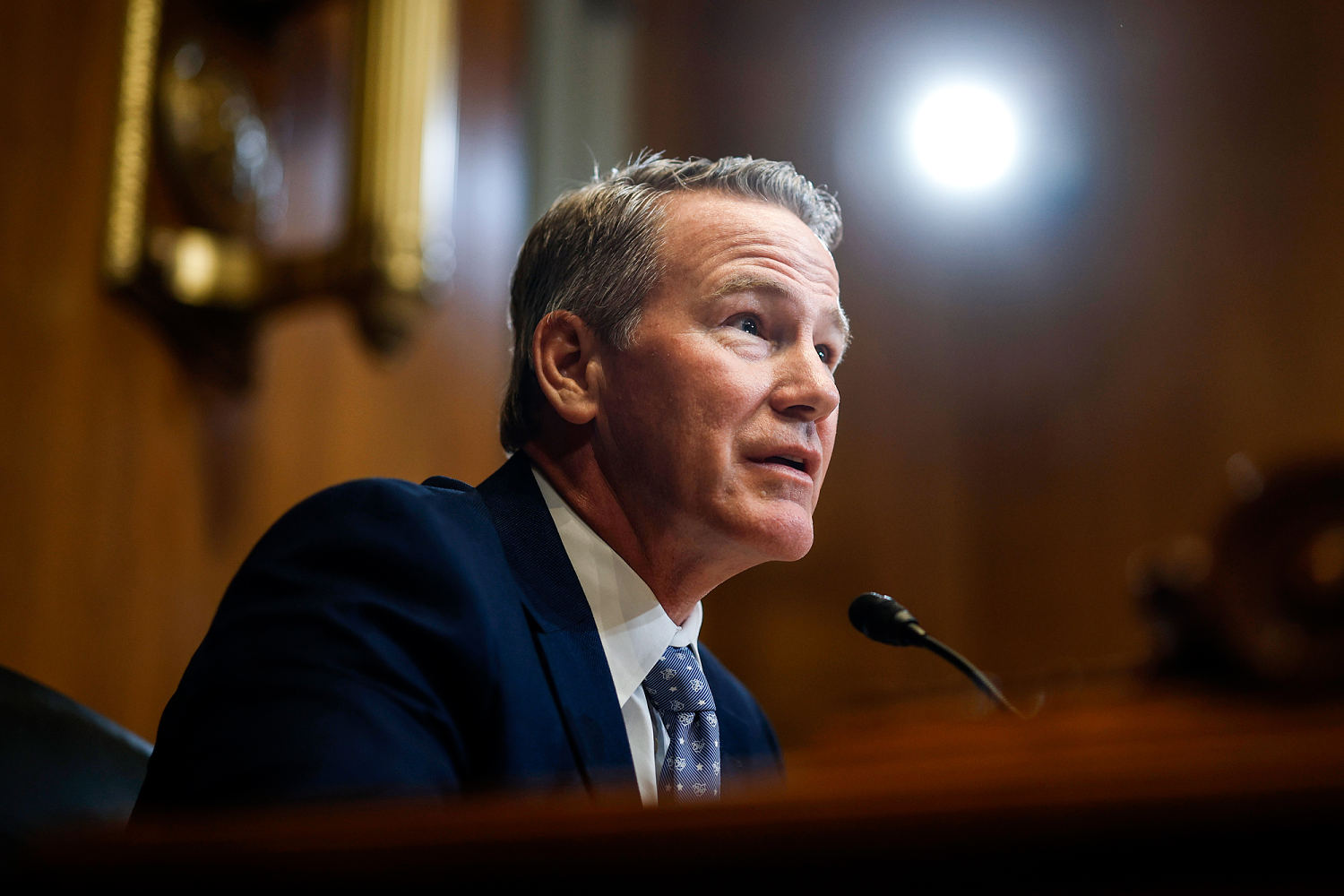
Senate Democrats block bills around stock trading, data centers
This video provides additional context regarding the specific parliamentary mechanisms and procedural votes utilized by Senate leadership to halt the stock trading and data center infrastructure bills prior to the electoral recess.