The air inside a subterranean vault does not move like the air above. It is heavy. It tastes of damp limestone, ancient dust, and a peculiar, freezing stillness that makes you hold your breath just to keep from disrupting it.
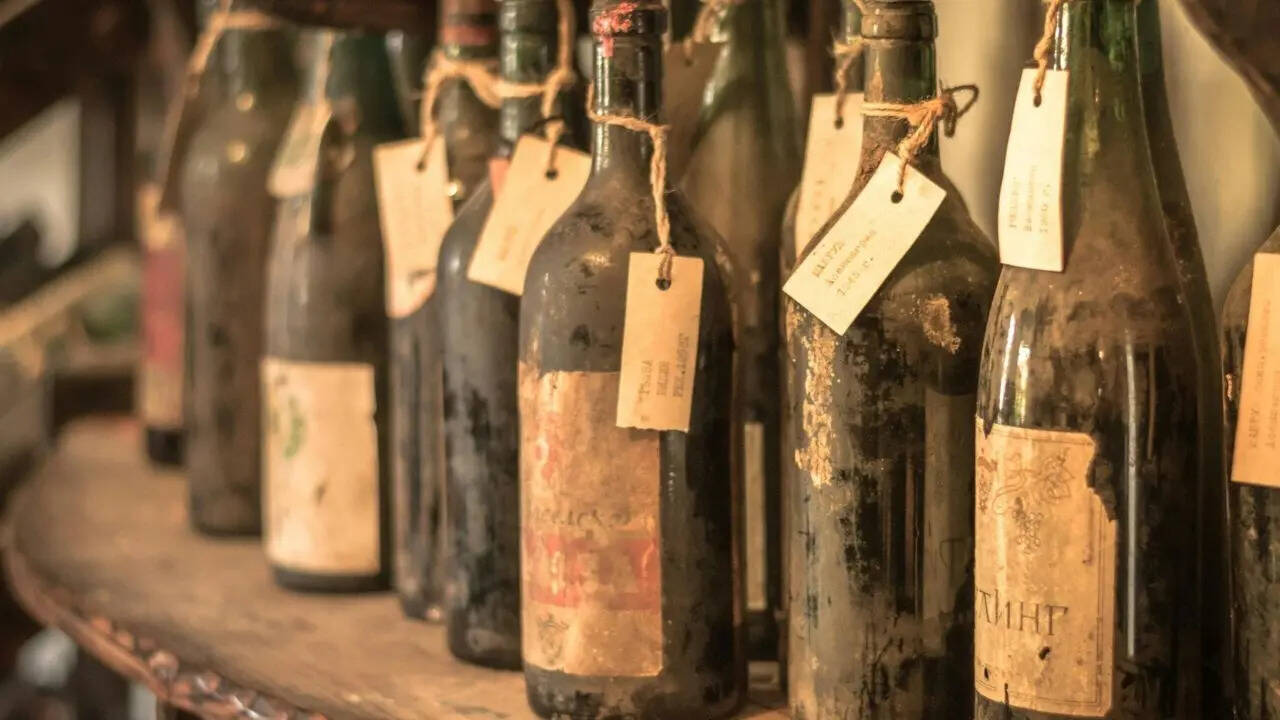
When the heavy iron door finally groaned open in the rolling hills of Georgia—the country, not the state—the beam of a flashlight cut through decades of absolute blackness. It illuminated row upon row of sleeping glass. Cobwebs hung like tattered lace from the necks of bottles. Dust lay so thick on the curves of the glass that the labels were entirely obscured, swallowed by time.
Forty thousand bottles.
To a spreadsheets-and-metrics mind, that is a massive inventory. It is a statistical anomaly, a windfall, a collector’s jackpot. But standing in that chill, feeling the dampness seep through the soles of your shoes, you realize it is something else entirely. It is a graveyard of liquid history, curated by one of the most terrifying figures of the twentieth century.
Joseph Stalin.
The world knew him for iron fists, forced industrialization, and brutal purges. History books paint him in shades of monochrome grey and blood red. Yet, hidden beneath the earth in his native Georgia, a deeply human, terrifyingly complex contradiction lay preserved in glass. Stalin, a man who stripped the world of its luxuries, was quietly hoarding them.
The Geography of Secrets
Georgia is a land where wine is not a hobby. It is an identity. For over eight thousand years, villages here have buried clay vessels called qvevri into the dirt, letting the earth ferment the grapes in a tradition that predates Western civilization. Wine is woven into the liturgy, the poetry, and the bloodline of the Caucasus.
Stalin knew this. He was born Iosif Dzhugashvili in the cobblestone streets of Gori, a Georgian boy who grew up surrounded by these vineyard-striped valleys before he transformed himself into the Soviet Man of Steel. You can try to strip the homeland out of a dictator, but you cannot strip the taste of the soil.
As the Soviet empire expanded, so did Stalin's private architectural paranoia. High-ceilinged dachas were built across the empire, equipped with green curtains to hide his silhouette from assassins and multiple identical bedrooms so no one knew which bed he slept in on any given night. But the most profound secret was built downward.
The vault recently uncovered was designed to withstand the end of the world. It was a fortress of moisture and shadow, engineered to maintain a flawless, unyielding temperature. While the rest of the Soviet Union lined up in the freezing snow for bread rations, forty thousand bottles of the finest liquid art on earth were resting in perfect, climate-controlled bliss.
Consider the sheer psychological dissonance required to construct this place. Outside, the state preached the total eradication of bourgeois decadence. Private property was a crime against the collective. Yet, deep beneath the Georgian mud, the ultimate bourgeois treasure room was being meticulously stocked.
Wine Under the Terror
What actually sits on those damp wooden racks?
It is a dizzying, schizophrenic mix of geopolitical posturing and deeply personal indulgence. Half of the cellar is a monument to the motherland. It holds legendary Georgian varietals like Khvanchkara—a semi-sweet, intensely aromatic red wine from the Racha region that Stalin famously drank from small, unassuming cups. There are bottles of Saperavi, ink-dark and heavy with the taste of blackberries and leather, capable of aging for centuries.
But then your flashlight drifts to the other half of the room, and the narrative shifts entirely.
Château d'Yquem. Château Lafite Rothschild. Pétrus.
The absolute pinnacle of French viticulture. The very definition of capitalist luxury. These were not bottles you could simply buy at a Soviet state store. They were acquired through specialized diplomatic channels, confiscated from aristocrats, or brought back as spoils of war.
Picture a hypothetical cellar master in the late 1930s. Let us call him Luka. Luka is a man who understands the delicate chemistry of wine, the way a cork can breathe or die based on a fraction of a degree in temperature. But Luka also understands the chemistry of survival. Every morning, he walks down the stone steps into the damp dark, clipboard in hand.
He knows that if a single bottle of the Premier Cru Bordeaux goes missing, or if a sudden spike in humidity spoils a batch of the General Secretary’s favorite Khvanchkara, it is not an administrative error. It is treason.
Luka wipes the dust from a 1929 French vintage with hands that cannot afford to shake. He checks the seals. He listens to the silence. The cellar is a sanctuary of exquisite flavor, but it is also a pressure cooker of absolute dread. The stakes of winemaking are usually financial or artistic; here, the stakes were mortal.
Every bottle in that room represents a moment where luxury met absolute power. Stalin used these wines as chess pieces. During the Yalta Conference in 1945, when the map of the modern world was being carved up, Stalin poured heavy, sweet Georgian wines for Winston Churchill and Franklin D. Roosevelt. He watched them get warm and loose-tongued under the influence of the Caucasus sun, while he remained sharp, calculating, and calculatingly sober.
The Great Slumber
Then, the heart stopped. In 1953, Stalin died in his dacha outside Moscow.
The empire shifted. Khrushchev denounced the cult of personality. The dachas were locked, repurposed, or abandoned. And the cellar? The cellar simply slept.
For decades, as the Cold War rumbled above, through the space race, the stagnation of the Brezhnev era, the collapse of the Berlin Wall, and the chaotic splintering of the Soviet Union in 1991, the forty thousand bottles remained undisturbed. The world forgot they were there.
Wine is a living thing. It does not stay frozen in time; it evolves, breathes, and decays. Inside those dark bottles, complex chemical ballets were performing in total isolation. Tannins were softening. Acids were mellowing. The aggressive fruit flavors of youth were slowly transforming into complex notes of forest floor, dried tobacco, and truffle.
When the doors were finally opened by modern custodians and historians, the initial reaction wasn't joy. It was a profound, suffocating awe.
To look at forty thousand bottles of wine that have outlived their owner, outlived his empire, and outlived the very ideology that built the room is a dizzying experience. It exposes the ultimate futility of totalitarian control. You can conquer nations, you can purge your rivals, and you can build concrete bunkers to hide your treasures from the world. But time wins. The earth wins.
The Taste of the Past
The inevitable question that hovers over a discovery like this is simple: Is it any good?
Can a bottle of semi-sweet red wine from the 1940s survive eighty years in a dark hole? Wine experts are notoriously skeptical of sweet wines aging past a certain point, but Georgian Saperavi and high-end French Bordeaux are legendary for their resilience.
A few selected bottles have been tasted by the rarest few. The reports feel less like a wine review and more like a seance. They speak of a flavor that is heavy with history—notes of oxidized plums, dark chocolate, and an unmistakable, lingering hint of wood smoke and earth. It is not necessarily a pleasant drink in the modern sense. It is intense. It is aggressive. It tastes exactly like the era that birthed it.
There is a strange poetry to the fact that these bottles emerged now, in an era where Georgia is rediscovering its ancient roots and asserting its identity on the global stage. The vineyards that Stalin nationalized and turned into mass-production factories for the Soviet state are now back in the hands of independent, passionate winemakers. They are using the same ancient qvevri methods to create wines that are celebrated in London, New York, and Tokyo.
The forty thousand bottles are no longer a dictator’s secret stash. They are a time capsule.
As they are cataloged, photographed, and occasionally auctioned off to museums and ultra-wealthy collectors, the power dynamic has completely inverted. The wines no longer belong to the man who demanded absolute obedience. Instead, the man belongs to the history of the wine. He is merely the dark, historical footnotes on a collection of spectacular French and Georgian vintages that managed to survive the century.
The iron door of the vault remains open now, the artificial lights revealing the cracks in the concrete walls. The damp smell is still there, but the stillness is gone. The ghost has been evicted. All that is left is the glass, gleaming faintly in the new light, holding eighty years of silence inside.