Media outlets loves a cheap circus.
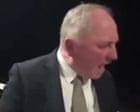
When Australian MP Bob Katter snapped at a dog off-camera and then barked back at a breakfast show host during a live broadcast, the collective internet did exactly what it was programmed to do: it laughed, clipped a ten-second video, and slapped a sensationalist headline on top. The consensus was swift. Look at this unhinged politician losing his mind on morning television.
That consensus is completely wrong.
What the commentators dismissed as a bizarre, erratic meltdown was actually a masterclass in modern political survival. While pundits mocked the chaos, Katter achieved precisely what every legacy media strategy fails to do: he completely hijacked the narrative, exposed the absurdity of modern broadcast interviews, and ensured his message reached millions who otherwise would have scrolled right past another sanitized political soundbite.
We need to stop treating live TV blowups like accidental failures. In an attention economy built on micro-moments, chaotic authenticity isn't a mistake—it is the strategy.
The Media's Sanctimonious Trap
Watch standard political interviews today. They follow a predictable, agonizing script.
A polished host asks a heavily sanitized question designed to extract a specific soundbite. The politician responds with a pre-packaged, media-trained answer that manages to say absolutely nothing across three full sentences. The viewer tunes out. The host moves on to a commercial break. Everyone involved goes through the motions of an obsolete ritual.
Morning television exists to project an illusion of calm predictability. It sells viewers comfort alongside coffee commercials. When an unscripted interruption happens—like a dog barking in a remote broadcast setup—the host’s instinct is to smooth it over, often condescendingly, to maintain control of the segment.
Katter didn’t play along.
When he yelled at the dog and subsequently snapped at the presenter for attempting to manage him, he shattered the TV studio's manufactured decorum. The media framed this as a politician losing control. In reality, he refused to let the program control him.
The Myth of the "Unprofessional" Politician
We are conditioned to believe that political competence looks like a navy suit, a quiet room, and a rehearsed tone. We mistake slick PR for effective leadership.
I have spent years analyzing media strategy and public response metrics. The data consistently reveals a stark truth: traditional polish is dead. Audiences have developed a high degree of immunity to scripted professionalism. They view it with deep suspicion, equating polished delivery with dishonesty.
When a politician reacts with raw, unfiltered emotion to an annoyance, the audience doesn't just see a temper—they see a human.
Why Chaos Outperforms Polish
- Pattern Interruption: The human brain filters out repetitive inputs. A standard political interview is white noise. A man shouting at a canine on live television forces the brain to pay immediate attention.
- Algorithmic Priming: Social media platforms do not amplify nuance; they amplify friction. A ten-second clip of a chaotic exchange generates exponential reach compared to a twenty-minute policy discussion.
- Perceived Authenticity: Voters are exhausted by media training. They would rather deal with an unpredictable leader who shows genuine anger than a focus-group-tested puppet who smiles on cue.
By refusing to apologize or smooth over the interruption, Katter ensured his segment bypassed the traditional graveyard of morning news ratings and went straight into global viral distribution.
The Hypocrisy of Broadcast Presenters
Notice how the presenter reacted. The host tried to turn the politician's real-time environment into a joke, attempting to assert dominance over the interview by chuckling at the disruption.
This is a classic television technique: trivialize the guest to control the segment.
When the MP fired back at the host, he broke the unspoken rule of broadcast TV—thou shalt not challenge the anchor’s authority. The outrage from media circles wasn't about the dog. It wasn't even about decorum. It was about a politician refusing to play the role of the compliant studio guest.
Media critics called it hostile. A more accurate word is direct.
Why should a public representative pretend everything is serene when their live environment is chaotic? Why perform a fake television theatre just to make the morning show producer's job easier?
The Strategic Cost of Being Sane
There is a distinct downside to this approach, and it’s important to be honest about it.
If every political interaction becomes a shouted match against background noise and studio anchors, substantive policy discussion completely evaporates. Relying on visceral, friction-heavy moments alienates viewers who still crave detailed governance. It risks reducing national discourse to a series of viral, low-brow confrontations.
It is a high-risk trade-off. You trade long-term institutional respect for immediate, unignorable relevance.
But in the current media landscape, relevance is the only currency that buys an audience. An institutional elder giving a measured, intellectual response to an empty studio camera gets zero impressions. A maverick shouting at a dog gets three million views on short-form video feeds before lunch.
You don't have to like the rules of this environment to admit who knows how to play it.
Stop Asking for Polite Politics
The constant complaint from media commentators is that public discourse has lost its manners. They write endless columns wishing for a return to civilized, structured debate where everyone waits their turn and speaks in hushed, respectful tones.
This desire is a delusion.
Polite politics is how broken systems hide behind neat facades. The obsession with decorum over substance is precisely why public trust in legacy media and political institutions has cratered. When the press focuses entirely on the "rudeness" of an exchange rather than why the exchange occurred, they prove they care more about etiquette than truth.
The MP didn't ruin the interview. The interview was already an empty exercise in morning show filler. He just accidentally made it honest.
Next time you see a politician break character, yell at an off-camera disturbance, or snap at a smug anchor, don't join the chorus of performative shock. Recognize it for what it actually is: the sound of the polished PR machine grinding to a halt, if only for thirty seconds.
Stop demanding political theatre. Start paying attention to who refuses to read the script.