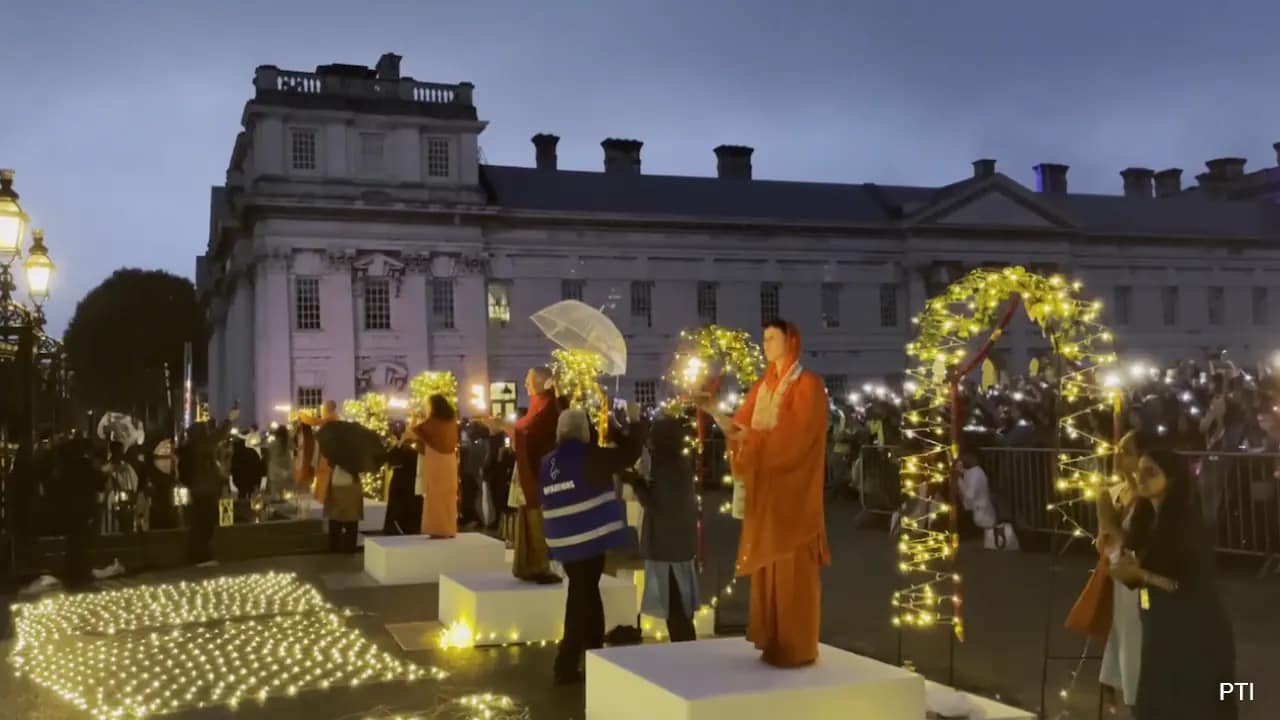
Thousands of people stood shoulder-to-shoulder along the water's edge in Greenwich, watching the sun dip below the London skyline. They weren't there for a typical music festival or a weekend food market. They gathered to witness something that had never happened before in the British capital: a traditional Ganga Aarti performed directly on the banks of the River Thames.
On Sunday, September 13, 2026, the Old Royal Naval College transformed into a vibrant cultural hub. Organized by Chinmaya Mission UK as part of their global 75th-anniversary celebrations—known as the Chinmaya Amrit Mahotsav—and integrated with the city's annual Totally Thames festival, the event shattered expectations. It sold out completely, drawing families, culture enthusiasts, and curious Londoners from all walks of life. But beneath the brass lamps, the rhythmic chanting, and the soaring brass plates filled with flickering flames lies a deeper story about how diasporas carve out cultural spaces in modern Western cities without compromising on modern ecological realities.
The Mechanics of Recreating an Ancient Ritual Abroad
Transplanting a ritual as visually and spiritually weighty as the Ganga Aarti from the ghats of Varanasi or Haridwar to the Thames isn't simple. You can't just copy and paste an ancient spiritual practice onto a European river and expect it to resonate. It takes meticulous planning, deep community backing, and an explicit alignment with local municipal rules.
The day-long event kicked off at four in the afternoon. Attendees wandered through community stalls, sampled diverse foods, and watched live music and dance performances that bridged Indian classical arts with contemporary British-Asian creativity. But the core of the gathering arrived at dusk. At precisely 7:15 PM, volunteers raised heavy brass lamps in unison, synchronizing their movements to traditional hymns echoing across the water.
The backdrop alone gave the ceremony an unmatched visual gravity. Standing at the heart of the Maritime Greenwich UNESCO World Heritage Site, the Old Royal Naval College provided towering columns, historic domes, and an unobstructed stretch of the Thames that caught the warm glow of the firelight. It felt grand. It felt permanent.
Why Greenwich Became the Epicenter
Choosing Greenwich wasn't an accident. London authorities and festival organizers needed a venue with historical resonance and enough open ground to safely handle thousands of attendees. The riverside location allowed the flame ceremony to face the water directly, mirroring the original architecture of riverbanks in India where aartis have been performed for millennia.
Yet, staging this required navigating layers of British public event regulations. Organizers worked alongside the Thames Festival Trust, which manages the Totally Thames festival. This partnership ensured that crowd management, public safety, and sound ordinances were locked down months in advance. You don't host an open-air fire ceremony in a World Heritage site without jumping through bureaucratic hoops, and the success of the debut proves that London's local frameworks are increasingly accommodating large-scale intercultural public events.
The Radical Eco-Consciousness Twist That Set This Aarti Apart
Critics of traditional river rituals often point to environmental degradation. In India, the sheer volume of offerings—marigold garlands, plastic-wrapped items, milk, and clay idols—left in rivers after large religious gatherings has sparked intense debates and court interventions. If London's inaugural Ganga Aarti wanted to succeed, it had to address these concerns head-on.
Chinmaya Mission UK introduced a strict, unyielding environmental rule: no items, including flowers, idols, or physical offerings, would be placed in the River Thames during or after the ceremony.
This single policy changes how diasporic religious events operate overseas. Instead of treating environmental stewardship as an afterthought, the organizers placed ecological respect at the core of the ritual. The aarti became purely an offering of light, sound, and inward gratitude, proving that ancient spiritual discipline can adapt to strict modern river conservation laws without losing its authentic power.
Environmental groups and local authorities noticed. By stripping away the physical debris often associated with large-scale water rituals, the event presented a clean, sustainable blueprint for spiritual gatherings in urban waterways. It shows that reverence for a river doesn't require polluting it.
Financial Backing and Community Mobilization
Pulling off an event of this scale in central London requires serious institutional support. The debut was made possible through the generosity of key institutional partners and corporate sponsors who stepped up to back Chinmaya Mission UK's vision. Major supporters included the Dhamecha Group, the Vascroft Foundation, Burnt Oak Builders Merchants, the Devji Group, Lifelines, Harmony Health & Wellness, and Bell Containers.
This coalition of businesses and charitable foundations highlights how deeply invested the British-Asian business community is in cultural visibility and public civic engagement. When local enterprises fund public heritage events, it moves cultural expression from niche community centers into the mainstream civic consciousness.
Beyond Ritual: What This Event Means for the Diaspora
Diasporas often grapple with a persistent cultural tension. How do you pass down heritage to younger generations born thousands of miles away from your ancestral homeland without turning culture into a museum piece?
Events like the London Ganga Aarti provide the answer. They take tradition out of indoor community halls and temple basements and place it right in the open public square. When thousands of people—spanning multiple generations and diverse ethnic backgrounds—gather in a historic British landmark to chant in unison, it shifts the cultural center of gravity.
International media outlets like The Hindu, The Times of India, and The Guardian covered the spectacle, recognizing that this was more than a localized religious service. It was a statement of cultural confidence. British-South Asians make up one of the largest and most influential diaspora communities in the UK, yet public spaces in London have historically been dominated by traditional Western celebrations. Carving out space for a Hindu ritual of this magnitude on the banks of the Thames signals a maturing multiculturalism where minority traditions aren't tucked away in private enclaves—they are shared openly with the entire city.
Overcoming Practical Hurdles and Public Skepticism
No major public event launches without friction. When rumors or announcements of the Ganga Aarti first circulated, skeptics questioned whether a Hindu fire ritual on a British river would cause logistical headaches or spark cultural friction. Local councils scrutinized noise levels, fire safety clearances, and crowd control measures.
Event planners had to manage massive registration demand. The event sold out rapidly, leaving many prospective attendees locked out. Organizers deployed digital communication channels quickly to manage expectations, coordinate volunteers, and ensure that attendees arrived prepared for an open-air evening by the water.
Operating in London's unpredictable September weather also presented a test. Attendees were advised to bring warm layers and picnic blankets. When dusk settled and the chill off the Thames rolled in, the warmth of the gathered community and the glow of the brass lamps created an atmosphere that insulated the crowd against the autumn air.
A Blueprint for Global Cultural Integration
What happened in Greenwich on September 13 isn't just a one-off news item destined to be forgotten by next week. It establishes a repeatable model for how faith-based communities can engage with civic institutions in major global metropolises.
When religious organizations partner with secular arts festivals like Totally Thames, they bridge the gap between faith and public culture. They invite people who have no background in Hinduism to stand shoulder-to-shoulder with practitioners, experiencing the beauty of the aarti purely as an aesthetic, communal, and meditative expression of gratitude to nature.
You don't need to practice a specific religion to understand the visceral power of hundreds of flames reflecting off the dark surface of the Thames as dusk settles over London. That universal appeal is why the ceremony resonated so widely, drawing praise from broadcasters, international influencers, and everyday Londoners alike.
As organizers look toward the future, the expectation is clear. This debut won't be an isolated experiment. Given the overwhelming public response and the close collaboration with municipal authorities, the Ganga Aarti on the Thames is poised to become a permanent fixture on London's annual cultural calendar.
Stop thinking of diaspora traditions as static echoes of the past. What happened on the Thames proves they are living, evolving forces capable of reshaping the cultural geography of the world's greatest cities.