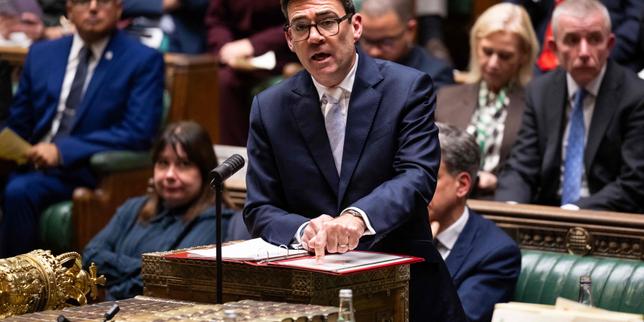
The rhetoric echoing from Whitehall has taken a sharp, uncompromising turn. British political leadership has moved past the traditional diplomatic language of deep concern and stern warnings, opting instead for direct, public indictments of Iranian and Russian state actors. This shift is not merely a rhetorical escalation for domestic political consumption. It represents a calculated exposure of subterranean hostilities that have simmered beneath the surface of European security for years.
When the prime minister of the United Kingdom stands before the dispatch box or addresses international summits to explicitly name Tehran and Moscow as the architects of persistent domestic disruption, intelligence analysts listen closely. This posture reflects a profound structural deterioration in state-to-state relations. For decades, Western intelligence agencies preferred to handle hostile foreign interference quietly. Covert operations, cyber intrusions, and proxy sabotage were met with proportionate, unheralded countermeasures. The decision to bring these clandestine campaigns into the glaring light of public scrutiny signals that the threshold of tolerable friction has been permanently crossed.
To understand why London is breaking protocol, one must look beyond the immediate diplomatic fallout and examine the changing nature of national security threats. Modern statecraft has drifted away from traditional military confrontations on open battlefields. Instead, adversaries now operate within the gray zone, executing continuous, low-intensity campaigns designed to degrade societal resilience without triggering a conventional military response.
The Mechanics of Gray Zone Interference
Gray zone warfare relies on plausible deniability. Cyber attacks on critical infrastructure, targeted disinformation campaigns designed to polarize elections, physical sabotage of logistics hubs, and state-backed intimidation of dissidents living abroad all share a common trait. They are specifically calibrated to fall just below the threshold of an armed attack under international law.
Moscow has spent years perfecting this playbook across Europe. From the use of nerve agents on British soil to extensive digital espionage operations aimed at government ministries and energy grids, the Kremlin treats peacetime as a continuous theater of operations. The objective is not necessarily to seize territory, but to exhaust democratic institutions, erode public trust in governance, and force adversaries to expend disproportionate resources on defense.
Tehran operates through a complementary, though distinct, methodology. The Islamic Republic relies heavily on its network of regional proxies and transnational intelligence operatives to project power far beyond the Middle East. In the context of British security, Iranian activities have increasingly involved targeting dissidents, journalists, and Jewish community spaces within the UK. The convergence of these two adversarial vectors has created a two-front security challenge for domestic law enforcement agencies.
MI5 and counter-terrorism police are no longer just guarding against traditional terrorist threats. They are tracking state-directed networks that utilize criminal proxies to carry out surveillance, arson, and attempted assassinations. When the prime minister points an accusing finger at Tehran and Moscow in the same breath, it acknowledges a sobering operational reality. These two capitals, driven by shared grievances against the Western-led international order, are increasingly sharing tactics, technologies, and operational security measures.
The Domestic Cost of Geopolitical Friction
For the average citizen, the fallout from this shadow war often manifests invisibly. It appears as a sudden spike in coordinated bot activity designed to amplify social divisions online. It looks like mysterious cyber disruptions affecting municipal services, or unexplained security alerts near military installations.
The British government faces a difficult communicative tightrope. Sounding the alarm too frequently risks inducing public fatigue or unnecessary panic. Remaining silent, however, allows hostile actors to operate with impunity, emboldening them to escalate their tactics. Downing Street has calculated that transparency is now a necessary defensive asset. By exposing foreign plots in real time, the UK strips hostile intelligence services of the element of surprise and forces them to recalibrate their operations.
This strategy carries inherent risks. Public accusations demand credible evidence, yet intelligence agencies are often reluctant to reveal their sources and methods for fear of compromising future investigations. When the government makes sweeping claims about foreign interference, it must constantly balance the imperative of public awareness against the necessity of protecting classified intelligence pipelines.
Furthermore, naming and shaming rarely deters authoritarian regimes on its own. Neither Moscow nor Tehran is particularly vulnerable to reputational damage in Western capitals. Both governments have built their domestic legitimacy on defiance of Western pressure. Consequently, verbal denunciations must be backed by tangible punitive measures, ranging from sweeping economic sanctions against proxy front companies to targeted expulsions of intelligence officers operating under diplomatic cover.
The Economic and Cyber Dimensions
Beyond physical security and intelligence operations, the confrontation has deeply altered the economic landscape. Financial crime and sanctions evasion serve as the lifeblood for both Russian oligarch networks and Iranian state enterprises. London historically served as a premier global hub for international capital, a status that unfortunately made it an attractive destination for laundering illicit funds generated by authoritarian regimes.
Post-2022 legislative efforts have tightened the screws on illicit finance, yet the plumbing of global finance remains porous. Shell companies registered in offshore jurisdictions continue to move funds designed to finance covert operations across Europe. When British leadership castigates these foreign capitals, they are simultaneously targeting the financial enablers operating within their own jurisdiction.
The digital domain presents an equally daunting battleground. Critical national infrastructure—water treatment plants, power grids, financial clearinghouses—remains under constant probing attacks. These digital incursions rarely aim to cause immediate catastrophic damage. Instead, they map networks, test defenses, and plant dormant malicious code that could be activated during a future period of acute geopolitical crisis.
Defending against this relentless digital assault requires a level of public-private cooperation that historically clashed with corporate secrecy. Telecommunications providers, energy firms, and financial institutions are now treated as frontline defenders in national security. The government shares threat intelligence with private enterprises not as a courtesy, but as an urgent necessity to patch vulnerabilities before hostile state hackers can exploit them.
The Limits of Deterrence
As this shadow war grinds forward, the fundamental question facing British strategists is one of effective deterrence. Traditional deterrence theory, forged during the Cold War, relied on the threat of mutually assured destruction to prevent major power conflict. That framework fails when applied to asymmetric, gray zone tactics.
If a hostile state deploys a criminal gang to carry out arson against a warehouse storing military aid destined for Ukraine, the response cannot realistically be a conventional military strike. The proportionality equation breaks down. This leaves Western governments scrambling to invent a new grammar of deterrence—one based on asymmetric costs, rapid attribution, and the weaponization of economic transparency.
The prime minister's direct accusations signal an understanding that conventional diplomacy cannot resolve these friction points. As long as authoritarian regimes view their survival as fundamentally incompatible with the stability of democratic societies, the shadow war will continue.
The rhetoric from Downing Street is not the prelude to an open conflict. It is an acknowledgment that the conflict is already underway, fought silently in fiber-optic cables, financial ledgers, and suburban backstreets, long before it ever reaches the headlines.