In the summer of 1900, a handful of men stood on a patch of grass at the Velodrome de Vincennes in Paris. They wore heavy white flannels and stiff collars, their brows damp under the French sun. Most of them were British expats or local club enthusiasts who had no idea they were making history. They were playing for an Olympic gold medal, though the spectators were sparse and the local newspapers barely noticed. Great Britain beat France. The cricketers went home. The sport packed its bags and left the Olympic stage for what everyone assumed would be a brief hiatus.
The hiatus lasted one hundred and twenty-eight years.
History has a strange way of looping back on itself. When the 2028 Olympic Games open in Los Angeles, a sport that feels alien to the average American will return to the world’s biggest stage. To some, cricket is a baffling relic of the British Empire—a game of tea breaks and mysterious terminology like "silly mid-off" and "googly." To the International Olympic Committee and the power brokers of global sport, however, cricket’s inclusion isn't about nostalgia. It is a calculated, multi-billion-dollar bet on a single, stubborn market.
America.
The Sound of a Leather Ball in a Concrete Jungle
Think of a young man named Arjun. He lives in a cramped apartment in Queens, New York. By day, he works in tech or drives for a ride-share app, navigating the gray grid of the city. But on Saturday mornings, he travels to a bumpy, uneven field in Van Cortlandt Park. He carries a heavy bag containing a willow bat and pads that have seen better days.
When Arjun walks onto that field, he isn't in New York anymore. He is back in Ahmedabad. He is connected to a billion people across the ocean who treat this sport as a secular religion. For decades, people like Arjun have been the invisible heartbeat of American cricket. They played in parking lots. They organized leagues on baseball diamonds where the infield dirt made the ball bounce unpredictably. They were ignored by mainstream media and bypassed by big sponsors.
Now, the world is finally looking at them.
The decision to bring cricket to the LA28 Games is a direct acknowledgment that the Arjuns of the world are no longer a niche demographic. There are roughly five million people in the United States who hail from cricket-playing nations. They represent one of the most affluent and tech-savvy diasporas in the country. For the Olympics, this isn't just about athletic excellence; it’s about the staggering math of the Indian subcontinent.
Consider the gravity of these numbers. When India plays Pakistan in a major tournament, the viewership can exceed four hundred million people. That isn't a typo. It is a cultural event that dwarfs the Super Bowl. By putting cricket in the Olympics, the IOC has essentially guaranteed that every television set in Mumbai, Karachi, and Dhaka will be tuned into the Los Angeles Games. The broadcast rights for India alone are expected to skyrocket, potentially increasing the Olympic revenue from that region by tenfold.
The Problem with the Clock
But there is a hurdle. It’s a hurdle that has kept cricket at arm's length from the American consciousness for a century: time.
Traditional cricket—Test cricket—lasts five days. It is a slow-burn psychological thriller. It involves strategy, patience, and the very real possibility that after thirty hours of play, the result is a draw. That format is a beautiful, archaic masterpiece, but it is poison to a modern American audience raised on the sixty-minute clock and the four-quarter structure.
To survive in LA, the sport had to evolve. It had to become leaner.
Enter Twenty20 (T20).
If Test cricket is a thick, Russian novel, T20 is a high-octane action flick. It is loud. It is fast. It ends in three hours. There are cheerleaders, fireworks, and players wearing neon-colored pajamas instead of the traditional "whites." This is the version of the sport that will debut in 2028. It is designed for the TikTok era, where every ball can be a highlight and every over can change the game.
Still, the skepticism remains. Can a game that requires a specialized flat pitch and a ball made of cork and leather truly "crack" a country that is already saturated with the NFL, the NBA, and MLB?
The answer lies in the infrastructure being built right now under our noses. Major League Cricket (MLC) launched in the U.S. in 2023, backed by some of the deepest pockets in Silicon Valley and Wall Street. These investors aren't sports hobbyists; they are people who understand market capture. They are building stadiums in Texas and North Carolina. They are betting that if you provide the spectacle, the audience will follow.
A Ghost in the Outfield
There is a poetic irony to cricket trying to conquer America. We often forget that cricket was once the most popular sport in the United States. Before the Civil War, there were over a thousand cricket clubs across the Northeast. Abraham Lincoln was known to have attended matches. The first-ever international sporting event in the world wasn't a soccer match or an Olympic event; it was a cricket match between the U.S. and Canada in 1844.
Cricket didn't die in America because it was boring. It died because of the Civil War, which favored baseball—a game that required less equipment and could be played more easily in army camps. After the war, baseball was branded as the "patriotic" pastime, and cricket was cast aside as a remnant of British colonialism.
So, when the first ball is bowled in Los Angeles in 2028, it won't be the arrival of a foreign invader. It will be the return of a long-lost son.
The stakes are invisible but massive. For the players, it is the chance to call themselves Olympians—a title that carries a weight no World Cup can match. For the administrators, it is a play for the "Final Frontier" of the global sports market. For the immigrant communities in the U.S., it is a moment of profound validation.
Imagine a twelve-year-old girl in a Chicago suburb. She loves the game because her grandfather tells her stories of the greats—Bradman, Tendulkar, Warne. But she has never seen a cricket match on a major American network. She has never seen a "professional" cricketer who looks like her on a billboard.
Then, 2028 arrives. She sees the best in the world competing in a stadium in Southern California. She sees the Stars and Stripes on a cricket jersey. Suddenly, the sport isn't something her family does in secret on Saturday mornings. It is part of the American fabric.
The Willow and the Dream
There is a tactile beauty to cricket that the data points often miss. The smell of linseed oil on a new bat. The rhythmic thud of the ball hitting the "sweet spot." The way a bowler can make a ball swing through the air like it’s being pulled by invisible strings.
This is what the Olympics will showcase. Not just the spreadsheets and the broadcast rights, but the raw human drama of a sport that demands a unique combination of grace and grit.
Will the average American sports fan trade their Sunday afternoon football for a T20 match? Perhaps not immediately. But the goal isn't necessarily to replace baseball or football. The goal is to claim a seat at the table.
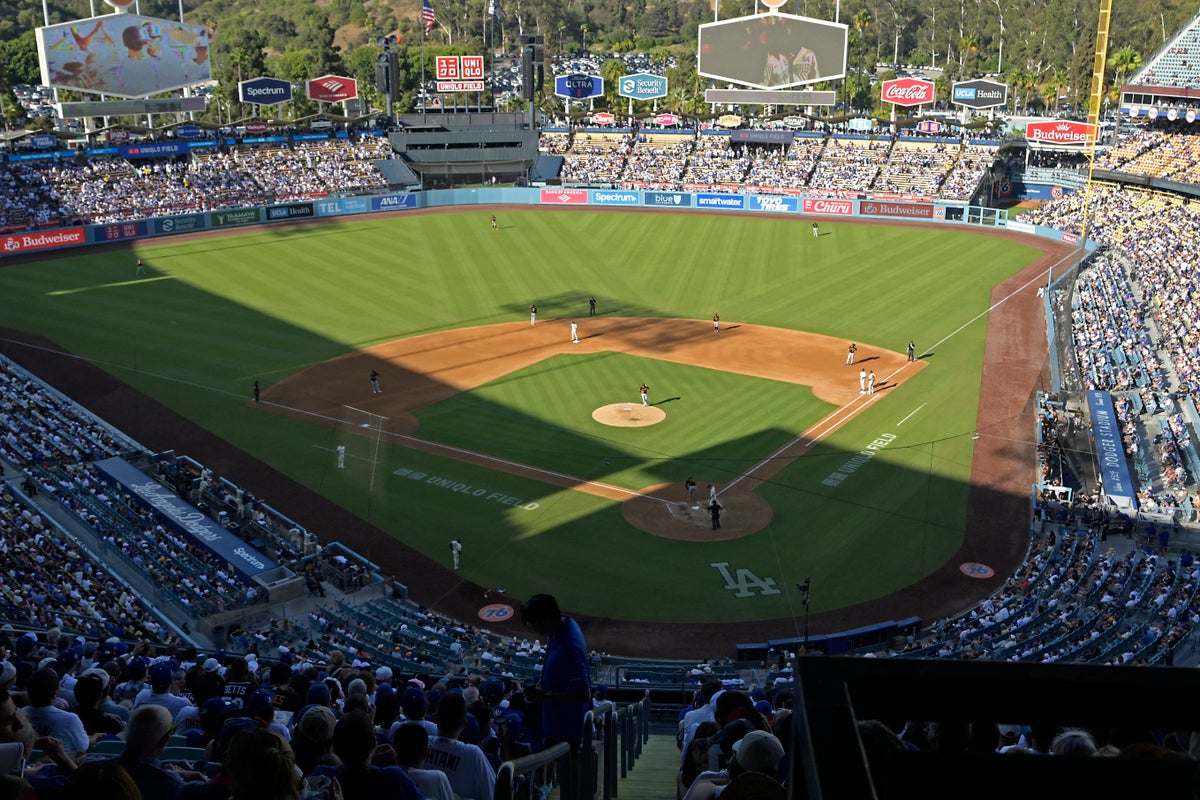
As the sun sets over the Pacific in the summer of 2028, the lights of a repurposed stadium will flicker on. The crowd will be a sea of colors—the blue of India, the green of Pakistan, the yellow of Australia, and the red, white, and blue of a host nation rediscovering its own history.
A bowler will stand at the top of his mark. He will feel the weight of the ball in his hand, a hard, red sphere that represents the hopes of his nation and the survival of his sport’s relevance in a changing world. He will run in. The crowd will hold its breath.
The willow will meet the leather with a crack that echoes across the stadium, a sound one hundred and twenty-eight years in the making.
The ghost of 1900 is finally being laid to rest, replaced by a neon-lit reality where the world’s most popular "unknown" sport finally finds its home in the land of the brave. Whether America is ready or not, the game is on.