Midnight in the hills above Port-au-Prince smells of dust, decaying mangoes, and the sharp, metallic tang of unspent gun oil.
On July 7, 2021, that smell was shattered. High-caliber rounds chewed through the mahogany doors of President Jovenel Moïse’s private residence. In the frantic minutes that followed, the leader of a nation already staggering on the precipice of institutional collapse was executed in his own bedroom. His wife, Martine Moïse, lay bleeding beside him, playing dead beneath a coat of warm iron. The world watched in breathless horror, waiting for answers to drop from the smoke.
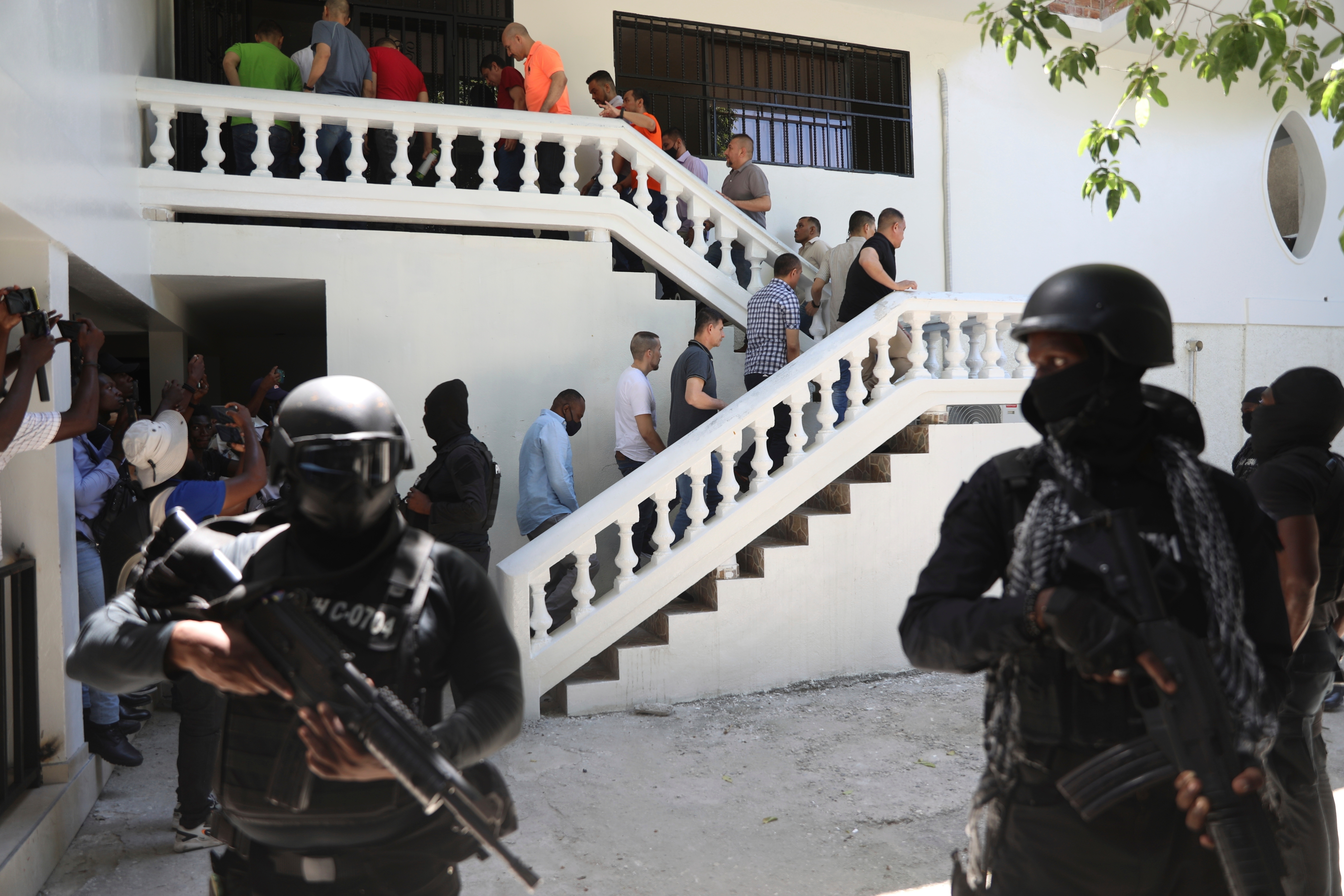
Years have passed since that dark summer night. The physical craters left by the bullets have long been swept away, but the machinery of justice moves with the sluggish, grinding indifference of tectonic plates. Today, that machinery shifts again. Eighteen suspects accused of orchestrating or executing the assassination are being bundled onto flights, bound for the United States to face federal charges.
To understand why a Haitian president’s murder is being tried in a Miami courtroom rather than a Caribbean one, you have to look past the cold press releases of the Department of Justice. You have to look at a broken country.
Imagine sitting in a courtroom where the walls are sweating from the tropical humidity, where the judge receives anonymous death threats before morning coffee, and where the stenographer’s laptop might die mid-sentence because the municipal power grid failed yet again. In Haiti today, the judiciary is not merely fragile. It is a ghost ship drifting through a hurricane. Gangs control eighty percent of the capital. Judges recuse themselves out of sheer terror; witnesses vanish into the labyrinthine slums of Cité Soleil; case files mysteriously evaporate from locked filing cabinets.
Holding a trial for a transnational assassination plot inside a collapsing state is like trying to perform open-heart surgery on a roller coaster.
So the chess pieces moved. The jurisdiction shifted northward, crossing the turquoise expanse of the Caribbean Sea to a federal courthouse in Florida. It is a pragmatic maneuver, born of absolute desperation, yet it carries a heavy, bitter irony. The sovereign dignity of a Caribbean republic is effectively outsourced because its own institutions were hollowed out by decades of corruption, foreign interference, and political rot.
Consider the cast of characters gathered in this sprawling conspiracy. This was not a band of local cutthroats acting on a sudden impulse. It was a multinational mosaic of ambition and greed. Among the eighteen individuals now facing American soil are former Colombian commandos—men trained in jungle warfare, veterans of counter-insurgency who traded their uniforms for mercenary paychecks, believing they were signing up for routine security details until the mission parameters abruptly shifted in the dead of night.
Alongside them sit Haitian-American dual citizens and domestic fixers, men who dreamed of stepping into the vacuum of power, slicing up government contracts, and reshaping the political landscape of a desperate island nation to suit their personal bank accounts. They fancied themselves modern conquistadors. Instead, they became pawns in a transnational tragedy.
When these men touch down in the United States, the handcuffs will click with a heavy, final sound. Federal prosecutors in Miami will open thick dossiers filled with wiretaps, bank transfers, encrypted messaging logs, and flight manifests. They will trace the money trail from Florida shell companies down to local bank accounts in the Caribbean. They will map out the logistics of terror with corporate precision.
Yet, as the American legal apparatus hums into gear, a profound silence hangs over the streets of Port-au-Prince.
Down in the dusty alleyways of Delmas, where children play soccer amidst mountains of uncollected garbage and the constant, vibrating dread of gang gunfire, nobody is tracking the docket numbers of the Miami federal court. The average Haitian does not care about federal conspiracy charges or extradition protocols. They care about whether they can walk to the market tomorrow without being kidnapped. They care about whether they will eat a single warm meal today.
The assassination of Jovenel Moïse was never just an attack on one man. It was the final, violent tearing of a social contract that was already hanging by a single frayed thread. It exposed the rot at the core of a political system where power is treated as private property and the state is treated as an open-air vault to be looted.
When those eighteen suspects stand before an American judge, they will hear charges of conspiring outside the United States to commit murder and kidnapping resulting in death. They will face life behind bars. Legal briefs will be filed, motions argued, and press conferences held beneath the glare of camera flashbulbs.
Justice, American style, will be served with cold, bureaucratic efficiency.
But back in Haiti, the shadow remains. The perpetrators of the night are caged, but the conditions that allowed them to slip into the presidential bedroom—the systemic poverty, the governance vacuum, the deep cynicism of a populace betrayed time and time again by their own leaders—remain utterly untouched. You cannot extradite a culture of impunity. You cannot lock away a structural collapse in a federal penitentiary.
The planes will land in Florida. The gavels will strike. The headlines will flash across glowing screens around the globe, offering a fleeting sense of closure to a story that defies simple endings.
Yet, as the sun dips below the horizon in Port-au-Prince, casting long, bruised purples across the rubble of a forgotten capital, the night air smells once more of smoke and waiting. The trial is beginning. But the reckoning is still a long way off.