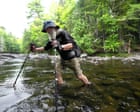
Achieving extreme physical feats at an advanced age challenges conventional models of human functional decline. When a ninety-one-year-old individual completes the Appalachian Trail, the event is typically received through the lens of emotional inspiration or motivational narrative. This perspective misses the underlying physiological mechanics, resource allocation strategies, and risk mitigation protocols that make such an outcome possible. Extreme endurance at an advanced chronological age is not merely an anomaly of willpower; it is the result of optimizing specific biological variables, minimizing systematic friction, and managing energy expenditure within strict physiological thresholds.
Evaluating this achievement requires dissecting the interaction between biological aging, mechanical efficiency, and environmental stress. Standard health metrics often treat aging as a linear descent of capacity. Exceptional longevity athletes demonstrate that the performance curve can be stabilized through rigorous mechanical discipline and precise load management. If you liked this post, you might want to look at: this related article.
The Physiological Cost Function of Extended Distance Trekking
Every physical activity imposes a biological tax. For long-distance trekking, this cost function operates across three distinct variables: structural load, metabolic expenditure, and recovery velocity.
Structural Load Management
The human skeletal and muscular systems degrade with age due to sarcopenia and decreased bone mineral density. To survive a two-thousand-mile footpath featuring hundreds of thousands of feet of elevation change, the daily mechanical load must be aggressively restricted. Traditional backpackers often carry base weights of thirty pounds or more. At advanced ages, the mechanical stress on the knee and hip joints makes this unsustainable. For another look on this story, see the latest update from Bleacher Report.
The mechanism for success relies on minimizing gear weight to absolute functional thresholds, thereby reducing the sheer force exerted per stride. When mass is reduced, the impact forces on articular cartilage drop proportionally, lowering the incidence of catastrophic micro-tears and inflammatory overuse injuries.
Metabolic Expenditure and Nutrition
As metabolic rate shifts over decades, caloric efficiency changes. Sustained physical exertion requires balancing caloric intake against severe daily deficits. Older adults experience lower rates of protein synthesis and slower digestive transit times. Consequently, fueling an extreme trek demands a constant, hyper-caloric intake strategy that avoids gastric distress while preventing lean muscle catabolism.
The metabolic constraint is less about peak power output and more about sustained, low-intensity aerobic output. Maintaining a heart rate strictly within Zone 2 prevents excessive lactate accumulation and preserves glycogen stores over twelve-hour exertion windows.
Recovery Velocity
The primary bottleneck for elderly endurance participants is not the ability to execute the movement on day one, but the rate of tissue repair by day thirty. Inflammatory markers remain elevated longer in older biological systems.
To counteract this, successful long-distance trekking at ninety-one requires a strict adherence to pacing discipline. Shortening daily mileage goals to match the biological window of cellular repair prevents cumulative systemic breakdown. The strategy replaces speed with uninterrupted consistency.
Environmental Variables and Risk Mitigation
The Appalachian Trail presents variable terrain, shifting weather patterns, and unpredictable isolation. Navigating these factors requires a formalized decision-making framework to avoid catastrophic failure.
Terrain Adaptability
Root-and-rock-strewn surfaces present acute fall risks. For older populations, a single balance failure can result in fractures that permanently terminate functional independence. Risk reduction relies on structural footwear choices, such as high-traction trail runners rather than rigid boots, which enhance proprioceptive feedback from the soles of the feet to the central nervous system. Trekking poles serve as an essential mechanical intervention, converting a bipedal gait into a stabilized quadrupedal system. This redistribution of force offloads approximately twenty percent of lower-body impact during descents.
Thermoregulation and Hydration
Age-related decline in autonomic nervous system function impairs the body's ability to vasoconstrict and vasodilate effectively, increasing vulnerability to hypothermia and heat exhaustion. Extreme endurance requires externalizing thermoregulation through precise layering fabrics and continuous fluid intake schedules, compensating for diminished natural thirst cues.
The Strategic Blueprint for Ultra-Late-Life Athletic Output
Replicating or understanding such high-consequence longevity performance demands abandoning generalized fitness advice in favor of rigorous systems analysis.
- Baseline Variance Reduction: Isolate the single point of failure in daily mechanics. If joint stress is the primary constraint, reduce load mass by fifty percent immediately, regardless of traditional equipment standards.
- Strict Cadence Enforcement: Eliminate intensity spikes. Sustained low-velocity output generates fewer systemic inflammatory responses than intermittent high-effort bursts followed by extended rest.
- Decoupling Motivation from Execution: Rely on fixed procedural checklists rather than emotional drive to manage daily milestones. Fatigue impairs cognitive decision-making; structured routines mitigate tactical errors in high-exposure environments.
Implement a daily operational audit that logs caloric intake, sleep duration, structural pain metrics, and weather conditions. Adjust tomorrow's output targets strictly based on today's recovery data, neutralizing ego-driven pacing adjustments before they manifest as physiological injury.