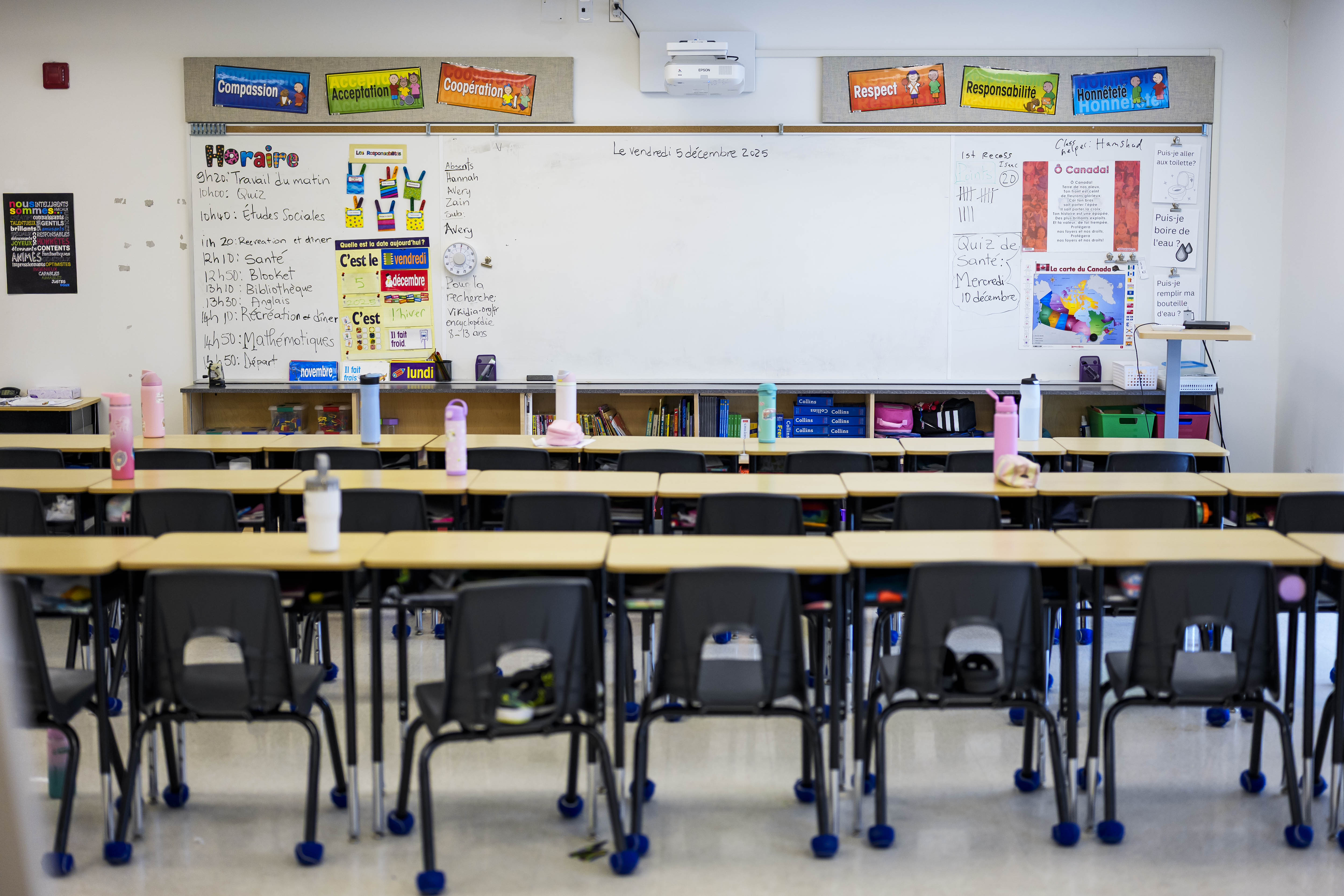
The headlines are predictable. They scream about "disparities" and "barriers" because a group of aspiring educators couldn't pass a Grade 9 math assessment. The narrative machine in Ontario has decided that the test is the problem. They claim the Ontario Mathematics Proficiency Test (MPT) is a tool of exclusion because success rates vary across racial and linguistic lines.
This isn't just a lazy take; it’s a dangerous one.
When we obsess over the demographics of the failure rate rather than the competency of the professional, we stop treating teaching as a high-stakes craft and start treating it as a jobs program. The real "disparity" isn't in the test results. The disparity is in the quality of instruction we are willing to tolerate for the next generation of students. If you can't demonstrate mastery of the very concepts you are licensed to explain, you aren't being "excluded." You are being filtered. That is exactly what a professional licensing exam is supposed to do.
The Myth of the Culturally Biased Equation
The loudest critics argue that standardized math tests are culturally biased. Let’s look at the actual content. We are talking about fractions, percentages, basic probability, and linear equations. These are not subjective literary analyses of Western canon. They are the universal building blocks of logic.
$2x + 5 = 15$
The value of $x$ remains 5 whether you are writing in Toronto, Tokyo, or Timbuktu. Math is the ultimate equalizer because it doesn’t care about your lived experience or your personal narrative. It only cares if you can solve the problem. To suggest that certain groups are inherently disadvantaged by a test of objective logic is, in itself, a patronizing and borderline offensive assumption. It suggests that "equity" can only be achieved by removing the requirement to be correct.
I’ve spent years watching institutional rot set in when "access" is prioritized over "aptitude." When you lower the floor to ensure a specific demographic outcome, you don't actually help the candidates you claim to support. You merely ensure that the credentials they eventually earn are viewed with skepticism by the public. You trade long-term professional integrity for a short-term PR win.
Competency is Not a Soft Skill
There is a bizarre trend in modern pedagogy that suggests "empathy" and "connection" can substitute for subject matter expertise. We hear that a teacher’s ability to "relate" to a student matters more than their ability to calculate a slope.
This is a false dichotomy.
A teacher who cannot confidently navigate a Grade 9 curriculum cannot diagnose why a student is struggling. They can't offer the three different ways of explaining a concept that a struggling learner needs. Instead, they hide behind a teacher’s manual, terrified that a bright student will ask a "why" question they can't answer.
In any other high-stakes profession, we would laugh this argument out of the room. Would you want a structural engineer who failed their licensing exam but had a "great vibe"? Would you want a surgeon who struggled with basic anatomy but was "very relatable"? Of course not. We demand technical excellence because the cost of failure is too high.
In education, the cost of failure is a generation of students who enter the workforce mathematically illiterate, unable to manage their finances, understand data, or compete in a global economy dominated by STEM.
The Data the Critics Ignore
The "disparity" argument relies on a narrow window of data. They point to the fact that candidates who speak English or French as a second language have lower initial pass rates.
Let’s apply some of that math they hate:
If a candidate fails the first time, they can rewrite the test. The data shows that with preparation, the gap narrows significantly. The test isn't a permanent "no." It is a "not yet." It is a signal that more study is required.
The critics aren't fighting for "fairness." They are fighting for the elimination of effort. They want the certification to be a participation trophy awarded upon completion of a degree, rather than a verification of skill.
The Institutional Failure of Faculties of Education
Where are these candidates coming from? They are graduates of Ontario’s Faculties of Education. They have already spent years in the university system.
If a student can graduate with a Bachelor of Education but cannot pass a basic math test, the scandal isn't the test. The scandal is the university that took their tuition money and handed them a degree without ensuring they possessed the foundational skills required for the job.
We are seeing a massive "pass-along" culture where institutions are too afraid of being labeled "un-inclusive" to actually fail anyone. The MPT was the only objective check and balance left in a system that has become a factory for degrees. By striking down the test—as the divisional court did before the Ontario Court of Appeal corrected course—we were essentially saying that the feelings of the applicant matter more than the education of the child.
The Technology Gap is Widening
We are living through an era where AI and automated systems are handling routine cognitive tasks. In this environment, the value of a human teacher isn't just delivering information; it's providing the deep, conceptual scaffolding that allows students to use these tools effectively.
If a teacher is intimidated by a basic algebraic word problem, how are they supposed to teach a student to prompt a large language model to solve a complex engineering task? How can they explain the statistical biases in an algorithm if they don't understand what a standard deviation is?
We are setting students up for failure by ensuring their mentors are equally ill-equipped. We are institutionalizing mediocrity in the name of social justice.
The Uncomfortable Truth About the "Teacher Shortage"
Whenever standards are raised, the "shortage" card is played. "We can't afford to lose these potential teachers," they say.
This is a hostage negotiation, not an educational policy.
Yes, we need more teachers. But we need qualified teachers. Filling a classroom with an individual who lacks foundational literacy or numeracy isn't solving a shortage; it's creating a liability. A classroom with an incompetent teacher is often worse than no teacher at all, as it fosters misconceptions that take years for future educators to un-teach.
I have seen the internal memos. I’ve sat in the rooms where administrators discuss "threshold adjustments." It’s never about the students. It’s always about liability and optics. They want a workforce that looks the part, even if it can't do the math.
Stop Blaming the Mirror
The MPT is a mirror. It is reflecting a harsh reality: our K-12 and post-secondary systems are failing to produce graduates with basic proficiency.
Smashing the mirror won't change your reflection.
If the results show a disparity, the solution is to fix the underlying educational pipeline. We should be demanding better prep courses, more rigorous math requirements for entry into Teachers' College, and higher standards throughout the undergraduate years.
Instead, the "equity" advocates want to break the mirror and tell everyone they look great.
The Price of Professionalism
Being a professional means being accountable. It means meeting a standard that the public can trust. When we erode that standard, we erode the status of the profession itself.
If you want teachers to be respected like doctors or lawyers, they must be vetted like doctors or lawyers. You don't get the prestige without the proficiency.
The MPT was a low bar. It was a floor, not a ceiling. The fact that it caused such an uproar is an indictment of the current state of teacher training.
If you can’t pass the test, don’t blame the "system." Don’t blame "bias." Don’t call it "structural racism" to ask for the correct answer to a multiplication problem.
Go back, study the material, and prove you belong at the front of the classroom. Your future students deserve nothing less than a teacher who knows what they are talking about.
Anything else isn't progress. It's a surrender.


