Ink dries quickly on official stationery.
A stamp comes down with a heavy, rhythmic thud. Denied. Rejected. Ineligible. To the bureaucrat sitting behind a polished wooden desk in Brussels, the paperwork represents a clean file, closed at the end of a long workday. Statistics on a spreadsheet.
Thirteen.
It is a small number. You can count them on your fingers and still have digits to spare. But behind that number lie thirteen human beings, thirteen sets of lungs breathing dust and smoke, thirteen minds that refused to stop memorizing grammar rules and mathematical equations while the world outside their windows crumbled. They are students from Gaza. Young adults who earned scholarships, passed rigorous entrance examinations, and secured university placements in Belgium. They packed their bags. They checked their passport expiration dates. They waited for the one crucial document that would turn an impossible dream into an airline ticket.
That ticket never arrived.
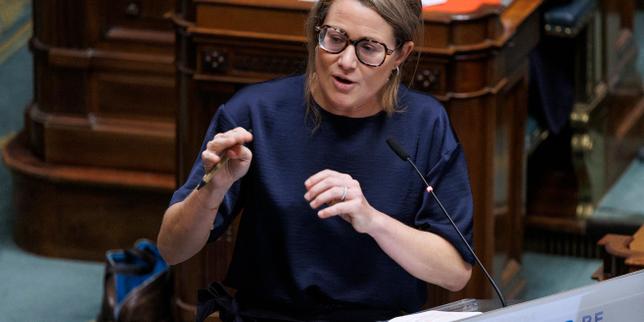
Instead, the political machinery of the Belgian government ground to a halt. Nicole de Moor, the State Secretary for Asylum and Migration, faced a storm of fierce criticism from opposition parties, human rights organizations, and university rectors alike. Her stance was clear, immovable, and administrative: Belgium’s reception network is saturated. Shelters are full. Beds are spoken for. The system cannot stretch any further without breaking entirely.
Logic, cold and numerical.
Yet, logic fails to capture the weight of a suitcase sitting untouched in a bedroom in Khan Younis or Deir al-Balah.
Consider what happens when an academic future is suspended indefinitely. You do not simply pause your life. You watch it erode. For months, these thirteen students lived in a state of suspended animation. They checked their email accounts fifty times a day. Every notification ping brought a jolt of adrenaline, followed by the quiet, crushing realization that another day had passed without a visa stamp.
The political debate in Brussels quickly devolved into familiar partisan friction. Critics pointed to a profound moral failure. How can a prosperous European nation turn its back on academic aspirants trapped in an active conflict zone? Universities offered housing solutions. Civil society groups pledged financial support. The argument was made that these students would not burden the public asylum infrastructure in the traditional sense; they were arriving on study visas, backed by institutional safety nets.
The government countered with the reality of an overstretched asylum apparatus. Years of crisis management have left municipal reception centers stretched to their absolute limits. Officials argued that making an exception for a select group risks creating a chaotic precedent, bypassing established legal channels where thousands of others wait in line.
Both sides spoke true languages. Both sides remained entirely parallel.
And that is where the tragedy of modern policy lives. In the chasm between administrative necessity and human desperation.
I remember what it feels like to wait for a border to open. Not in a war zone, but in the quiet panic of bureaucratic uncertainty, where your entire existence is held hostage by a rubber stamp. Your plans, your ambitions, your very identity are reduced to a barcode on a manila folder. You become acutely aware of how fragile safety is. You realize that geography is destiny. Where you happen to be born determines whether a scholarship is a golden ticket or a cruel joke.
The students from Gaza did not ask for charity. They asked for permission to study. They wanted lecture halls, libraries, and late-night debates over lukewarm coffee. They wanted the ordinary stress of midterms instead of the extraordinary terror of shrapnel.
When nations close their doors during a crisis, they often believe they are building a wall to protect their resources. But walls cast long shadows. They block out more than just the outside world; they obscure our shared humanity.
The controversy in Belgium eventually faded from the daily headlines, buried beneath the relentless avalanche of new global crises. News cycles are notoriously brief. Attention spans are fleeting.
In a quiet room somewhere in Gaza, a young woman closes a laptop screen. The battery indicator blinks red. She places her passport back into the drawer, right next to the acceptance letter that arrived too late to matter.
Outside, the evening falls over the Mediterranean, dark and uninterrupted.