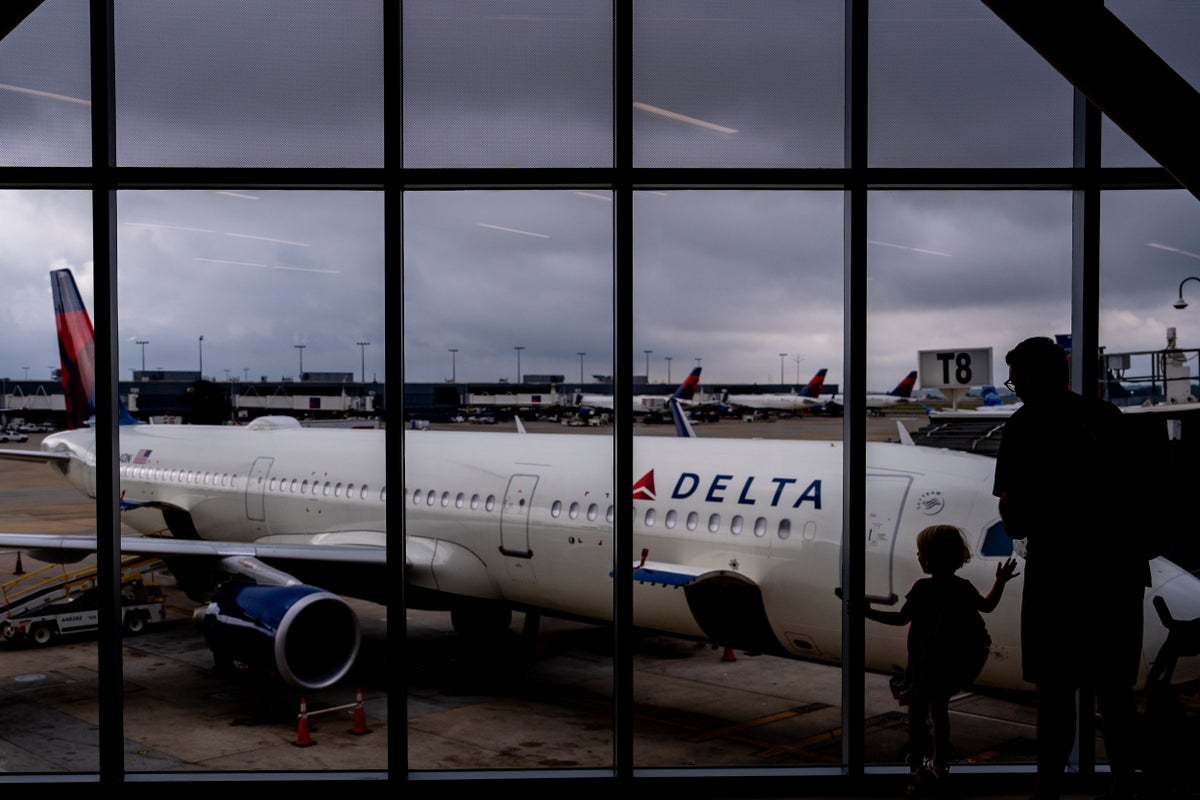
The traditional travel listicle operates on a flawed premise: it treats geographic destinations as fungible commodities, assuming a uniform distribution of traveler intent, capital expenditure, and infrastructure capacity. This approach fails to account for the macroeconomic structural changes shaping the travel sector. Total domestic travel spending is projected to reach $1.20 trillion, driven by a K-shaped economic reality where 55% of the traveling public commands household incomes above $100,000.
Concurrently, external shocks—specifically the logistical footprint of the 11 US host cities for the FIFA World Cup and a 10% year-on-year surge in peak-season domestic itineraries—have forced a reevaluation of how travel capital is deployed. Maximizing the return on experience requires a strict quantitative breakdown of destination capacity, supply-side pricing mechanics, and logistical friction.
The Core Variables of the Destination Yield Equation
Evaluating the viability of a primary destination requires balancing experiential value against economic and physical friction. This trade-off can be understood through three distinct metrics:
- The Friction Index: The combined logistical overhead encompassing airport terminal congestion, local transit bottlenecks, and accommodation capacity constraints. High-friction environments require greater defensive planning and early booking capital.
- The Elasticity of Premium Upgrades: The willingness of consumers to pay a premium for luxury tiering (e.g., premium hotel properties, curated food and beverage programs) to bypass local friction.
- The Crowding Coefficient: The volume of transient visitors relative to local infrastructure capacity, currently exacerbated by compressed sports-tourism timelines and concentrated seasonal travel.
Tier 1: Major Metropolitan Micro-Economies under Macro Stress
New York City and Seattle: The High-Yield Urban Corridors
Urban centers are experiencing divergent supply-and-demand dynamics due to shifting domestic leisure demand. Seattle has emerged as the top domestic destination by volume, driven by cooler northern climates and a lower baseline Friction Index compared to the Northeast corridor. However, this volume has compressed premium hotel inventory, driving up average daily rates (ADR).
Conversely, New York City functions as a highly inelastic market. Despite elevated baseline costs, consumer spend on dining and upscale accommodations remains resilient, though the infrastructure operates at near-peak Friction Index levels throughout the summer months.
- Strategic Play: For urban corridors, yield optimization requires a counter-cyclical booking strategy. Booking windows must extend past 60 days to avoid the compounding spot-price inflation driven by corporate-leisure corporate demand overlap.
Los Angeles and Miami: The World Cup Demand Shock
The major 2026 travel bottleneck centers on the 11 US cities hosting FIFA World Cup matches. Los Angeles and Miami represent the highest concentration of international inbound capital, which is projected to rebound to $178 billion nationally. This creates an immediate inventory squeeze.
[Inbound International & Domestic Sports Capital]
                       │
                       ▼
         [Hyper-Compression of Inventory]
                       │
                       ▼
 [Alternative Regional Hubs / Capacity Overflow]
This influx of sports-centric travelers creates a crowding coefficient that alters the traditional pricing models of adjacent hospitality networks.
- Strategic Play: Travel capital deployed to these metros must account for a 30% to 45% premium on ancillary services. Non-sports travelers should divert to secondary regional infrastructure to avoid paying the logistics tax imposed by global events.
Tier 2: The Entertainment and Theme Park Oligopolies
Orlando and Central Florida: The Inventory Expansion Trap
Orlando represents a unique case study in supply-side expansion. The introduction of major new theme park infrastructure, alongside private crystalline lagoon concepts like Evermore Bay, has expanded total room keys and attractions. Under normal market conditions, this expansion would suppress ADR through pure volume. However, sustained demand from Millennial and Gen Z demographics—who prioritize experiential spending despite broader economic pressures—has neutralized this supply increase.
                  [Supply Expansion]
            (New Theme Parks & Room Keys)
                         │
                         ▼
           [Counter-Balanced By Demand]
     (Gen Z / Millennial Experiential Capital)
                         │
                         ▼
            [Price Equilibrium Sustained]
The friction here is no longer financial, but logistical: terminal capacity at Orlando International Airport (MCO) and local transit choke points generate a high Friction Index during multi-day family itineraries.
- Strategic Play: Optimize the trip duration. Shorter, high-density, 3-to-4-day regional trips yield a higher experiential return per dollar than traditional 7-day iterations, which suffer from diminishing marginal utility due to prolonged exposure to high-crowding environments.
Las Vegas: The Monetization of Digital Detox
Las Vegas continues to operate as a high-volume leisure ecosystem, but consumer behavior data reveals a structural shift. Approximately 47% of summer travelers are executing a "Joy of Logging Off" strategy, intentionally seeking presence over digital performance.
While Las Vegas historically optimized for continuous digital engagement, gaming, and nightlife, the market has pivoted toward premium health, wellness, and culinary experiences. High-income cohorts are trading down on volume (fewer trips) but trading up on the quality of isolated, premium experiences within single-site integrated resorts.
Tier 3: Geographic Isolation and Natural Capital
Yellowstone and Yosemite: The Shoulder-Season Arbitrage
The crown jewels of the US National Park system face a severe structural bottleneck: physical capacity constraints paired with strict environmental conservation mandates. During peak summer windows, parks like Yosemite and Zion hit critical thresholds on their Crowding Coefficients, resulting in vehicular rationing and mandatory reservation lotteries.
The mechanism driving this friction is simple: fixed natural infrastructure cannot scale to meet a 10% macro increase in domestic itinerary volume.
       [10% Macro Increase in Itinerary Volume]
                         │
                         ▼
        [Fixed Natural Infrastructure Limits]
         (Reservation Lotteries / Rationing)
                         │
                         ▼
         [Severe Peak-Season Friction Index]
- Strategic Play: Execute shoulder-season arbitrage. Shifting the travel window to the spring snowmelt period or early autumn drops the Friction Index precipitously while maximizing the aesthetic asset value (e.g., peak waterfall volumes in Yosemite).
The Blue Ridge Mountains and Montana: Luxury Dispersion
As primary national parks reach capacity constraints, capital is flowing into secondary natural markets that offer decentralized luxury. The expansion of elevated outdoor accommodations in regions like Western North Carolina and West Yellowstone represents a clear trend toward geographic dispersion.
These destinations capture the traveler seeking outdoor assets but eliminate the institutional friction of federal park boundaries by integrating private hospitality infrastructure directly into the landscape.
Tier 4: Cultural Preservation and Micro-Regional Markets
Colonial Williamsburg and Salt Lake City: High-Value Alternatives
Secondary urban and historical hubs offer a critical hedge against the hyper-inflation seen in Tier 1 cities. Salt Lake City benefits from structural investments in regional transit and airport efficiency, yielding one of the lowest Friction Indexes among western mountain hubs.
Colonial Williamsburg leverages educational and cultural preservation assets that appeal directly to Gen X travelers prioritizing concentrated family experiences over fragmented leisure.
- Strategic Play: These markets function as value-retention destinations. They provide stable baseline costs and minimal crowding coefficients, making them ideal for capital allocation when the primary goal is predictable execution and low logistical variance.
The Strategic Capital Allocation Playbook
Optimizing travel assets requires moving away from qualitative destination choice and adopting a strict risk-mitigation framework.
- Establish a Logistics-to-Cost Ceiling: Before selecting a destination, determine if the target location falls within a World Cup footprint or an infrastructure bottleneck. If the baseline Friction Index is high, allocate 15% of the total budget exclusively to defensive friction mitigation (e.g., private airport transfers, premium lounge access, non-traditional expedited transit).
- Arbitrage the K-Shaped Economy: Budget-conscious segments should leverage trade-down strategies on lodging while preserving capital for marquee experiences. High-income segments must counter high prices not by cutting trip length, but by securing early bookings to lock in pricing before spot-market inflation takes effect.
- Diversify via Regional Substitution: Replace high-crowding natural assets with private, infrastructure-adjacent wilderness hubs. Substitute Tier 1 coastal metros with secondary cultural centers to capture identical experiential yield without paying the systemic congestion premium.
The ultimate differentiator in travel execution is the calculated minimization of logistical friction. Wealth is no longer demonstrated merely by destination selection, but by the structural efficiency with which the journey is executed.