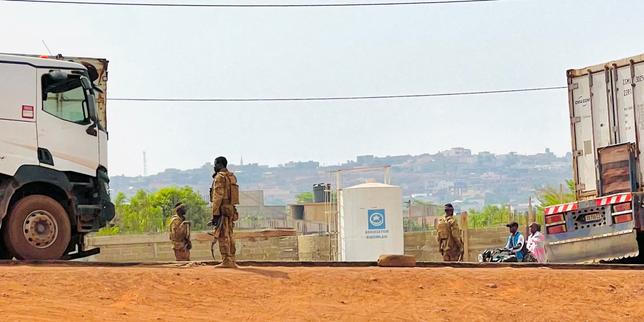
Moscow claims they want stability in Bamako "as soon as possible." Western media parrots this line with a skeptical eyebrow, framing it as a failed attempt at peacekeeping. They are both wrong. Stability is the last thing the Kremlin wants for Mali, and it is certainly the last thing the current military junta can afford.
The mainstream narrative treats the instability in the Sahel as a problem to be solved. If you view the world through the lens of traditional diplomacy, you see a "confused situation" where Wagner—or whatever we are calling the Africa Corps this week—is struggling to contain insurgencies. That perspective assumes that the goal of Russian intervention is a peaceful, sovereign Mali. It isn't. The goal is a permanent, manageable state of friction.
The High Cost of Peace
Peace is expensive. Peace requires civil institutions, transparent mineral rights, and a professional military that doesn't rely on mercenaries for its survival. For the current leadership in Bamako, peace is actually a threat. The moment the threat of Tuareg rebels or jihadist incursions vanishes, the justification for military rule evaporates.
Russia understands this better than any Western NGO. By positioning themselves as the "security partner of last resort," they create a cycle of dependency. If the situation actually stabilized, Mali wouldn't need a few thousand Russian contractors roaming around the gold mines. They would need accountants, judges, and trade agreements.
The "confused situation" on the ground isn't a sign of Russian failure. It is the business model.
Dismantling the Mercenary Competence Fallacy
Critics love to point at the recent losses suffered by Russian forces in Tinzaouaten as proof of their incompetence. They claim Russia is "losing" Mali. This is a fundamental misunderstanding of how irregular warfare functions in the 21st century.
Traditional armies care about holding territory. Mercenary-backed regimes care about holding assets. As long as the junta controls the capital and the extraction sites remain operational under Russian oversight, a tactical defeat in the desert is just a line item on a balance sheet.
I’ve watched foreign interventions for decades. The Americans tried "nation-building" and failed because it has a defined end goal. The Russians are doing "regime-tethering." There is no end goal because there is no end to the contract.
- Fact Check: Stability usually correlates with high foreign direct investment (FDI).
- The Reality: In Mali, "stability" has been replaced by "survivalism," where the state’s only function is to keep the ruling elite from a coup.
The Sovereign Illusion
The loudest argument from the pro-junta camp is "sovereignty." They kicked out the French (Operation Barkhane) to reclaim their independence. But you haven't reclaimed independence if you’ve simply swapped a colonial landlord for a private security firm.
True sovereignty requires a monopoly on the use of force. Mali has outsourced that monopoly. When you outsource your core security to a foreign entity that answers to the Kremlin, you aren't a sovereign state; you are a subsidiary.
The "People Also Ask" crowd wants to know: Is Russia replacing France in Africa? The answer is no. France, for all its colonial baggage, was trying to maintain a sphere of influence through a mix of aid, culture, and military presence. Russia is running a protection racket. There is no "Russian Aid" building hospitals in rural Mali. There are no Russian literacy programs. There are only guns and gold.
The Logic of Managed Chaos
Let’s run a thought experiment. Imagine a scenario where Mali actually achieves total internal peace tomorrow. The rebels lay down their arms. The jihadists vanish.
What happens to the junta? They would have to hold the elections they keep postponing. They would have to justify why the treasury is being drained to pay foreign fighters instead of building infrastructure. They would lose their leverage.
The instability is the glue holding the current power structure together. It allows for the suspension of the constitution. It allows for the silencing of dissent under the guise of "national security."
Russia's rhetoric about wanting stability is a diplomatic smokescreen. They benefit from a Mali that is just stable enough to mine, but just chaotic enough to need them. This is the "Goldilocks Zone" of failed states.
Why the West Keeps Getting the Analysis Wrong
Western analysts are obsessed with "winning hearts and minds." They look at the civilian casualties caused by Wagner operations and assume it will turn the population against the Russians.
They forget that in a survivalist state, the "hearts and minds" of the rural population don't matter. Only the hearts and minds of the guys with the tanks in Bamako matter. As long as the Russians keep the junta in power, the junta will keep the Russians in the mines.
The mistake is thinking that Russia is trying to "fix" Mali. You don't fix a gold mine; you hollow it out.
The Real Risks of the Russian Model
There is a downside to this contrarian view, and I’ll be the first to admit it. Managed chaos is a high-stakes gamble. If the friction becomes too great—if the insurgents actually threaten the capital—the whole house of cards collapses.
- Overextension: Russia is fighting a massive war in Ukraine. Their ability to rotate seasoned troops into the Sahel is diminishing.
- Fragmented Command: Without a central figure like Prigozhin, the "Africa Corps" is more bureaucratic and less nimble.
- Local Backlash: While the elite are protected, the grassroots resentment is building. You can only blame the French for so long before people look at the guys currently holding the rifles.
The End of the "Transition"
Stop waiting for the transition to civilian rule. It’s not coming. Every time a deadline approaches, a new "security crisis" will magically appear to justify another delay. The "confused situation" that the media laments is actually the most predictable thing in the world.
We are witnessing the birth of a new type of statecraft. It’s not diplomacy, and it’s not traditional war. It’s a permanent state of emergency that serves as a profit center for the Kremlin and a life insurance policy for the junta.
If you want to understand Mali, stop listening to what Moscow says and start watching what they do. They aren't building a country. They are guarding a vault.
Go tell the people in the "stability" camp that they are chasing a ghost. The chaos isn't an obstacle to the mission. The chaos is the mission.