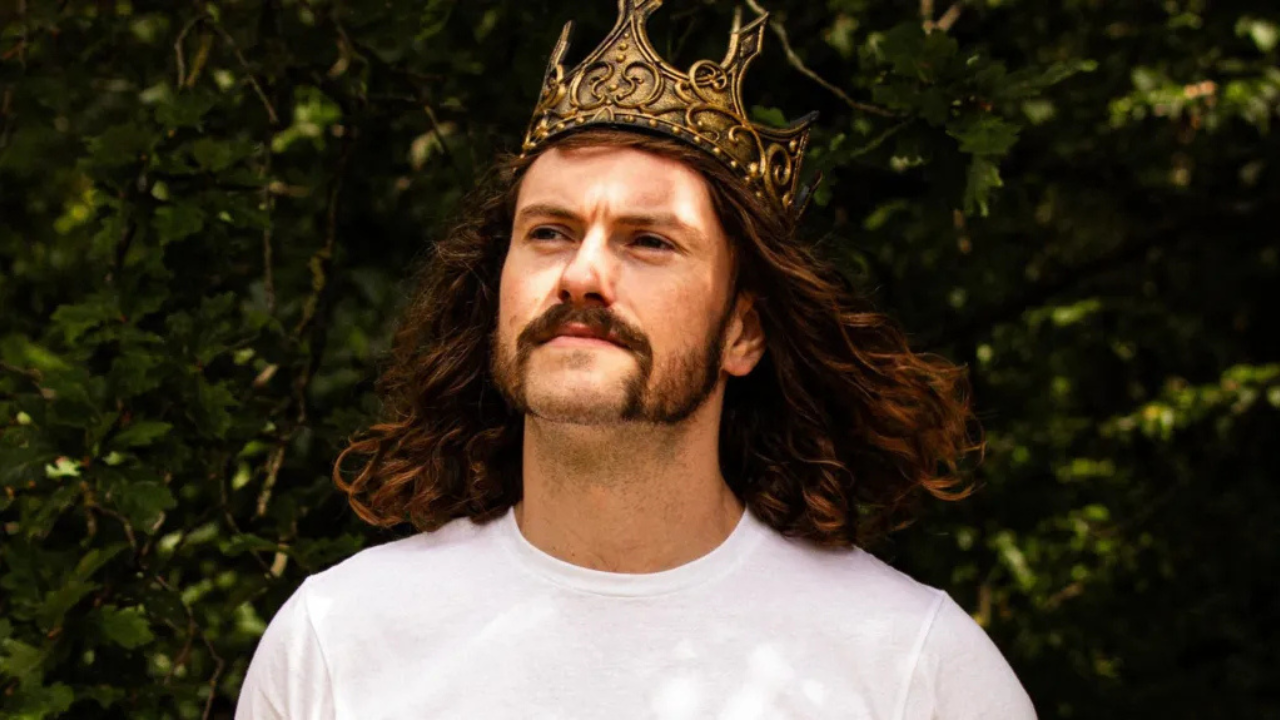
The prognosis was supposed to be a final period at the end of a short sentence. Glioblastoma does not negotiate, and it rarely grants extensions. Yet, somewhere on a rain-slicked road outside Dublin, a man carrying a malignant tumor inside his skull is logging miles that defy oncology textbooks.
Metastatic or terminal diagnoses usually shrink human ambition to the immediate horizon of hospital wards and palliative care. Kevin Murphy chose a different trajectory. Labeled "The King of Chemo" by medical staff who watched him endure endless rounds of cytotoxic drugs with gallows humor and stubborn resilience, Murphy turned endurance sports into his primary weapon of defiance. Now, he is setting his sights on a full marathon, treating endurance running not as a lifestyle hobby, but as a deliberate act of neurological rebellion against a death sentence. Building on this topic, you can find more in: The Hours We Do Not Measure Inside the Fracture Zone.
Medicine measures life in progression-free survival months. Patients measure it in milestones they hope to witness. Murphy measures his in splits, heart rate zones, and kilometers conquered before the fatigue overtakes him.
The Anatomy of a Relentless Protocol
Glioblastoma is the most aggressive form of primary brain cancer. It infiltrates healthy brain tissue like tentacled roots, making complete surgical resection nearly impossible. Standard care involves surgical debulking followed by concurrent radiation and temozolomide chemotherapy. The median survival hovers around fifteen months. Most patients experience cognitive decline, debilitating fatigue, and progressive neurological deficits long before the end arrives. Observers at Psychology Today have shared their thoughts on this trend.
Murphy’s body has absorbed chemical regimens that would sideline a professional athlete. Temozolomide is notorious for causing severe nausea, bone marrow suppression, and profound exhaustion. To ingest these toxic compounds and simultaneously train for long-distance running requires a physiological and psychological tolerance that borders on the anomalous.
Oncologists often advise rest during active treatment. Physical exertion is traditionally viewed through a risk-benefit lens, where the threat of falls, immune suppression, and cardiovascular strain outweighs potential gains. Murphy bypassed the traditional playbook. Exercise stimulates the release of myokines, reduces systemic inflammation, and upregulates neurotrophic factors like BDNF, which supports brain health. While running cannot reverse the mutation of glial cells, it constructs a fortress of cardiovascular resilience around a compromised central nervous system.
Rewriting the Clinical Narrative
The label "The King of Chemo" was born out of institutional exhaustion. Hospital oncology wings are places of quiet desperation, where patients endure long hours hooked to IV poles under fluorescent lights. Murphy arrived with a radio, a sharp tongue, and an refusal to wear the standard-issue patient passivity. He treated the infusion chairs like pit stops.
This gallows humor is not mere optimism. Psychoneuroimmunology confirms that high stress accelerates tumor progression through cortisol-mediated immune suppression. By maintaining agency and channeling adrenaline into physical training, patients alter their endocrine response to chronic illness. Murphy did not accept the sick role. He weaponized his outpatient schedule, timing his heavy runs for the days when his neutrophil counts rebounded just enough to let him push the pace.
Journalists often lean heavily on war metaphors when describing cancer patients—the brave fighter, the heroic battle. Those tropes miss the mechanical reality of what Murphy is doing. He is not fighting a war against a ghost; he is managing a physical decay through sheer stubborn mileage. Every training run is an empirical test of what is left in the reservoir.
The Physiology of the Long Run Under Duress
Running a marathon requires an immense consumption of glycogen, efficient oxygen utilization, and severe psychological fortitude. When the brain is burdened by a space-occupying lesion, the central nervous system governor changes its parameters. Fatigue sets in earlier. Proprioception can wobble. Balance becomes a variable equation.
For Murphy, managing a run means monitoring variables most runners never consider. A sudden spike in intracranial pressure can trigger a seizure. A drop in blood sodium can destabilize brain chemistry rapidly. Yet his neurological scans show stability that confounds his medical team. The correlation between his intensive aerobic conditioning and his tumor stabilization has forced his medical team to reconsider how physical stress affects cellular turnover in malignant tissue.
Endurance training increases cerebral blood flow. It promotes angiogenesis, the formation of new blood vessels, which in a healthy brain improves cognitive function. In a brain fighting glioblastoma, increased perfusion is a double-edged sword that could theoretically nourish the tumor. But Murphy's doctors have observed that the metabolic demand of his skeletal muscles during heavy training strips resources from rogue cellular growth, while the overall anti-inflammatory state induced by chronic aerobic exercise suppresses the microenvironment tumors need to thrive.
Beyond Inspiration Porn
Media coverage of terminal illness often defaults to inspiration porn, framing the sick individual as a magical conduit of wisdom for the able-bodied. That framing is patronizing and inaccurate. Murphy is not running a marathon to teach anyone a lesson about gratitude or to inspire office workers to hit the gym on a Tuesday.
He is running because the alternative is sitting in a room waiting for a statistic to fulfill its quota.
The marathon finish line will not cure his brain cancer. The tumor remains. The genetic mutations in his glial cells are relentless. Eventually, the math of glioblastoma catches up to every patient who fights it. Murphy knows this better than anyone who reads about him over morning coffee. He watches the MRI scans. He tracks the subtle shifts in his short-term memory. He understands the expiration date stamped onto his medical chart.
That realization strips away all hesitation. When time is compressed, the trivial details of daily friction evaporate. What remains is the asphalt, the stopwatch, and the rhythmic impact of running shoes against the ground, proving with every single stride that life is measured by motion, not by survival metrics.