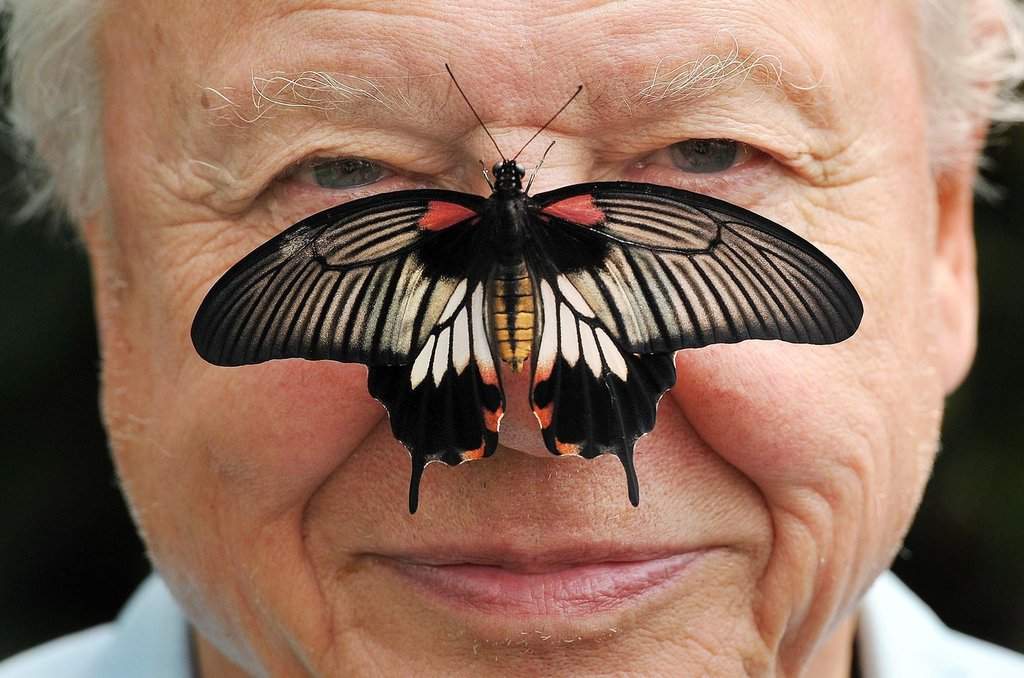
The room is dim, illuminated only by the soft, blue glow of a television screen. A child sits cross-legged on the carpet, chin resting in small palms. On the screen, a silver-haired man in a khaki shirt crouches in a mountain forest. He isn't shouting. He isn't performing. He is whispering, his voice a rhythmic blend of awe and conspiracy, as if he is letting the child in on a secret that the rest of the busy, loud world has forgotten.
That child grew up. The television changed from a heavy box to a glass sliver on a wall. The world warmed, the forests thinned, and the silence of the wilderness grew more profound. Yet, the voice remained.
Today, David Attenborough reaches a milestone that feels less like a birthday and more like a victory for the planet itself. He is 100.
A century of living is an achievement for any human being, but for Attenborough, these hundred years represent the arc of our collective relationship with the only home we have. He did not start as a prophet of doom. He started as a seeker of wonder. In the early days of black-and-white broadcasting, he was the bridge between the soot-stained cities of the post-war era and the vibrant, pulsing lungs of the tropics. He brought the "other" into our living rooms. He made the strange feel familiar and the familiar feel miraculous.
The Blue Marble in the Living Room
Consider the sheer scale of the change he has witnessed. When Attenborough began his career at the BBC, the concept of "nature television" barely existed. People viewed the wild as something to be conquered, extracted, or ignored. There was no global consciousness of ecology. The term "biodiversity" hadn't even been coined yet.
He didn't lecture us from a podium. Instead, he took us to the Galápagos. He climbed into the canopy of the Amazon. He sat in the mud with mountain gorillas, not as a master, but as a guest. This was the shift. By placing himself—a soft-spoken, curious Englishman—beside these creatures, he removed the barrier of "us versus them."
The stakes were invisible then. We thought the oceans were bottomless and the forests were infinite. Attenborough’s early work was a celebration of that perceived infinity. We watched Life on Earth and felt a surge of pride in our planet’s complexity. We saw the slow-motion dance of a pitcher plant and the brutal, necessary hunt of a cheetah. It was beautiful. It was entertainment.
But as the decades ticked by, the tone began to shift. The seeker of wonder became a witness to loss.
The Turning Tide
The transformation of David Attenborough is perhaps the most important narrative of the last century. It mirrors our own late-stage realization that we are breaking the things we love. There was a period where critics argued he was too passive, that his films were too "pretty" and ignored the encroaching destruction. They wanted him to scream.
He chose a different path. He understood that you cannot ask people to save what they do not first love.
He spent eighty years building that love. He cultivated a global intimacy with the natural world so deep that when he finally turned to the camera in his later years—his voice slightly thinner, his eyes more urgent—and told us that the party was over, we actually listened.
The turning point was visceral. It wasn't a spreadsheet of carbon emissions that changed the global conversation; it was the sight of a mother albatross feeding plastic to her chick in Blue Planet II. It was the sound of a walrus falling from a cliff because the sea ice had vanished. These weren't just facts. They were tragedies. Attenborough’s genius has always been his ability to translate scientific data into the language of the heart.
The Burden of a Century
Imagine standing at the summit of a hundred years and looking back at the trail. Attenborough has seen more of this planet than perhaps any other human in history. He has seen places that no longer exist. He has filmed species that have since blinked out of inhabitancy.
There is a weight to that kind of memory.
To reach 100 is to be a living library. He carries the colors of vanished coral reefs and the songs of birds that no longer have a forest to fly in. Yet, when you see him speak today, there is no bitterness. There is a fierce, quiet intensity. He has transitioned from a broadcaster to a statesman for the wild, appearing at climate summits to look world leaders in the eye. He isn't there to talk about quarterly earnings or geopolitical strategy. He is there to talk about the "wonderful" and why we are fools to let it slip through our fingers.
His longevity is a metaphor for the resilience he preaches. He suggests that if we stop and listen—truly listen—there is still time to mend the safety net of the natural world. He speaks of "rewilding," not just as a conservation strategy, but as a psychological necessity. We need the wild to be whole so that we can be whole.
Beyond the Screen
The secret to his enduring grip on our imagination isn't just the high-definition cameras or the sweeping orchestral scores. It’s the authenticity of his wonder.
Watch his face when he sees a bird of paradise perform a mating dance. He isn't acting. That is the genuine, unvarnished joy of a man who has never lost his childhood curiosity. In a world that is increasingly cynical, curated, and digital, that sincerity acts as a vacuum. It pulls us in.
He reminds us that we are biological creatures. We are not separate from the cycle of the seasons or the health of the soil. When he describes the interconnectedness of a mangrove forest, he is describing our own life support system. He makes the abstract concrete. The "environment" isn't a political talking point; it is the air in our lungs and the water in our glass.
His voice has become the soundtrack of our conscience. It is the voice we hear when we look at a sunset or a strip-mined mountainside. It is a voice that commands respect because it has never sought power, only understanding.
The Silent Handover
There is a certain irony in celebrating a centenary for a man who has spent his life highlighting the brevity of individual lives in the face of evolutionary time. He knows he is a brief spark.
But the fire he lit is what matters now.
The child sitting on the carpet today isn't watching the same world Attenborough saw in the 1950s. That child is watching a world in crisis. But they are also watching with a sense of connection that wouldn't exist without him. They know the names of the creatures in the deep. They understand that a bee in a garden is linked to the food on their plate.
Attenborough has spent 100 years narrating the story of life. He has given a voice to the voiceless—the insects, the mosses, the great whales, and the microscopic plankton. He has shown us that the world is not a stage for human drama, but a vast, intricate web where every thread matters.
As the candles are lit and the tributes pour in from every corner of the globe, the most fitting honor isn't a plaque or a statue. It’s a moment of silence.
Go outside. Step away from the screen. Walk until the pavement ends and the dirt begins. Listen to the wind in the leaves or the scuttle of something small in the undergrowth. Realize that you are part of it. Realize that it is fragile. Realize that it is worth everything we have to save it.
The old man in the khaki shirt has done his part. He has shown us the map. He has told us the story. Now, the ending is up to us.
The camera pans back, rising high above the trees, higher still until the green blurs into the blue of the oceans and the white of the clouds. The voice fades out, leaving us standing on a small, lonely, exquisite planet, blinking in the light of a new century, finally realizing that we were never just watching the show—we were always the lead actors in the fight for its survival.