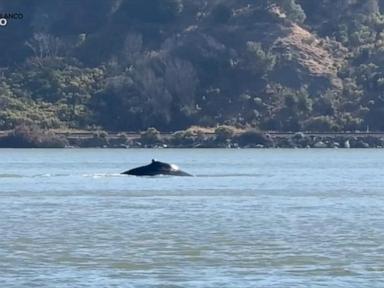
Marine mammal disorientations, particularly those involving baleen whales entering restricted estuaries or shallow coastal river systems in Northern California, represent a complex intersection of acoustic ecology, physiological navigation limits, and anthropogenic oceanographic disruption. When an individual cetacean deviates from its migratory corridor—such as the southbound or northbound movements of gray whales (Eschrichtius robustus) along the Pacific coast—the event is frequently sensationalized as an isolated behavioral anomaly. A structural examination of these occurrences reveals a predictable cascade of sensory failures, environmental variables, and hydrodynamic constraints.
The Navigational Architecture of Baleen Whales
Cetacean navigation relies on a multi-layered sensory apparatus that operates across varying spatial scales. Unlike odontocetes, which utilize high-frequency echolocation for fine-scale spatial mapping and prey capture, mysticetes depend primarily on a combination of low-frequency acoustic communication, geomagnetic sensitivity, bathymetric contour tracking, and celestial cues.
The primary vector of long-distance orientation is bathymetric memory and topography. Continental shelf edges, submarine canyons, and thermal fronts act as underwater highways. Whales maintain trajectories relative to these physical features over thousands of kilometers. When an individual enters a shallow, complex coastal shelf environment, the reliability of these traditional cues degrades rapidly.
The sensory inputs governing this architecture can be classified into three operational tiers:
- Macroscopic Orientation: Magnetite-mediated magneto-reception aligning with the Earth's geomagnetic field lines, coupled with seasonal thermoregulatory and reproductive imperatives.
- Mesoscopic Orientation: Low-frequency acoustic reception utilizing ambient ocean noise, seismic profiling, and vocalizations to map continental shelf boundaries and coastal topography.
- Microscopic Orientation: Visual detection of surface contours, localized kelp canopy boundaries, and immediate depth changes relative to the animal's displacement velocity.
Failure Modes in Coastal Estuaries
When a whale diverges from the deep-water pelagic corridor into restricted coastal environments like Humboldt Bay, the Sacramento-San Joaquin River Delta, or smaller river mouths, it encounters a fundamentally different hydrodynamic and acoustic regime. This transition exposes specific vulnerabilities in the animal's orientation system.
The acoustic profile of shallow estuaries introduces severe reverberation. Low-frequency vocalizations emitted by baleen whales bounce off shallow bathymetric floors and vertical shorelines, distorting the returning acoustic signature. This phenomenon, known as acoustic entrapment or multi-path interference, masks the ambient ocean signatures required for directional tracking. The animal effectively loses its acoustic horizon.
Furthermore, coastal waters in Northern California are subject to intense upwelling, significant tidal fluctuations, and complex freshwater-saltwater interfaces. These physical gradients create localized thermal and salinity anomalies that can disrupt geomagnetic and chemical sensing mechanisms. The physiological cost of navigating these confined spaces escalates non-linearly. As the animal expends energy attempting to locate deep water against outgoing tides and narrow channels, metabolic depletion sets in, impairing cognitive function and compounding directional errors.
Anthropogenic Interferences and Acoustic Masking
Natural navigational errors are frequently exacerbated by human activity within the marine corridor. Commercial shipping traffic, seismic surveys, and coastal infrastructure generate pervasive low-frequency noise that overlaps directly with the communication frequencies of mysticetes.
Acoustic masking occurs when anthropogenic sound sources elevate the ambient noise floor, reducing the active space of whale vocalizations and obliterating the subtle acoustic cues generated by distant surf zones and shelf breaks. An animal attempting to process directional sound in a high-noise environment experiences sensory overload or sensory deprivation, depending on its proximity to the source.
The interaction between anthropogenic noise and shallow-water topography creates a functional trap. If low-frequency noise reverberates off a shallow coastline, it can project an acoustic shadow or a false directional beacon, inadvertently luring a foraging or migrating animal toward restricted waters where escape paths narrow.
Ecological and Physiological Consequences
The entry of a large cetacean into a shallow riverine or estuarine environment initiates a rapid physiological decline. Prolonged exposure to hyposmotic freshwater environments causes severe stress to the animal's skin, leading to cellular damage, electrolyte imbalances, and secondary infections. The absence of adequate buoyant support in shallow water increases skeletal and muscular stress, particularly along the pectoral girdles and thoracic cavity.
Rescue or intervention operations deployed during these events must contend with the inverse relationship between human intervention speed and animal stress levels. Passive monitoring paired with targeted acoustic or physical deterrence—such as boat-based noise projection or tidal-gate manipulation—represents the primary operational playbook for agencies tasked with encouraging egress. However, the success rate of these interventions is constrained by the animal's underlying physiological state and the degree of neurological or sensory disorientation that precipitated the original deviation.
Strategic management of these occurrences requires shifting from reactive rescue protocols to predictive spatial modeling. By mapping the confluence of high-intensity commercial shipping lanes, bathymetric funnels, and seasonal whale migration peaks, maritime authorities can identify high-risk zones where real-time acoustic monitoring can provide early warnings of navigational distress before animals become entrapped in restricted systems.