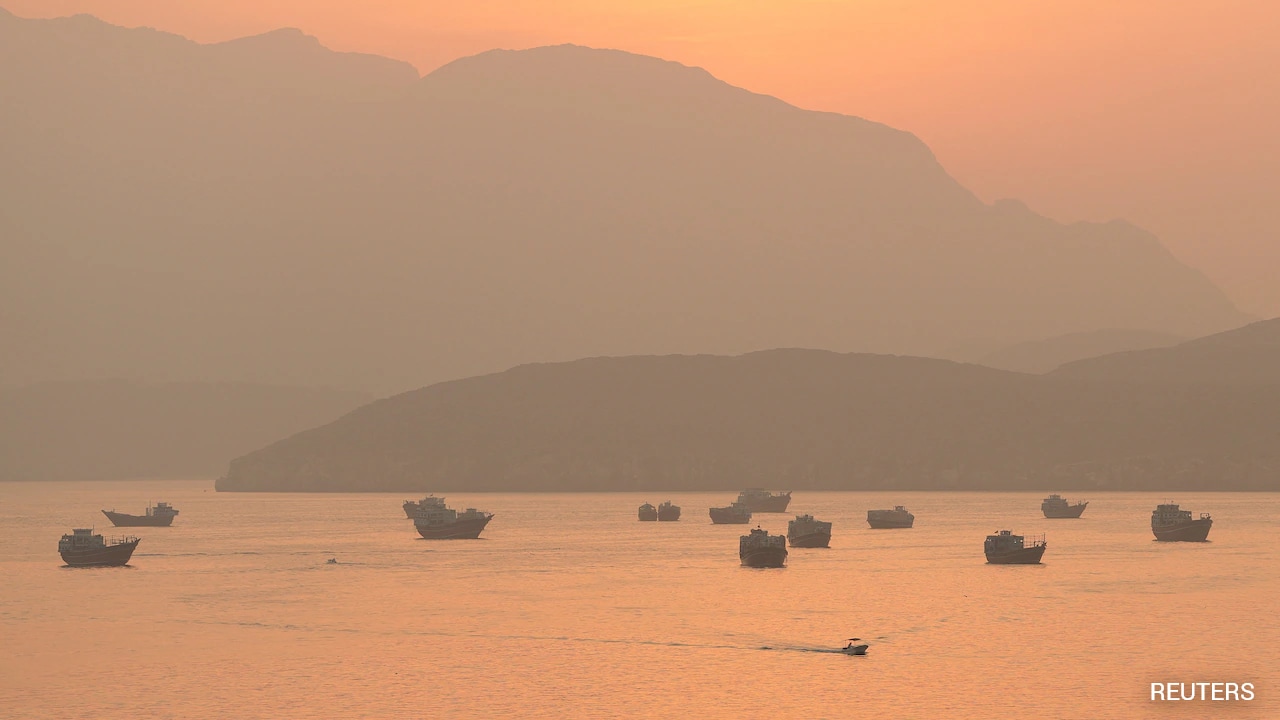
A single kinetic strike on a vessel operated by a state-owned energy enterprise in the Strait of Hormuz alters the risk pricing of roughly one-fifth of global petroleum liquids consumption within minutes. When a tanker linked to the United Arab Emirates state oil apparatus suffers an attack resulting in eleven injured crew members and one missing mariner, the immediate human toll is only the first-order event. The second-order effect is an instantaneous repricing of maritime insurance, freight day-rates, and sovereign energy supply chains across the Persian Gulf.
Standard reporting treats a vessel strike as an isolated security incident. Operational analysis treats it as a stress test of global energy logistics, naval deterrence, and maritime insurance underwriting. Understanding the true weight of this event requires separating verified operational facts from market assumptions, mapping the transmission mechanisms of maritime risk, and identifying the exact structural vulnerabilities that turn a localized attack into a global supply chain bottleneck. Discover more on a related topic: this related article.
The Anatomy of a Chokepoint Strike
At its narrowest point, the Strait of Hormuz spans 21 nautical miles, with shipping lanes for inbound and outbound traffic measuring just two miles wide in each direction, separated by a two-mile buffer zone. Any kinetic event inside this corridor exploits a geographic bottleneck where evasion is physically constrained by draft limits, traffic separation schemes, and shallow coastal waters.
In the reference incident involving a vessel tied to the UAE state oil sector, the known operational parameters establish three immediate realities: Additional reporting by The Motley Fool delves into similar perspectives on the subject.
- Direct Human and Crew Impact: Eleven crew members sustained injuries requiring medical evacuation or onboard trauma response, while one crew member remains unaccounted for. In commercial maritime operations, crew casualties immediately trigger search-and-rescue protocols that halt transit speeds, divert nearby commercial and naval assets, and freeze port clearance procedures for the affected hull.
- Asset Vulnerability: State-owned oil firms—such as the Abu Dhabi National Oil Company (ADNOC) and its maritime logistics arm, ADNOC Logistics & Services—operate specialized fleets ranging from Very Large Crude Carriers (VLCCs) to refined product tankers and offshore support vessels. Even when a hull remains afloat without catastrophic cargo ignition, blast or projectile damage to the superstructure, propulsion plant, or steering gear renders a vessel a constructive operational loss until dry-dock inspection confirms structural integrity.
- Attribution vs. Operational Reality: Standard news coverage focuses heavily on immediate political attribution. From a risk-management standpoint, attribution lags behind operational impact. Maritime operators, charterers, and underwriters do not wait for forensic confirmation of whether an attack originated from a limpet mine, an uncrewed surface vessel (USV), a coastal anti-ship cruise missile, or a loitering munition. The mere confirmation of a kinetic breach inside the transit lane forces immediate defensive posture changes across all commercial hulls in the Gulf of Oman and the Persian Gulf.
The Four Transmission Mechanisms of Maritime Risk
When a state-linked tanker is struck in Hormuz, the shock propagates through four distinct economic and operational channels. Missing any one of these channels leads to a flawed assessment of the event's true cost.
1. War Risk Insurance Repricing
Commercial hull and machinery (H&M) policies exclude war and terrorism perils, shifting that exposure to the Joint War Committee (JWC) listed areas market—principally Lloyd’s of London. Following a confirmed strike on a sovereign-linked vessel, underwriters execute a rapid sequence of adjustments:
- Notice of Cancellation: Underwriters issue 7-day or 48-hour notices of cancellation on existing war risk policies covering the Persian Gulf and Gulf of Oman, forcing shipowners to renegotiate terms at spot rates.
- Additional War Risk Premiums (AWRP): Rates are calculated as a percentage of the hull’s insured value per seven-day transit window. During baseline periods of low tension, AWRP sits near 0.05% to 0.10% of hull value. Following a direct strike with casualties, premiums routinely spike to 0.50%–1.00% or higher. For a modern VLCC valued at $120 million, a jump to 0.75% adds $900,000 in direct insurance overhead for a single transit.
- Cargo War Risk Divergence: Hull insurance is only half the equation. Cargo owners must separately insure the crude or refined product aboard. When a state oil firm’s vessel is hit, cargo war risk rates decouple from hull rates, penalizing buyers who purchase on a Free on Board (FOB) basis and assume transit risk once the oil passes the ship’s flange.
2. Freight Rate Volatility and Fleet Utilization
Maritime freight pricing operates on marginal vessel availability. A kinetic incident does not need to sink a ship to tighten global tanker supply; it only needs to slow the fleet down.
- Transit Speed Adjustments: Operators implement tactical speed profiles—either accelerating through high-risk zones at maximum continuous rating (burning exponential amounts of bunker fuel) or holding outside the Gulf of Oman until naval escorts or daytime transit windows open. Both behaviors degrade schedule reliability.
- Charterer Self-Sanctioning: Private trading houses and major oil companies frequently pause spot fixtures into the Persian Gulf for 48 to 72 hours after a strike while internal compliance and marine assurance teams reassess vetting criteria. This artificial demand pause creates a temporary cliff in fixture volume, followed by a violent spike in Worldscale rates once charterers are forced back into the market to meet refinery run schedules.
- Crew Refusal Clauses: Under International Bargaining Forum (IBF) agreements, seafarers hold the right to refuse sailing into designated warlike operations areas or demand double basic wages while inside the zone. Finding replacement crews for specialized gas or crude carriers creates acute crewing bottlenecks that sideline vessels even when hardware is intact.
3. Sovereign Bypass Infrastructure Constraints
The UAE holds a unique strategic position in the Persian Gulf because it possesses the only large-scale overland pipeline infrastructure capable of bypassing the Strait of Hormuz entirely—excluding Saudi Arabia's East-West Pipeline to the Red Sea.
The Abu Dhabi Crude Oil Pipeline (ADCOP), running from Habshan to the port of Fujairah on the Gulf of Oman, carries a nameplate capacity of roughly 1.5 million to 1.8 million barrels per day (bpd). However, bypass infrastructure is not a frictionless substitute for Hormuz transit:
- Capacity Ceilings: Total UAE crude production routinely exceeds 3 million bpd, alongside substantial volumes of condensates, liquefied natural gas (LNG) from Das Island, and refined products from Ruwais. Fujairah’s export terminals cannot absorb 100% of UAE hydrocarbon output, leaving a structural baseline of exports permanently exposed to Hormuz transit.
- Terminal Congestion: When threat levels rise inside the Strait, state and private shippers divert every available barrel to Fujairah. This surge overwhelms anchorage slots, tug availability, and bunkering infrastructure outside the Strait, creating demurrage penalties that erode netback crude prices.
4. Asymmetric Deterrence vs. Escalation Dominance
A strike resulting in eleven injured and one missing sailor sits deliberately inside the "gray zone" of maritime conflict—severe enough to impose immediate financial and psychological friction, yet calibrated below the threshold of total blockade or catastrophic environmental disaster.
- The Cost-Asymmetry Problem: Low-cost uncrewed systems or mines require minimal capital outlay by an aggressor but force multi-billion-dollar naval task forces into continuous, high-tempo defensive operations. Escorting individual commercial tankers through a 21-mile chokepoint demands air defense destroyers, maritime patrol aircraft, and mine countermeasures vessels—assets that face severe hull-count constraints.
- Escalation Control: If a state energy firm’s vessel is damaged without sinking, the targeted state faces a strategic dilemma. Retaliating kinetically risks widening the conflict into an open exchange of strikes against fixed energy infrastructure—desalination plants, refineries, and offshore platforms. Abstaining from kinetic retaliation preserves immediate export continuity, but signals to underwriters that commercial hulls remain exposed to sporadic attrition.
Known Facts vs. Analytical Hypotheses
Rigorous intelligence and market analysis requires separating confirmed operational inputs from second-order projections.
| Dimension | Verified Operational Fact | Analytical Hypothesis / Market Projection |
|---|---|---|
| Incident Scope | Vessel linked to UAE state oil operations struck in the Strait of Hormuz; 11 crew injured, 1 missing. | Damage was localized to crew quarters, bridge, or engine room rather than catastrophic cargo tank breach, given survival of the majority of crew. |
| Immediate Response | Search-and-rescue operations initiated for the missing mariner; medical evacuation of injured personnel. | Joint War Committee review triggered for Persian Gulf transit zones; immediate spot AWRP surcharges applied to new fixtures. |
| Supply Chain Impact | Disruption to a single state-linked maritime asset in a primary global hydrocarbon corridor. | Temporary diversion of incremental UAE crude barrels toward the Habshan-Fujairah pipeline to mitigate immediate transit exposure. |
| Deterrence Posture | Attack occurred despite existing international maritime security task forces operating in the region. | Increased demand for naval accompaniment and Electronic Countermeasures (ECM) for commercial tankers transiting inbound/outbound lanes. |
Structural Limitations of Current Maritime Risk Mitigation
No operational playbook eliminates chokepoint risk in the Persian Gulf. Practitioners managing energy supply chains or maritime fleets must account for three hard constraints:
- Physical Hardening Limits: Commercial tankers are double-hulled structures built to prevent environmental spills during low-speed groundings, not to absorb shaped-charge warheads or high-velocity kinetic impacts. Installing citadel safe rooms protects crews from boarding parties, but offers minimal protection against stand-off munitions or underwater mines.
- AIS Darkening Trade-offs: Turning off Automatic Identification System (AIS) transponders conceals a vessel’s identity from open-source tracking, yet commercial tankers remain easily detectable via coastal radar, commercial synthetic aperture radar (SAR) satellites, and visual reconnaissance drones. Worse, disabling AIS inside congested Hormuz shipping lanes sharply increases collision risk with non-military traffic.
- Insurance Pass-Through Friction: While shipowners pass Additional War Risk Premiums onto charterers through standard BIMCO war risk clauses, extreme spikes in premiums can render marginal spot cargoes uneconomical, forcing refiners in Asia and Europe to draw down commercial inventories rather than pay inflated delivered-at-place (DAP) prices.
Strategic Execution for Energy and Maritime Operators
Organizations exposed to Persian Gulf maritime transit cannot rely on passive monitoring or delayed news cycles. Execute the following protocol immediately following a confirmed chokepoint strike:
- Audit Charter Party War Risk Clauses: Review all active time-charter and voyage-charter agreements under BIMCO CONWARTIME or VOYWAR provisions. Confirm the exact trigger thresholds that allow vessel masters to refuse transit and verify how AWRP cost-sharing splits between owner and charterer.
- Maximize Overland Pipeline Nominations: For liftings involving UAE grades (such as Murban), prioritize loading schedules at Fujairah over Persian Gulf terminals (Jebel Dhanna or Das Island) until naval threat assessments stabilize, locking in terminal slots before demurrage queues build.
- Implement Dynamic Transit Windows: Coordinate with regional naval liaison offices (such as UKMTO or MSCIO) to schedule Hormuz transits during peak coalition air-patrol windows, minimizing loitering time in the Gulf of Oman approaches where anchored tankers present stationary targets.
- Hedge Freight and Crude Spreads: Establish forward freight agreements (FFAs) on TD3C (Middle East Gulf to China) routes and monitor the Brent-Dubai Exchange of Futures for Swaps (EFS). A widening EFS signals that physical Middle Eastern sour crude is pricing in acute transit friction, requiring immediate adjustments to refinery crude slates.