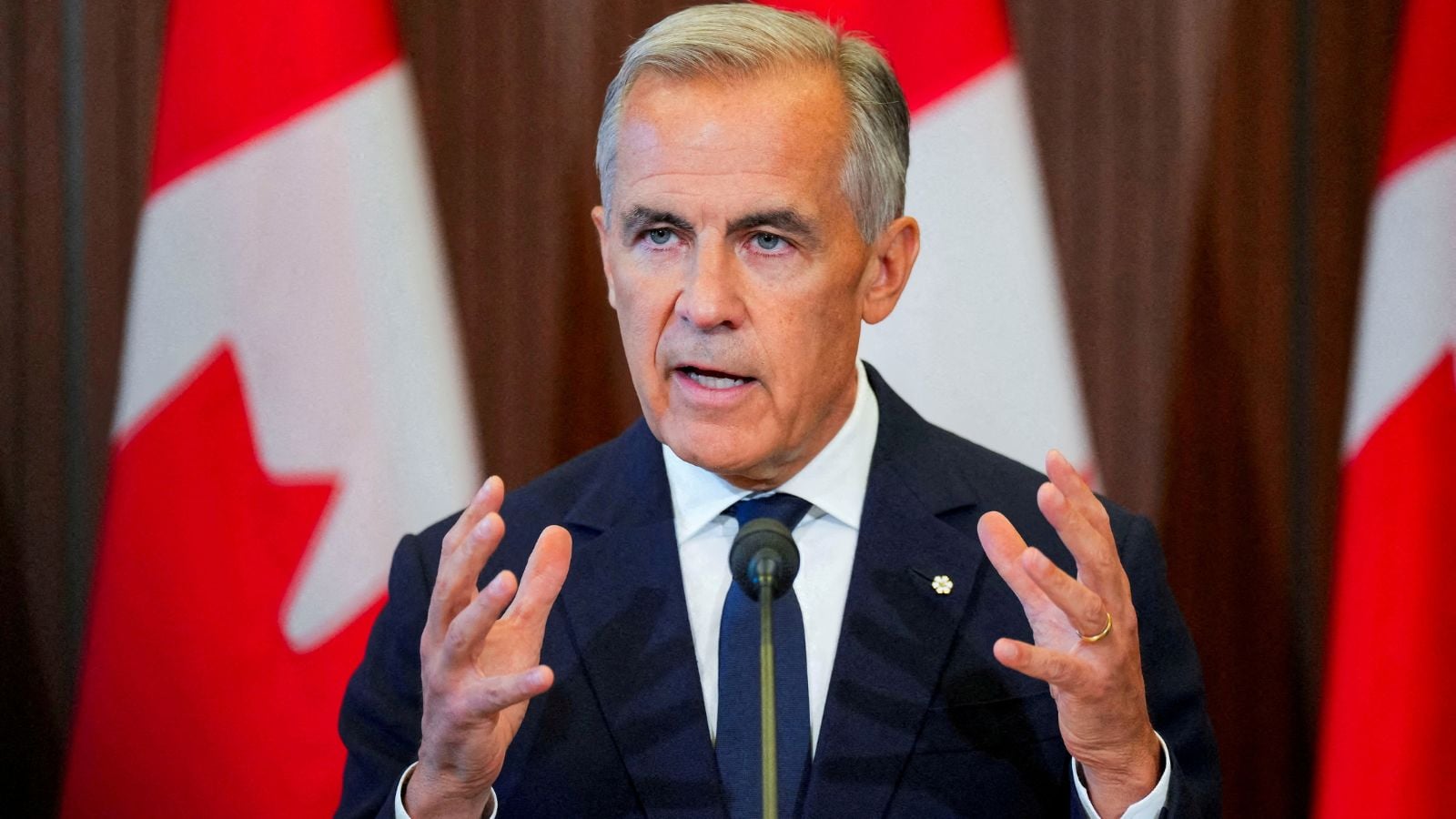
Mark Carney wants you to believe that Canada is the economic lifeboat the United States needs to slash its punishing cost of living. Listen closely to the establishment talking points echoing from Ottawa to Washington, and you hear the same lazy lullaby. More cross-border integration. Tighter supply chains. Dependable, allied partnerships that magically stabilize grocery bills and utility rates for American households. It sounds sophisticated. It sounds responsible. It is absolute economic fiction.
I have spent two decades watching politicians trade in warm-and-fuzzy trade rhetoric while inflation quietly grinds down the middle class. The comforting myth that a northern neighbor can insulate an empire of 340 million people from domestic monetary reality ignores basic math, structural logistics, and the hard mechanics of price formation. Canada does not lower American expenses. America exports its inflation, and Canada absorbs it. Turning that dynamic upside down requires breaking every rule of modern macroeconomic gravity.
Let us dismantle the core deception.
The Geography Illusion
Geographic proximity breeds intellectual laziness. Because trucks roll across the Ambassador Bridge and pipelines snake south from Alberta, policymakers assume economic synergy is a free lunch. We are told that reliable energy and raw materials from a stable democracy act as a natural depressant on American prices.
Reality is far more stubborn. Energy prices are set on global commodities exchanges, not by campfire handshakes between prime ministers and presidents. If West Texas Intermediate spikes, Western Canadian Select moves in lockstep. Canadian crude does not arrive at American refineries with a discount sticker born of diplomatic goodwill. It trades at market rates, subject to pipeline bottlenecks, refining margins, and currency fluctuations.
When Carney pitches Canada as a dependable cure for American cost pressures, he ignores the fundamental law of export pricing. Canadian producers sell to the highest bidder. If Asian or European markets offer superior returns for lumber, wheat, or electricity, those resources flow outward or demand matching domestic premiums. A foreign supplier does not sacrifice profit margins out of neighborly affection. Expecting Canadian commodities to act as a permanent charity discount for American consumers defies every incentive structure in global trade.
The Currency Asymmetry Trap
Talk of reliable partnerships glosses over the dirty engine room of currency exchange. The Canadian dollar is a commodity-linked currency.
Carney Is Wrong Canada Cannot Lower American Prices
business, news
Mark Carney wants you to believe that Canada is a magical discount warehouse waiting to bail out an inflation-weary American consumer. He stands at podiums, talking about reliable global partnerships and how a northern neighbor can grease the wheels of commerce to shave dollars off everyday costs down south. It is a comforting narrative. It sounds responsible. It is also entirely detached from economic reality.
I have spent decades watching politicians pitch cross-border salvation as the cure-all for domestic structural failure, and every single time, the math refuses to cooperate.
The lazy consensus in modern geopolitical trade talk is that supply chains are merely congested pipes. Open the valves wider, let Canadian energy, timber, and manufacturing flow unhindered, and American prices drop. The premise treats inflation as a logistical glitch rather than a structural symptom of domestic monetary expansion, labor shifts, and energy policy choices. Canada does not possess the scale, the structural cost advantages, or the logistics network to move the needle on American consumer price indices.
Let us look at the numbers instead of the rhetoric.
American consumer spending hovers around seventeen trillion dollars annually. Total Canadian merchandise exports to the entire world sit well below six hundred billion dollars, with the lion's share already locked into integrated continental supply chains. Expecting that trade corridor to absorb, scale up, and cheapen goods for an economy thirty times its size is like trying to cool a blast furnace with an ice cube. The capacity simply does not exist.
The Illusion of Continental Scale
When officials talk about reliable partnerships lowering costs, they ignore the domestic regulatory burden embedded in every single unit of cross-border production. Canada does not feature a low-cost manufacturing model. Between stringent environmental mandates, high corporate tax rates relative to certain southern jurisdictions, and a heavily unionized resource sector, Canadian goods carry a hefty compliance price tag.
If you import more Canadian energy or materials under the banner of reliability, you are importing regulated costs. You are trading one set of supply chain bottlenecks for another bound by different geographic and political constraints. Pipeline constraints, rail bottlenecks through the Canadian Shield, and maritime export limits mean that getting Canadian commodities to U.S. markets often costs more per ton-mile than sourcing domestically or from more agile global players.
The counter-intuitive truth is that cheaper American prices will not come from external dependencies. They will come from internal deregulation and productivity gains that Washington refuses to prioritize.
Why the Partnership Narrative Falls Apart
Reliability is a buzzword politicians use when they cannot offer competitive pricing. When Carney stresses reliable global partnerships, he is selling insurance against geopolitical shocks, not a discount on your grocery bill or your heating oil.
Think about what happens during a severe winter storm or a rail strike. Supply chains freeze from coast to coast. Relying on an external partner who faces the exact same northern weather patterns, labor shortages, and infrastructure decay does not diversify risk; it doubles down on the same geographic vulnerabilities.
Furthermore, currency dynamics destroy the discount thesis. When the Canadian dollar strengthens against the greenback—as it tends to do when commodity prices spike—any theoretical savings vanish. You end up paying more in USD for the privilege of buying Canadian inputs.
I have watched corporate procurement teams chase cross-border arbitrage year after year, only to get crushed by foreign exchange fluctuations and cross-border customs friction. The administration in Washington wants a scapegoat for high prices, and Canadian leadership wants relevance on the global stage. They found each other in a marriage of mutual convenience, wrapped in the soothing language of hemispheric solidarity.
The Real Cost of Looking North
By pretending that foreign trade adjustments can solve a domestic cost-of-living crisis, political leaders manage to avoid the hard conversations. They avoid talking about zoning laws that choke housing supply. They avoid talking about federal spending programs that pump liquidity into an economy running at full capacity. They avoid addressing the energy restrictions that keep baseline electricity and fuel costs artificially elevated.
Canada cannot rescue the American consumer because Canada is struggling with its own cost-of-living crisis, housing bubble, and stagnant productivity growth. Pointing across the border is a distraction.
If you want lower costs, stop looking for foreign saviors. Look at the domestic regulatory machine choking supply right at home.