The standard narrative following any major football title celebration is as predictable as a metronome. Crowds gather. Flared emotions inevitably spill over into physical altercations. Property gets damaged. Then, right on cue, a police chief steps up to a microphone to condemn the "significant and unacceptable" violence directed at officers, while the media runs headlines designed to spark collective moral panic.
Everyone nods along. The public demands harsher sentences. The clubs issue boilerplate statements promising lifetime bans. The cycle repeats next season.
This reactive outrage ignores the actual mechanics of crowd dynamics and urban policing.
To look at a chaotic post-match celebration and conclude that the primary issue is simply a lack of moral fiber among sports fans is a lazy shortcut. It misses the nuance of how modern public spaces are managed—or mismanaged—during high-stakes events. The truth about matchday disorder is far more uncomfortable than the standard "thugs vs. police" dichotomy. The current strategy of containment and condemnation actively guarantees the exact chaos it claims to prevent.
The Illusion of Containment
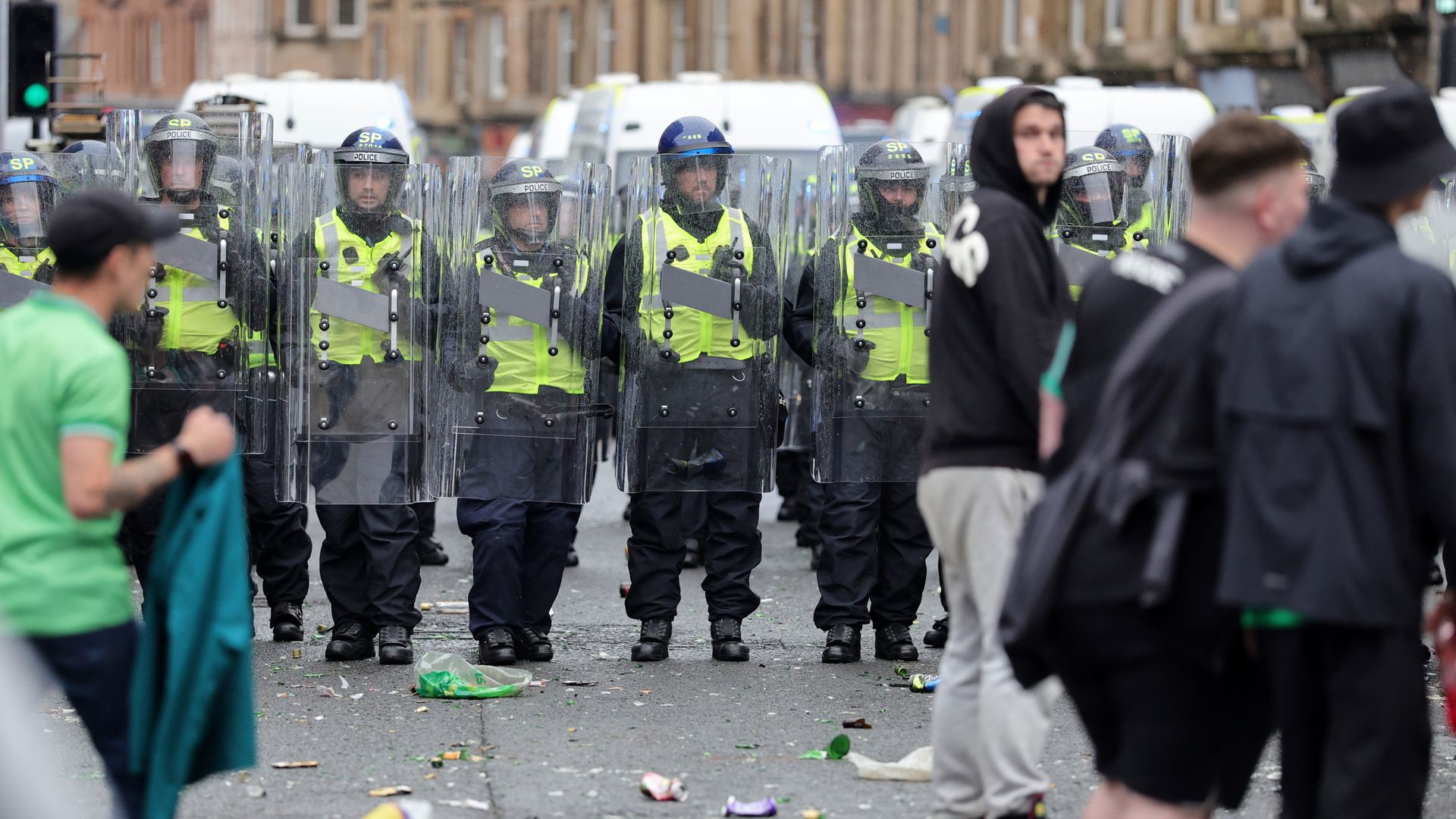
When tens of thousands of people flood a city center to celebrate a historic victory, traditional policing models break down. The standard playbook relies on containment: barricades, kettling, and a heavy, visible show of force.
This approach rests on a fundamentally flawed premise. It assumes that a massive, highly charged crowd can be compressed and controlled through sheer intimidation.
Sociological research into crowd behavior demonstrates that highly visible, militarized policing often acts as a catalyst for escalation rather than a deterrent. When a crowd senses hostility from authority figures, the collective identity shifts from "celebrating fans" to "an adversarial group under siege."
Imagine a scenario where thousands of individuals are funneled into restricted geographic bottlenecks with zero infrastructure, no access to basic amenities, and an overwhelming presence of riot gear. The physical friction alone creates flashpoints. A push at the back of a dense crowd becomes an assault at the front. What looks like a coordinated attack on an officer from a helicopter camera is, more often than not, the chaotic result of poor crowd flow management and panic.
By treating a celebration strictly as a public order threat from minute one, authorities inadvertently create the environment for confrontation.
The Empty Rhetoric of Condemnation
Post-match press conferences are exercises in political theater. They serve to shift accountability entirely onto the public while shielding institutional strategies from critical review.
When a police department issues a statement focusing solely on the numbers of arrests and injured officers, it performs a neat sleight of hand. It positions the police purely as victims of an unpredictable natural disaster, rather than active participants in a complex urban event.
I have spent years analyzing urban risk management and public space policy. The most glaring operational failure in these situations is almost always a total breakdown in co-production—the collaborative planning between football clubs, local government, transport networks, and police forces.
When a title win is mathematically imminent weeks in advance, treating the resulting gathering as an unpredicted emergency is a failure of imagination. If a city does not provide designated, managed zones for fans to congregate safely—with adequate waste management, medical tents, and clear egress routes—the crowd will simply occupy whatever space is available. Nature abhors a vacuum; so does a football crowd. The chaos that follows is a design failure, not just a behavioral one.
The Cost of the Status Quo
To challenge the consensus, we must admit the genuine downsides of alternative approaches. Shifting from a high-visibility enforcement model to a low-profile, facilitative model requires a high tolerance for calculated risk.
In a facilitative model, police officers wear standard uniforms rather than protective armor, blending into the crowd to engage in dialogue and de-escalate minor incidents before they turn into riots. It requires radical restraint. It means ignoring minor infractions, like the use of pyrotechnics or public drinking, to maintain overall peace.
The downside is obvious: if a small faction is genuinely intent on violence, a low-profile police presence can initially appear vulnerable. It takes immense institutional courage to tell the public that minor laws will be overlooked to protect the wider peace. But the alternative is what we see played out in the headlines year after year: a cycle of mutual escalation that solves nothing and leaves officers injured.
Dismantling the Standard Questions
The public discourse is trapped asking the wrong questions. The media asks, "How do we punish these fans more severely?"
The premise is flawed. Increased sentencing and retrospective bans have zero deterrent effect in the heat of a chaotic, alcohol-fueled crowd. The real question should be: "Why did the urban environment allow a celebration to degrade into a riot in the first place?"
Another common inquiry from local residents is, "Why can't the football clubs pay for the entire policing bill?"
This question misunderstands the legal boundaries of policing. Football clubs are financially responsible for the footprint of their stadiums and private property. They cannot legally or logistically police public high streets three miles away from the ground. Demanding that clubs fix an issue rooted in public infrastructure and municipal planning is a deflection. It allows local councils and police authorities to evade their core responsibility: managing the public realm.
Changing the Playbook
Real reform requires abandoning the comfort of moral outrage and implementing cold, logistical changes.
- Establish Sanctioned Fan Zones: If a major victory is imminent, the city must work with the club to create controlled, ticketed outdoor spaces equipped with screens, facilities, and stewarding. Give the energy a designated outlet.
- Implement the Liaison Model: Transition the primary police response away from tactical riot units toward specially trained liaison officers whose sole job is communication and crowd dynamics management.
- Redefine Success Metrics: Stop measuring the success of an event by the volume of arrests or the force of the post-match statement. Success is an event where the temperature never reaches boiling point.
The current system relies on the headline-grabbing chaos to justify its own heavy-handed existence. Until we stop treating thousands of celebrating citizens as an occupying army that needs to be suppressed, the streets will continue to fracture, officers will continue to get hurt, and the press releases will remain entirely useless.