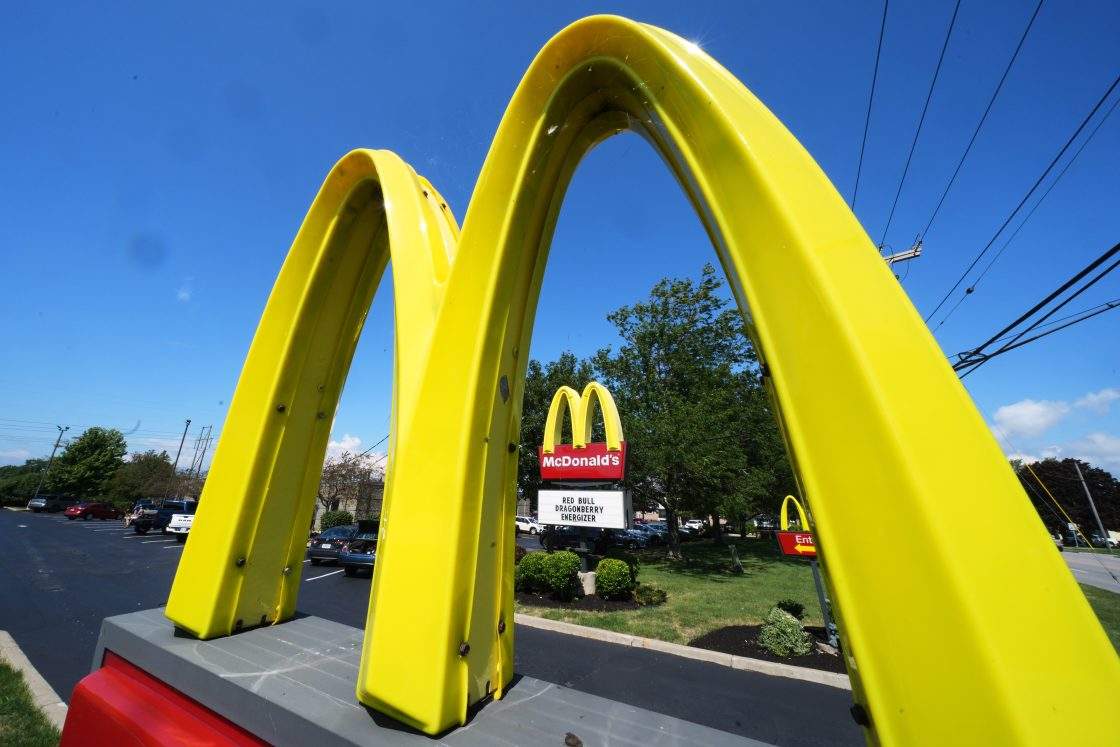
Every financial reporter on Wall Street is parroting the exact same lazy narrative right now. McDonald’s U.S. comparable sales dipped, and the consensus diagnosis is remarkably simple. Inflation broke the consumer. Low-income diners are tapped out. Therefore, the Golden Arches must slash prices and flood the market with $5 meal deals to win back traffic.
It is a neat, tidy explanation. It is also completely wrong.
I have sat in boardrooms watching heritage consumer brands burn hundreds of millions of dollars chasing traffic with aggressive discounting, only to wake up twelve months later with gutted margins and the exact same foot-traffic problem. When a dominant market leader loses volume despite rolling out aggressive promotional pricing, you do not have a pricing problem. You have a value-equation collapse.
McDonald’s isn’t bleeding customers because a Big Mac costs too much. They are bleeding customers because they spent the last decade systematically stripping away every non-price reason to walk through their doors, leaving price as their only remaining weapon. And when price is your only weapon, you are already dead.
The Anatomy of a Broken Value Equation
To understand why the $5 meal deal failed to spark an immediate turnaround, you have to understand how retail economists define perceived value. It is not simply the dollar figure printed on the menu board. Perceived value is a fraction. The numerator is the total sum of product quality, speed, hospitality, cleanliness, and emotional reward. The denominator is the total cost—not just money, but time, friction, and frustration.
For fifty years, McDonald’s dominated the quick-service restaurant (QSR) sector by keeping both sides of that equation heavily in the consumer's favor. The food wasn't gourmet, nor did it pretend to be. It was hot, hyper-consistent, delivered in under ninety seconds, and served in a clean, brightly lit dining room by a human being who made eye contact.
Look at the numerator today.
Speed of service at major drive-thrus has slowed markedly over the past decade due to bloated, overly complex menus and the operational bottleneck of third-party delivery drivers clogging up the kitchen line. Dine-in hospitality has been largely replaced by towering touch-screen kiosks that force the customer to do unpaid data-entry labor while employees stand ten feet away avoiding eye contact behind a wall of mobile-order bags. The dining rooms themselves—redesigned during the "Experience of the Future" remodel initiative—traded warm, welcoming primary colors for sterile, brutalist grey boxes that actively scream eat your food and leave.
When you degrade the product experience, slow down the service, and eliminate human warmth, you shrink the numerator. Even if you cut the denominator by launching a $5 value bundle, the overall fraction still feels like a rip-off. Consumers aren't refusing to pay $12 for a combo meal because they lack $12. They are refusing to pay $12—or even $5—to feel like an inconvenience at a kiosk.
The Elasticity Trap That Destroys Legacy Brands
Wall Street analysts love to talk about price elasticity of demand, the measure of how much consumption changes when prices move. The standard textbook theory says that if demand drops when you raise prices, lowering prices will restore demand.
That theory assumes your competitors are standing still. They aren't.
While McDonald’s was busy testing the upper limits of menu pricing between 2021 and 2024—pushing hash browns past $3 and Quarter Pounder meals north of $13 in major metro areas—they accidentally eradicated their own moat. For decades, McDonald’s occupied a protected middle ground. They were dramatically cheaper than fast-casual chains like Chipotle, Panera, or Shake Shack, and dramatically faster than sit-down casual dining like Chili’s or Applebee’s.
By raising prices to near-fast-casual levels while keeping fast-food ingredient quality, McDonald’s pushed themselves right into the crosshairs of better operators.
Consider what happened when Chili’s launched its "3 For Me" campaign. For $10.99, a customer gets a bottomless drink, chips and salsa, and a freshly cooked, half-pound burger with fries, served at a real table by a real human being. Suddenly, McDonald’s wasn't competing against Burger King and Wendy’s anymore. They were losing share to casual dining chains offering exponentially higher quality for the exact same ticket price.
Once a customer experiences a $10.99 sit-down burger, offering them a $5 McDouble and four nuggets doesn't feel like a bargain. It feels like a downgrade. You cannot discount your way out of an inferior value proposition when the customer has already discovered what their ten bucks can buy across the street.
Why App-Gated Discounts Alienate the Core Buyer
If you look closely at McDonald’s digital strategy, you will spot another massive blind spot that mainstream coverage completely misses. Executives frequently boast about their tens of millions of active loyalty app users, framing digital adoption as an unalloyed triumph.
In reality, app-gated pricing has created a toxic two-tier economy that punishes the exact low-income consumer McDonald’s claims it wants to win back.
If you are a tech-savvy suburbanite with high-speed data, ample phone storage, and the patience to navigate coupon codes before pulling into the drive-thru, you can still hack McDonald’s into an affordable meal. Buy-one-get-one deals and free fries live inside the app.
If you are a blue-collar worker on a twenty-minute lunch break, an elderly diner, or a cash-paying customer who doesn't want to surrender your personal location data to a multinational corporation just to buy a cheeseburger, you get hit with the "sucker tax" at the menu board. You pay full freight—often 30% to 40% more than the person in the car behind you.
Imagine a scenario where a grocery store charged people $8 for a gallon of milk unless they downloaded an app, created an account, verified their email, and scanned a QR code at the register to get it for $4. Shoppers would riot. Yet fast-food executives convinced themselves this was brilliant behavioral engineering.
It isn't. It is friction. And in a convenience business, friction is fatal. Low-income diners didn't stop going to McDonald’s because they forgot how cheap the dollar menu used to be. They stopped going because walking up to the counter without a smartphone discount made them feel like fools.
What Everyone Gets Wrong About QSR Turnarounds
When a giant brand stumbles, the business press immediately starts asking the wrong questions. They ask how low prices need to go to stimulate volume. They ask how long the promotional window needs to last.
Let's dismantle the three biggest myths dominating the conversation right now.
Does lowering prices automatically bring back lost traffic?
No. Lowering prices on a limited-time bundle merely subsidizes the customers who were already coming anyway. Economists call this cannibalization. Instead of attracting lapsed diners, a $5 meal deal convinces a regular customer who was going to spend $9.50 to spend $5.00 instead. Same traffic, lower average check, crushed franchisee profitability. True traffic recovery requires fixing the core product experience so customers are willing to pay full price again.
Is the fast-food slowdown purely a macroeconomic issue?
If high interest rates and cumulative inflation were the sole culprits, every restaurant chain in America would be posting identical negative comparable sales. They aren't. Chains like Wingstop, Texas Roadhouse, and Chipotle have posted massive same-store sales growth during the exact same economic window. Consumers have money. They are simply ruthlessly selective about where they spend it. They will gladly pay $15 for a bowl loaded with fresh ingredients, and they will revolt over paying $11 for a lukewarm burger wrapped in paper.
Are franchisees aligned with corporate’s value push?
Not even close. Corporate McDonald’s makes the vast majority of its money from rent and royalties tied to top-line gross sales. Franchisees, who operate roughly 95% of U.S. locations, live and die by bottom-line operating margins. Corporate loves $5 meal deals because top-line volume looks great on an earnings call. Franchisees hate them because labor costs in states like California have surged to $20 an hour, food costs remain elevated, and selling loss-leader bundles bleeds their store-level cash flow dry. A turnaround strategy built on forcing operators to lose money on every transaction is a civil war waiting to happen.
The Contrarian Playbook That Actually Works
To be completely transparent, abandoning aggressive value menus carries serious short-term risk. If McDonald’s pulls back on discounting tomorrow, their quarterly transaction numbers will look ugly. Wall Street analysts, obsessed with ninety-day increments, will punish the stock. Franchisees will panic during the transition.
Taking the long view requires a stomach for short-term pain that few public-company CEOs possess. Nevertheless, if leadership actually wants to rebuild an unassailable moat rather than rent temporary traffic through margin-destroying coupons, they need to throw out the current playbook and execute four brutal pivots.
1. Kill the Kiosk-First Obsession
Technology should remove friction for the customer, not transfer labor onto them. Rip out the towering, slow self-order kiosks that clog up lobbies and force human beings back to the front counter. Train staff to greet customers within three seconds of walking through the door. In an era where every retail interaction has become cold, automated, and transactional, basic human warmth is the highest-margin differentiator on earth.
2. Slash the Menu by Thirty Percent
Complexity is the silent killer of fast food. Every new limited-time sauce, specialty cold-foam coffee, and multi-step chicken sandwich adds seconds to the make-line, increases food waste, and tanks order accuracy. Look at In-N-Out Burger or Raising Cane’s. Their menus are laughably small. Because they make four things instead of forty, the food comes out blistering hot, orders are rarely wrong, and throughput during peak lunch rushes is unmatched. McDonald’s needs to purge every slow-moving SKU and get back to ruthless operational speed.
3. Abolish App-Exclusive Pricing
Stop punishing walk-in customers. Put the real, everyday low price directly on the physical menu board where everyone can see it. Use the mobile app for actual loyalty rewards—like earning points toward free food after five visits—and hyper-fast pickup, not as a tollbooth to avoid predatory menu pricing. Transparency rebuilds trust faster than any television commercial ever will.
4. Reinvest in Product Quality Over Margin Extraction
You cannot shrink-flate your way to greatness. Stop shaving millimeters off beef patties, cutting corners on bun formulations, or holding cooked proteins in warming trays past their prime just to squeeze another twenty basis points of operating margin. Spend the money to make the core cheeseburger taste undeniably fresh, hot, and substantial.
The Real Lesson for Every Market Leader
McDonald’s is currently learning a hard truth that eventually humbles every legacy titan. Brand equity is like a bank account. For years, you can make withdrawals—raising prices faster than inflation, cutting labor hours, automating away hospitality, shrinking portions—and the balance still looks healthy because customers operate on habit.
Eventually, the account hits zero. Habit breaks. Customers look around, realize the magic is gone, and walk across the street.
When that day comes, slapping a $5 sticker on the window won't save you. You don't win back trust by making a mediocre experience cheaper. You win it back by making the experience worth paying for again.