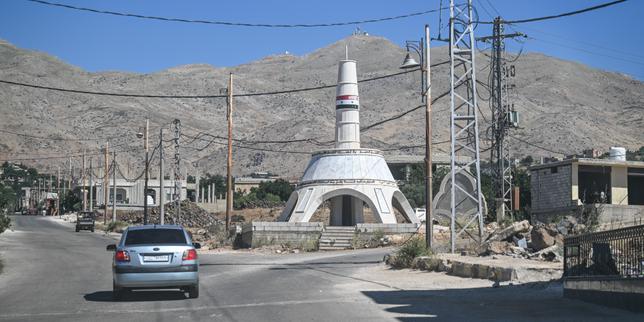
The tactical shift along the line of separation between Israel and Syria in the Quneitra and Daraa governorates represents a calculated restructuring of border geography, rather than a series of isolated cross-border skirmishes. When an occupying or neighboring military force consistently advances past established demarcation lines to clear terrain, establish observation posts, and construct physical barriers, it operates under a specific doctrine of defensive depth. The objective is the systematic neutralization of asymmetric threats before they reach the primary border infrastructure.
Understanding this operational reality requires moving past sensationalized reports of village incursions and examining the structural mechanics driving the escalation. The friction in southern Syria is a predictable outcome of state fragmentation, proxy alignment, and the enforcement of a hard security perimeter by a technologically superior adversary. Read more on a connected topic: this related article.
The Tri-Border Friction Framework
The geopolitical dynamics of southern Syria rest on three distinct operational pillars. Each pillar introduces specific variables that dictate the intensity and frequency of military incursions.
+-------------------------------------------------------------+
|               THE TRI-BORDER FRICTION FRAMEWORK            |
+-------------------------------------------------------------+
|                                                             |
|  [ 1. SECURITY VACUUM ] ---->  Sovereignty deficits and    |
|                                local militia fragmentation  |
|                                                             |
|  [ 2. PROXY PROXIMITY ] ---->  Forward deployment of        |
|                                asymmetric assets near Golan |
|                                                             |
|  [ 3. TERRAIN ALTERATION ] ->  Engineering operations and   |
|                                buffer zone enforcement      |
+-------------------------------------------------------------+
1. The Security Vacuum and Sovereignty Deficit
The Syrian state maintains nominal sovereignty over the southern governorates, but its functional administrative and military control is highly fragmented. Following the 2018 reconciliation agreements brokered by external powers, local factions in Daraa and Quneitra retained small arms and a high degree of autonomy. This created a patchwork of security zones managed by weak state checkpoints, local defense committees, and reconciled rebel remnants. More journalism by Associated Press delves into related perspectives on the subject.
A central authority's inability to monopolize violence across its borderlands creates an inevitable security vacuum. For an adjacent state, this vacuum is an active threat vector. The lack of standardized, reliable border policing means the territory becomes a staging ground for non-state actors operating outside the host nation's strategic calculations.
2. The Proxy Proximity Variable
The primary driver of external military intervention in southern Syria is the forward deployment of asymmetric assets affiliated with regional networks, specifically Hezbollah and various Iranian-backed militias. These groups utilize the complex topography of the volcanic plains and hills adjacent to the occupied Golan Heights to establish reconnaissance nodes, launch sites, and logistical safe houses.
The strategic math for the Israeli military is straightforward: the cost of allowing an adversarial proxy to embed itself along a sensitive border outweighs the diplomatic or kinetic friction generated by targeted incursions. Consequently, villages located within a five-to-ten-kilometer radius of the 1974 Disengagement of Forces Agreement line become high-value intelligence targets and eventual zones of kinetic clearance.
3. Tactical Terrain Alteration
Military incursions are rarely just about neutralizing personnel; they are about engineering the landscape to permanently favor defensive operations. The actions observed in the border villages—such as agricultural land clearing, the excavation of anti-tank ditches, and the construction of fortified berms—serve a clear dual purpose:
- Line-of-Sight Optimization: Removing vegetation, orchards, and structures eliminates visual cover for anti-tank guided missile (ATGM) teams and sniper positions.
- Mobility Restriction: Trenches and berms channelize the movement of local populations and potential infiltrators into easily monitorable chokepoints.
The Micro-Economics of Local Displacement
When military forces engage in terrain alteration and localized incursions, the immediate casualty is the rural micro-economy. The agrarian communities of Quneitra and Daraa depend heavily on livestock herding and small-scale agriculture. The enforcement of a de facto buffer zone alters this economic model through a specific sequence of resource denials.
The Agriculture-Security Tradeoff
The primary mechanism of economic displacement is the restriction of land access. Farmers whose fields lie within the newly established operational zones face a binary choice: risk kinetic engagement by tending to crops or abandon their primary source of income.
The loss of land value is compounding. When fields are bulldozed or declared closed military zones, the supply chain for local produce collapses, driving up food prices in adjacent towns that are already absorbed in a macroeconomic crisis.
Livestock Mobility Bottlenecks
For pastoral communities, wealth is held in livestock. Herders rely on seasonal movement across communal grazing lands. As military engineering projects fragment the landscape with trenches and fences, these traditional grazing routes are severed.
This spatial restriction forces herders to overgraze smaller, accessible plots, leading to rapid environmental degradation and a decline in livestock health. Alternatively, herders are forced to purchase expensive manufactured feed, rendering their business models unsustainable and forcing liquidations of assets at depressed prices.
Population Cascades
The cumulative effect of economic paralysis and direct physical insecurity is localized displacement. Unlike mass refugee movements triggered by heavy aerial bombardment, this displacement occurs in quiet, compounding waves. A family departs when their well is destroyed or when their home falls within the direct line of sight of a newly erected military observation tower.
These displaced populations migrate inland, concentrating in larger urban centers like Baath City or Daraa al-Balad. This influx strains already dilapidated municipal infrastructure, driving up rental costs and depressing local wages due to an oversupply of unskilled labor.
The Operational Paradox of Buffer Zones
While a buffer zone achieved through tactical incursions fulfills immediate defensive requirements, it creates long-term structural instability. This dynamic can be modeled as a loop of diminishing returns for the intervening power.
+-------------------------------------------------------------+
|              THE BUFFER ZONE INSTABILITY LOOP               |
+-------------------------------------------------------------+
|                                                             |
|   Tactical Incursion & Cleared Perimeter                    |
|             │                                               |
|             ▼                                               |
|   Economic Displacement & Population Flight                 |
|             │                                               |
|             ▼                                               |
|   Local Resistance Hardening & Deep Proxy Recruitment       |
|             │                                               |
|             ▼                                               |
|   New Asymmetric Threat Vectors Developed                  |
|             │                                               |
|             ▲ (Forces next round of expansion)              |
|             └───────────────────────────────────────────────┘
+-------------------------------------------------------------+
The initial clearance of a border zone reduces the probability of short-range cross-border attacks. It pushes the immediate launching points for rockets and ATGMs further back, increasing the reaction time for defensive systems.
However, the complete displacement of the local civilian population eliminates a critical source of human intelligence and creates a depopulated zone that is highly susceptible to covert infiltration. As local populations leave, the abandoned structures and fields provide excellent concealment for seasoned asymmetric actors who are far more adept at navigating contested environments than local farmers.
The economic devastation wrought by the buffer zone serves as a potent recruitment tool for hostile proxies. When young men lose their livelihoods due to agricultural destruction, the financial incentives offered by well-funded non-state armed groups become the only viable path to survival. The intervening power’s effort to secure its border structurally guarantees a steady supply of recruits for the very organizations it seeks to deter.
Strategic Forecast and Regional Implications
The trajectory of southern Syria will not be determined by local tribal arrangements or symbolic statements from Damascus. It will be governed by the structural requirements of regional containment strategies.
The Syrian state lacks the fiscal capacity and the military deployment density to push back against external incursions or to effectively suppress foreign proxy networks operating within its borders. Consequently, the central government will remain a passive observer, registering formal diplomatic protests while tacitly accepting the reality of its eroded borders.
The Israeli military will likely continue its policy of creeping engineering adjustments. Rather than launching a massive, sovereign-altering invasion of southern Syria, the strategy will favor incremental expansion—shifting fences forward by hundreds of meters at a time, leveling specific strategic high points, and enforcing an unwritten, lethal zero-tolerance policy for any movement within the designated perimeter.
This means the villages of Quneitra and western Daraa are locked into a permanent status as grey-zone battlefields. The civilian presence will continue to thin out, replaced by hardened military infrastructure on one side and deeply embedded, low-signature proxy cells on the other. Stakeholders analyzing the region must abandon the expectation of a return to the pre-conflict status quo; the border has fundamentally transformed, and the geography of southern Syria is being rewritten one trench at a time.