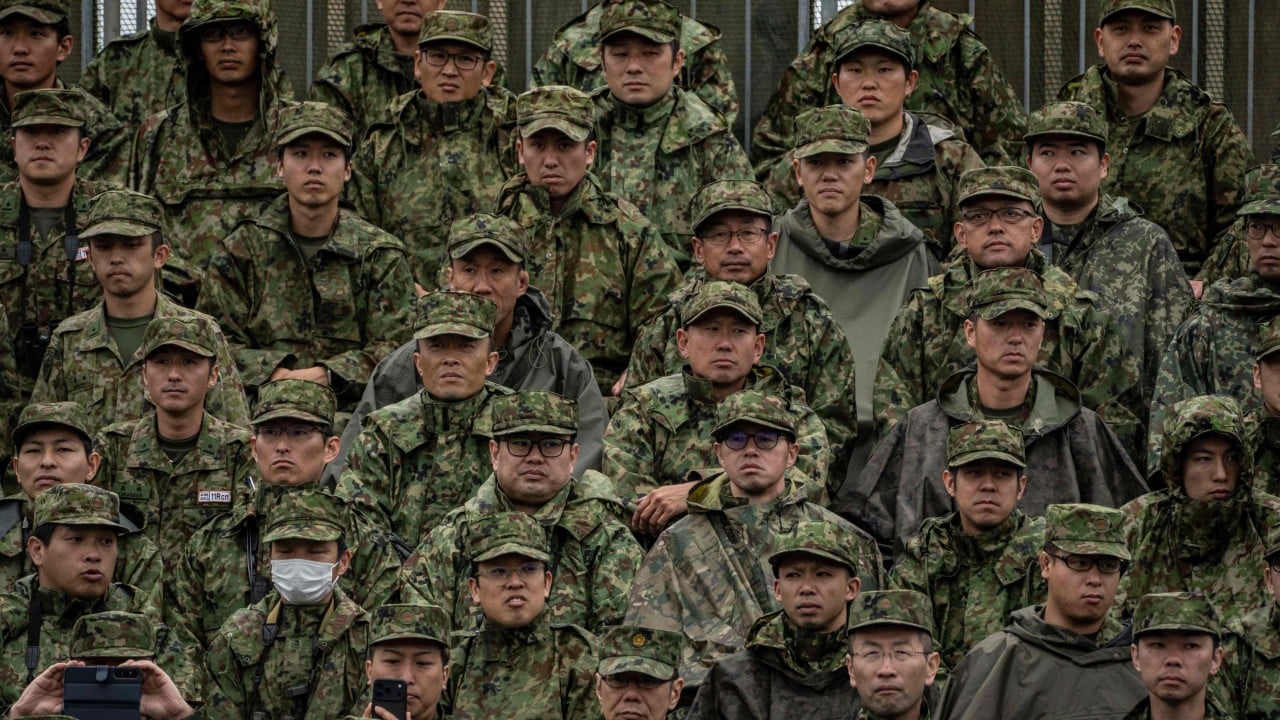
Japan is executing the most substantial overhaul of its national security architecture since 1945, shifting from an exclusively defensive posture toward active deterrence and counterstrike capability. While surface-level commentary frames this transformation as a binary choice between pacifism and militarism, the operational reality is governed by a classic structural problem in international relations: the security dilemma. When Tokyo acquires long-range precision munitions and doubles its defense expenditure toward the NATO benchmark of two percent of gross domestic product, it alters the strategic calculus of every neighboring state, transforming defensive modernization into a regional catalyst for symmetric and asymmetric escalation.
Understanding this trajectory requires stripping away diplomatic rhetoric and examining the underlying strategic frameworks, operational bottlenecks, and game-theoretic feedback loops driving Tokyo's policy. The core drivers of this shift are not ideological; they are material responses to shifts in the regional balance of power, the erosion of geographic insulation, and the changing reliability calculus of extended deterrence.
The Structural Breakdown of Postwar Restraint
For over seven decades, Japanese security policy operated within a strict framework defined by Article 9 of its constitution, the Yoshida Doctrine, and an informal spending ceiling of one percent of GDP. This model functioned because two conditions held true: the United States maintained overwhelming conventional and nuclear superiority in the Western Pacific, and regional adversaries lacked the precision-strike capabilities required to threaten the Japanese archipelago without initiating a prolonged amphibious or aerial campaign.
Both foundational conditions have degraded. The proliferation of ballistic and cruise missiles, hypersonic glide vehicles, and integrated anti-access/area denial networks across the Indo-Pacific has compressed decision-making timelines from days to minutes. Under these conditions, a purely reactive defense—relying entirely on ballistic missile defense interceptors to absorb incoming salvos while waiting for allied intervention—becomes mathematically untenable.
The economics of missile defense dictate this failure. The cost-exchange ratio between an offensive ballistic missile and an advanced interceptor heavily favors the attacker. A saturation strike using relatively inexpensive munitions can exhaust a defender's interceptor magazines rapidly, leaving critical command nodes, airfields, and civilian infrastructure exposed. Tokyo's strategic planners recognized that attempting to build an impenetrable shield is a losing proposition. The alternative is deterrence by punishment: acquiring the capacity to hold an adversary's launch platforms, command-and-control centers, and logistics hubs at risk before subsequent salvos can be fired.
The Three Pillars of Japan's Strategic Realignment
To operationalize this shift, Japan's revised National Security Strategy, National Defense Strategy, and Defense Buildup Program rest on three distinct structural pillars. Each pillar addresses a specific operational vulnerability, yet each introduces new friction points into regional stability.
1. Counterstrike Capability and Stand-Off Defense
The centerpiece of the reform is the acquisition of counterstrike capabilities, formally defined as the ability to strike enemy territory to prevent further attacks once an armed assault against Japan has commenced. This relies on stand-off munitions—weapons launched from outside the range of an adversary's defensive perimeter.
- Immediate Bridging Measures: Procuring foreign systems, such as Tomahawk land-attack cruise missiles, to establish an operational capability rapidly while domestic production scales.
- Indigenous Long-Range Systems: Upgrading the Type 12 surface-to-ship missile to extend its range beyond 1,000 kilometers and adapting it for launch from naval vessels, aircraft, and ground vehicles.
- Hypersonic and Glide Technologies: Investing in hyper-velocity gliding projectiles designed to maneuver unpredictably in the upper atmosphere, complicating adversary radar tracking and interception.
This capability fundamentally alters Japan's force posture. By shifting from point defense to deep-strike deterrence, Tokyo forces regional planners to account for the vulnerability of their own mainland infrastructure.
2. Integrated Air and Missile Defense Architecture
Counterstrike does not replace active defense; it pairs with it. Japan is restructuring its sensor-to-shooter networks to counter complex, multi-axis threats, including low-altitude cruise missiles and hypersonic vehicles that fly beneath traditional ballistic radar horizons.
This requires deep integration across the Ground, Maritime, and Air Self-Defense Forces, alongside real-time data sharing with United States Indo-Pacific Command. The objective is to create a unified kill web where space-based infrared sensors, airborne early warning aircraft, and Aegis-equipped destroyers pass targeting data seamlessly to the most advantageous interceptor platform. Without this network integration, individual weapon systems remain isolated and vulnerable to saturation.
3. Defense Industrial Base Revitalization and Sustainment
Modern high-intensity warfare consumes munitions, spare parts, and fuel at rates that peacetime manufacturing cannot sustain. Japan's defense industry has historically suffered from low production volumes, lack of export markets, and thin profit margins, causing dozens of subcontractors to exit the sector.
The revised strategy treats industrial capacity and logistical sustainment as combat multipliers. Measures include:
- Ammunition Stockpiling: Constructing hardened, dispersed storage facilities across the Southwest Islands to ensure forces can fight through initial supply chain disruptions.
- Infrastructure Hardening: Reinforcing runways, fuel depots, and command bunkers against blast and electromagnetic pulse effects.
- Export Rule Relaxation: Modifying the Three Principles on Transfer of Defense Equipment and Technology to allow the export of lethal systems co-developed with partners, thereby achieving economies of scale and lowering unit costs for the Self-Defense Forces.
The Mechanics of the Security Dilemma
When analysts warn of escalation, they are describing the operational manifestation of the security dilemma—a foundational concept in realist international relations theory formulated by John Herz and Robert Jervis. The dilemma arises when steps taken by one state to increase its own security (such as acquiring defensive weapons or forming alliances) are perceived by other states as offensive preparations, prompting them to respond with countermeasures that ultimately leave all parties less secure.
The ambiguity of modern military hardware intensifies this dynamic. A stand-off cruise missile launched from a Japanese destroyer or mobile ground launcher is physically identical whether its intended mission is a preemptive first strike or a retaliatory counterstrike. Adversaries cannot verify intent; they can only measure capability.
This creates a structured action-reaction cycle across three primary regional dyads:
The Sino-Japanese Dynamic
Beijing views Japan's acquisition of counterstrike missiles and the fortification of the Ryukyu Island chain—which stretches from Kyushu toward Taiwan—as an effort to construct a containment barrier along the First Island Chain. From the perspective of the People's Liberation Army, Japanese bases in Okinawa and the surrounding islands sit directly astride vital naval and air corridors.
Consequently, Beijing interprets Tokyo's buildup not as an isolated defensive measure, but as an integrated component of a broader coalition designed to intervene in a Taiwan contingency. The rational counter-response for Beijing is to expand its own rocket force inventory, increase naval and air patrols in the East China Sea to normalize a persistent presence, and target Japanese command-and-control nodes earlier in its operational war plans. The result is a compressed crisis stability window: in a confrontation, both sides face strong incentives to strike first rather than risk having their mobile launchers or forward bases destroyed on the ground.
The Korean Peninsula Variable
North Korea's rapid advancement in solid-fuel ballistic missiles, tactical nuclear warheads, and submarine-launched systems provides the immediate political justification for Japan's defense reforms. However, Tokyo's pursuit of counterstrike capabilities introduces complex coordination challenges with South Korea.
While Washington actively promotes trilateral security cooperation among the United States, Japan, and South Korea, historical grievances and divergent threat perceptions persist. Seoul maintains its own massive conventional strike doctrine—the Korea Massive Punishment and Retaliation plan—and views any unilateral Japanese military action on the Korean Peninsula as a sensitive sovereignty issue. Furthermore, Pyongyang uses Japanese defense increases as propaganda to justify its own nuclear expansion, creating a self-reinforcing cycle of proliferation and brinkmanship.
The Russian Far East Front
Russia's military alignment with China and its continued fortification of the Southern Kuril Islands (known in Japan as the Northern Territories) force Tokyo to manage a multi-front security environment. Joint Sino-Russian bomber patrols and naval exercises near Japanese waters serve as deliberate signaling mechanisms. They demonstrate that any conflict in the East China Sea could expand horizontally into the Sea of Japan and the northern Pacific, stretching Japanese intelligence, surveillance, and reconnaissance assets across two distinct geographic theaters.
The Operational Bottlenecks and Strategic Limitations
A rigorous assessment cannot stop at policy intentions; it must evaluate execution risks. Japan's defense transformation faces severe structural constraints that limit its near-term deterrence value and create dangerous vulnerability windows during the transition phase.
The Demographic and Recruitment Deficit
Hardware cannot operate itself. Japan is experiencing acute demographic contraction, with a shrinking pool of young adults eligible for military service. The Self-Defense Forces consistently miss annual recruitment targets, leaving frontline units understaffed. Acquiring advanced destroyers, fighter aircraft, and missile batteries while struggling to crew existing platforms creates a hollow force risk. Tokyo is attempting to mitigate this through automation, unmanned systems, and improved service conditions, but demographic math imposes a hard ceiling on total force size.
Fiscal Constraints and Currency Volatility
Funding a sustained increase in defense expenditure requires permanent revenue sources. Japan carries the highest debt-to-GDP ratio among developed economies, and an aging population places relentless upward pressure on social security and healthcare budgets. Financing defense through tax hikes faces intense domestic political resistance, while relying on debt issuance increases exposure to interest rate shifts.
Furthermore, because a significant portion of Japan's immediate procurement relies on United States Foreign Military Sales—such as F-35 fighter jets, Tomahawk missiles, and E-2D surveillance aircraft—exchange rate fluctuations directly erode purchasing power. A weak yen significantly inflates the real cost of imported defense systems, forcing planners to either cut procurement quantities or delay modernization timelines.
Command, Control, and Intelligence Gaps
Effective counterstrike capability requires far more than missiles; it demands an end-to-end target acquisition architecture. To strike mobile launchers or naval vessels hundreds of kilometers away, Japan must possess persistent satellite reconnaissance, resilient communications networks, and real-time battle damage assessment capabilities.
Currently, Japan remains heavily dependent on United States intelligence, surveillance, and reconnaissance assets to close this kill chain. Building an indigenous constellation of low-Earth orbit tracking satellites and high-altitude unmanned aerial vehicles will take years. During this interim period, Tokyo possesses the kinetic strike tools without full autonomous targeting independence, creating an operational gap between capability on paper and execution in combat.
The Constitutional and Legal Threshold
Japan's legal framework restricts the use of force to the minimum extent necessary for self-defense, triggered only when an armed attack occurs or when the survival of a close ally is threatened in a way that poses a clear danger to Japan. Operationalizing counterstrike within these legal boundaries creates immense ambiguity during a fast-moving crisis.
If satellite intelligence shows an adversary fueling ballistic missiles on mobile launchers, does launching a counterstrike constitute preemptive war—which remains illegal under international and Japanese domestic law—or lawful anticipatory self-defense? Waiting until enemy missiles are airborne risks catastrophic damage to Japanese bases; striking before launch risks triggering a broader war based on potentially flawed intelligence. This legal gray zone complicates rules of engagement and slows political authorization at the exact moment speed is decisive.
Managing the Transition Window
The central danger in Japan's strategic pivot lies not in the end state, where a more capable Japan contributes to regional equilibrium, but in the transition period over the next five to ten years. During this window, Japan's intentions are fully visible to its adversaries, provoking diplomatic hostility and military countermeasures, while its actual defensive and counterstrike capabilities remain incomplete.
To navigate this high-risk phase without triggering inadvertent escalation, strategic execution must prioritize four specific operational adjustments:
- Enforce Strict Crisis Communication Protocols: Establish dedicated, redundant military-to-military hotlines with Beijing that bypass political bottlenecks. As air and maritime encounters increase around the Senkaku Islands and the Miyako Strait, tactical miscalculations by local commanders represent the highest probability trigger for an unintended conflict.
- Prioritize Passive Defense Over Offensive Signaling: Accelerate the hardening of bases, dispersal of aircraft, and stockpiling of munitions before deploying high-profile offensive strike platforms. Hardened infrastructure reduces an adversary's incentive to launch a disarming first strike, thereby stabilizing the crisis environment without provoking the intense security dilemma reaction caused by long-range missiles.
- Codify Bilateral Rules of Engagement: Finalize unified command-and-control frameworks with the United States to eliminate ambiguity regarding target validation, intelligence sharing, and launch authorization. Joint operational plans must clearly delineate defensive responsibilities so adversaries cannot exploit seams between Tokyo and Washington.
- Anchor Fiscal Execution to Domestic Industrial Scaling: Shift procurement budgets rapidly from foreign off-the-shelf purchases to domestic production lines and dual-use technology development. Sustaining a two percent defense posture over decades is economically viable only if defense spending recirculates into the domestic industrial base, driving technological innovation and supply chain resilience rather than draining capital reserves through foreign currency outflows.


