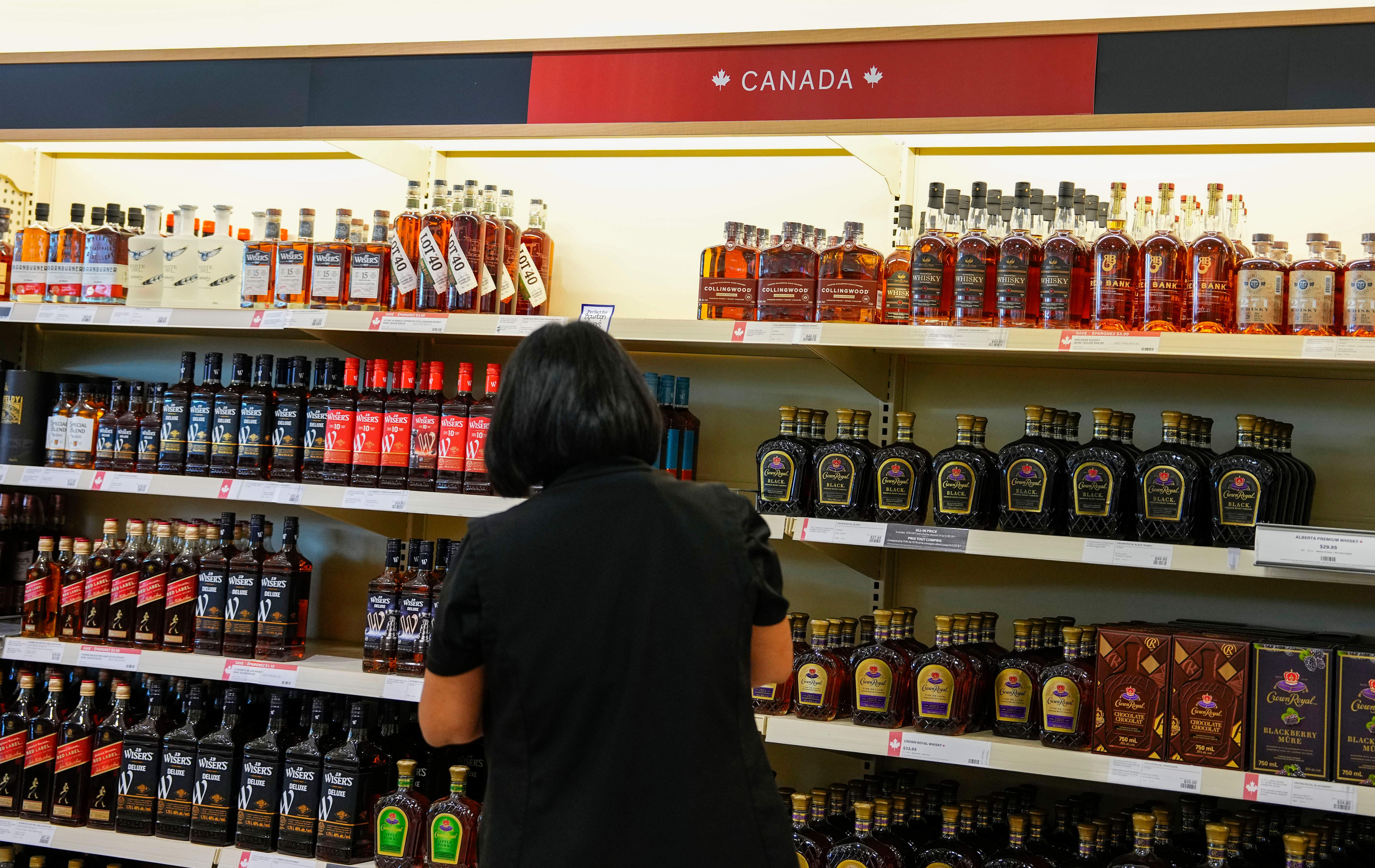
Trade retaliation operates on economic principles of signaling and margin compression. When the United States administration implemented a near-billion-dollar ban targeting specific Canadian imports, including dairy, alcoholic beverages, and heavy motorcycles, the mechanism went far beyond standard protectionism. It was a structural response to Canada's retaliatory counter-tariffs, transforming a tariff dispute into a total market exclusion strategy.
To understand the real-world impact of these bans, we must deconstruct the architecture of the trade flow, the role of pre-existing cost barriers, and the downstream friction introduced into bilateral supply chains. Don't forget to check out our recent article on this related article.
The Economic Architecture of the Target Categories
The selection of goods wasn't random; it targeted specific sectors where cross-border volume is high, but substitution dynamics favor domestic producers or alternative international suppliers.
The targeted categories divide cleanly into three functional groups: To read more about the history here, Business Insider offers an in-depth breakdown.
- Agricultural and Dairy Goods: Canadian cheese and dairy products face direct competition from entrenched domestic agribusiness lobbies in the United States.
- Alcoholic Beverages: High-volume export items such as Canadian rye, whisky, beer, wine, vermouth, tequila, vodka, and rum. Beer Canada data historically highlights that approximately 10 percent of all domestic beer production is exported, with the United States acting as the primary destination.
- Heavy Industrial Vehicles: Motorcycles, mopeds, and internal combustion engine cycles exceeding 800 cubic centimeters.
The economic vulnerability of these sectors is a function of export dependency. When a government abruptly cuts access to the largest consumer market in the region, producers cannot simply absorb the surplus domestically without severe price erosion.
The De Facto Ban Threshold
A critical analytical error made by casual observers is treating an outright import ban as a sudden, infinite increase in trade friction compared to a heavy tariff. In reality, many of the targeted goods were already burdened by prior 50 percent U.S. tariffs.
From an operational standpoint, a 50 percent tariff often acts as a de facto prohibition. It compresses profit margins to zero, pricing foreign goods completely out of competitiveness. Therefore, the transition from a 50 percent tariff to an official federal ban changes the legal status of the trade barrier rather than its immediate economic reality.
The primary difference lies in legal permanence and compliance costs. A tariff can be hedged against or absorbed if currency fluctuations or brand equity allow for premium pricing. An outright ban eliminates optionality, forcing supply chain managers to write off distribution channels entirely rather than recalculating landed costs.
The Cost Function of Retaliatory Loops
Trade wars persist because both sides operate on predictable political-economy cost functions. The sequence follows a rigid loop:
- Trigger: Implementation of broad baseline tariffs by the originating state.
- Retaliation: The target state responds with calibrated, dollar-for-dollar counter-tariffs across politically sensitive sectors.
- Escalation: The originating state escalates from taxation to outright prohibition to re-establish deterrence.
This dynamic creates a negative-sum outcome for cross-border logistics firms, distributors, and retail networks that built their operational models on integrated North American supply chains. The friction introduces permanent structural redundancy. Importers must reconfigure their sourcing maps, establishing relationships with domestic or offshore alternatives that carry higher baseline logistics costs than their historical Canadian partners.
Strategic Operational Forecast
Producers caught in this regulatory crossfire face a narrow set of tactical choices. Companies dealing in impacted alcohol and heavy machinery must either pivot their export strategies toward developing international markets—such as Asia-Pacific or European trade zones—or accept permanent capacity contraction.
The long-term consequence of these bans is not a sudden macroeconomic collapse, but a gradual bifurcation of North American trade. As administrative barriers replace open borders, cross-border integration degrades, and redundancy replaces efficiency as the primary metric of supply chain design.