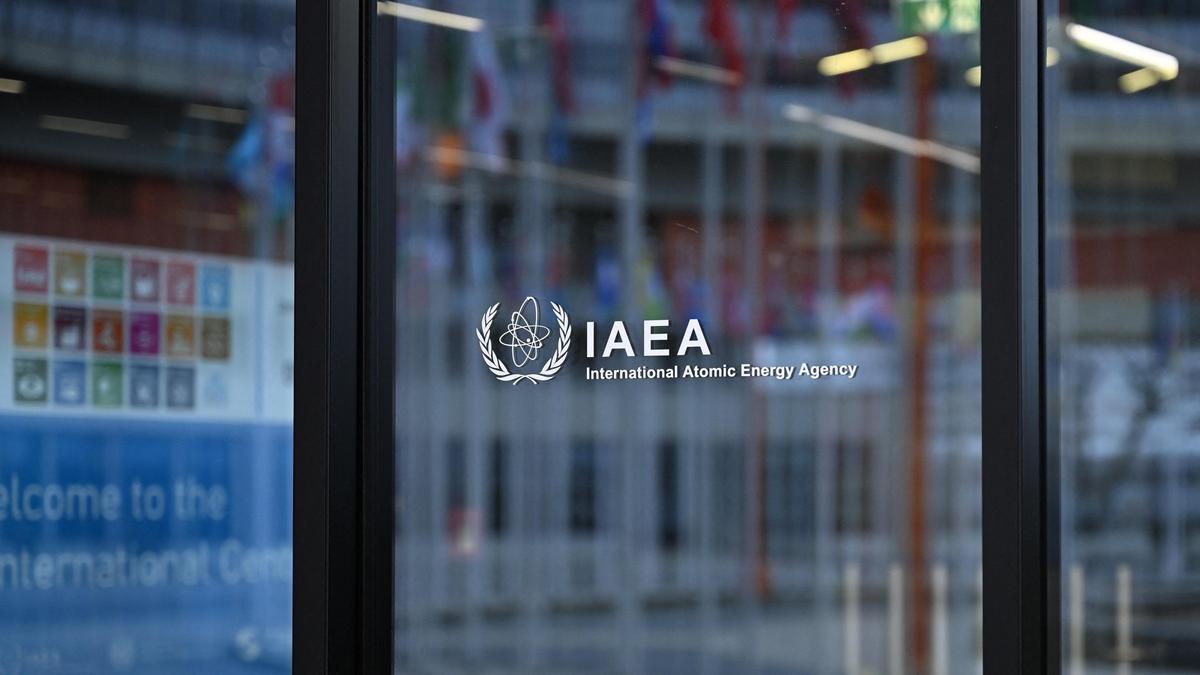
The International Atomic Energy Agency (IAEA) convening an extraordinary meeting on March 2, 2026, signals a failure of routine diplomatic friction and the onset of a kinetic regulatory crisis. When the Board of Governors shifts from quarterly cycles to emergency sessions, the objective is rarely information gathering; it is the formalization of non-compliance to trigger the "Snapback" mechanism or UN Security Council referral. The current escalation centers on a specific erosion of the Monitoring and Verification (M&V) framework, specifically the widening "Knowledge Gap" regarding advanced centrifuge production and highly enriched uranium (HEU) stockpiles.
The Three Pillars of Nuclear Escalation
To analyze the significance of this meeting, one must look past the political rhetoric and evaluate the three physical variables that determine the proximity of a "breakout" scenario. For a deeper dive into similar topics, we suggest: this related article.
- Enrichment Velocity and Grade: This is the literal speed at which $U^{235}$ isotopes are separated from $U^{238}$. While 3.67% enrichment (JCPOA limit) is suitable for power and 20% for medical isotopes, 60% enrichment represents 90% of the effort required to reach weapons-grade (90%+). The leap from 60% to 90% is mathematically minor due to the diminishing volume of material required for further processing.
- Centrifuge Efficiency (SWU): The Separative Work Unit (SWU) measures the effort required to enrich uranium. Iran’s shift from the IR-1 (first-generation) to the IR-6 and IR-9 models is not a linear upgrade; it is an exponential increase in enrichment capacity per square meter of facility footprint. These advanced machines allow for a smaller, more easily hardened, or even clandestine physical footprint.
- The Transparency Deficit: This is the delta between what the IAEA is permitted to see and what is actually happening. Since 2021, the removal of surveillance cameras and the restricted access to centrifuge manufacturing sites have degraded the IAEA’s "Continuity of Knowledge." Without this, the agency cannot provide "credible assurances" that nuclear material has not been diverted to secret locations.
The Cost Function of Non-Compliance
The decision to hold an extraordinary meeting on March 2 is a calculated move to impose costs on Iranian strategic depth. The IAEA Board of Governors operates under a specific geopolitical cost-benefit logic. The current impasse is driven by three primary friction points:
The Traceability Bottleneck
The IAEA discovered man-made uranium particles at undeclared sites (Turquzabad, Varamin, and Marivan). Iran's failure to provide technically credible explanations for these particles creates a legal stalemate. Under the Non-Proliferation Treaty (NPT) Safeguards Agreement, the "presence of undeclared nuclear material" is an objective violation. The March 2 meeting aims to codify this violation as a formal finding of non-compliance. For broader information on this issue, comprehensive reporting can also be found at NPR.
The Breakdown of Modified Code 3.1
The Iranian government’s suspension of Modified Code 3.1—an agreement to provide design information for new nuclear facilities as soon as the decision to build them is made—prevents the IAEA from preparing for future sites. This creates a "black box" in the long-term nuclear roadmap, forcing the IAEA to rely on satellite imagery and human intelligence rather than onsite verification.
The Expansion of the 60 Percent Stockpile
The accumulation of 60% HEU serves as a "virtual deterrent." While it is not a bomb, it is a precursor that can be converted to 90% grade in a matter of days or weeks. The March 2 session will likely quantify the exact mass of this stockpile against the "Significant Quantity" (SQ) metric—the approximate amount of nuclear material from which the possibility of manufacturing a nuclear explosive device cannot be excluded ($25\text{kg}$ of $U^{235}$ for HEU).
Operational Limitations of the IAEA
It is a mistake to view the IAEA as a global policeman with enforcement powers. The agency is a technical auditor. Its primary tool is the Board Report, which acts as a signaling device for the UN Security Council. The March 2 meeting faces several structural constraints:
- Political Fragmentation: The Board of Governors is not a monolith. While the E3 (UK, France, Germany) and the US push for censure, the "Global South" and BRICS+ members often view aggressive IAEA oversight as a violation of sovereignty. This fragmentation dilutes the impact of any resolution passed.
- The Inspection Paradox: The more the IAEA pressures Iran for access, the more Iran threatens to reduce existing access or withdraw from the NPT entirely. This creates a ceiling on how much "rigor" the agency can actually apply before losing its remaining visibility into the Fordow and Natanz facilities.
- Data Latency: Even with real-time monitoring, there is a lag between a "diversion event" and its detection. Advanced centrifuges (IR-6) allow for rapid reconfiguration of "cascades," meaning the enrichment level can be changed faster than the IAEA’s administrative cycle can respond.
The Strategic Pivot: Referral vs. Resolution
The March 2 meeting will likely conclude in one of two ways, neither of which offers an immediate resolution but both of which shift the strategic landscape.
Scenario A: The Soft Censure
The Board passes a resolution "calling upon" Iran to cooperate without setting a hard deadline for UN Security Council referral. This maintains the status quo while increasing diplomatic pressure. The limitation here is that "pressure" without "penalty" has historically led to further expansion of the Iranian nuclear footprint.
Scenario B: The Finding of Non-Compliance
The Board formally declares that Iran is in breach of its NPT obligations. This is the "nuclear option" of diplomacy. It triggers a mandatory report to the UN Security Council and provides the legal basis for the re-imposition of all pre-2015 international sanctions. This would effectively terminate the JCPOA framework and move the conflict into a new, more volatile phase of "maximum pressure" vs. "maximum enrichment."
The Calculus of the "Breakout" Window
Analysis of the March 2 meeting must account for the Breakout Time, defined as the time required to produce enough 90% HEU for one nuclear weapon. Estimates currently place this window at less than two weeks for the first weapon's worth of material, and approximately four to five months for a total of four weapons.
The IAEA’s task is to ensure that the detection time remains shorter than the breakout time. As Iran increases the number of advanced centrifuges and the size of its 60% stockpile, the detection-to-breakout ratio approaches a critical 1:1 parity. Once the breakout time is shorter than the IAEA's ability to report and the international community's ability to intervene, the M&V regime becomes obsolete.
Immediate Strategic Requirement
The March 2 meeting must move beyond "expressing concern" and address the specific technical requirements for restoring the Continuity of Knowledge. This requires a three-step operational pivot:
- Mandatory Re-installation of Surveillance: Re-establishing the camera network at the centrifuge component manufacturing workshops in Isfahan and other locations. Without this, the IAEA cannot verify if Iran is building a "spare" enrichment capacity for a clandestine site.
- Clarification of the "Unexplained Particles": Setting a 30-day "hard-stop" for technical explanations regarding the man-made uranium discovered at undeclared sites.
- Transparency on Advanced Centrifuge R&D: Demanding a full accounting of the IR-6 and IR-9 production rates to calibrate the global understanding of Iran's "Virtual SWU" capacity.
Failure to secure these points renders the extraordinary session a mere administrative formality in the face of a mounting proliferation crisis. The shift from 60% enrichment to weapons-grade is a technicality; the shift from diplomatic oversight to an unmonitored nuclear program is the true threat to the global non-proliferation architecture. The March 2 board meeting is the final window for a technical audit to prevent a permanent geopolitical blind spot.