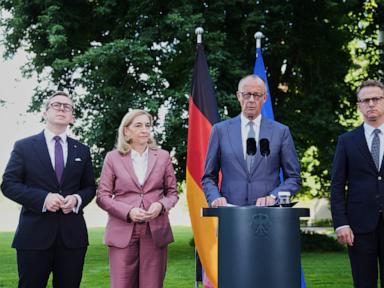
Executive leadership during political instability requires structural realignments rather than cosmetic personnel changes. Chancellor Friedrich Merz’s reshuffling of key Chancellery and parliamentary positions reveals a defensive posture disguised as proactive management. As the Alternative for Germany (AfD) expands its voter base ahead of critical state elections in Saxony-Anhalt, the governing CDU-SPD coalition faces a structural credibility deficit driven by economic stagnation, friction within the grand coalition, and messaging hypocrisy.
An analysis of this executive realignment exposes the strategic calculus behind the personnel shifts, the institutional friction within the coalition, and the structural vulnerabilities threatening the German executive branch.
The Three Vulnerabilities of the Merz Administration
Political consolidation operates under strict institutional constraints. Merz’s decision to move Thorsten Frei, Nina Warken, and Carsten Linnemann into new roles addresses immediate political pressures while leaving structural vulnerabilities unaddressed.
1. Structural Coalition Friction
The grand coalition between the center-right Union bloc (CDU/CSU) and the center-left Social Democrats (SPD) inherently generates ideological drag. When two historic rivals form a governing alliance, legislative velocity decreases as every policy requires dual-internal consensus before entering parliamentary debate.
This policy inertia creates an ideological void. Disaffected center-right voters perceive compromise as a betrayal of conservative principles, while center-left voters view cooperation as concession. The resulting policy paralysis directly fuels the growth of populist opposition platforms that promise uncompromised decision-making.
2. Economic Stagnation and Reform Lag
Merz entered office pledging rapid economic turnaround for Europe’s largest economy after years of zero-growth trajectories. However, structural reform implementation suffers from a substantial lag phase between legislative enactment and macro-economic impact:
- Pension Reform Delay: Proposals to gradually increase the retirement age address long-term demographic deficits but generate immediate elector resistance without delivering short-term fiscal relief.
- Tax Wedge Friction: Proposed income tax cuts for low- and middle-income earners aim to stimulate domestic consumption, but their implementation timeframe fails to outpace inflationary pressures on household real wages.
- Infrastructure Capital Allocation: Despite establishing dedicated funds for transport infrastructure upgrades, physical capital deployment remains stalled in municipal planning bottlenecks and regulatory compliance procedures.
3. Policy-Conduct Asymmetry
Political credibility decays rapidly when public policy mandates conflict with senior official behavior. The resignation of Jens Spahn from the parliamentary leadership role following revelations regarding surrogacy arrangements highlighted an acute institutional weakness: policy-conduct asymmetry.
When a political organization enforces conservative social mandates within its official party platform while senior leadership bypasses these restrictions through private means, the resulting exposure inflicts maximum damage on the party’s core value proposition. This asymmetry degrades trust among traditional conservative constituents, creating direct transition paths toward alternative right-wing parties.
Executive Position Mapping and Internal Power Realignment
The current reshuffle represents a tactical reallocation of executive talent aimed at enforcing parliamentary discipline and accelerating policy output ahead of September regional votes.
+-----------------------------------------------------------------------+
|                       CHANCELLERY EXECUTIVE OFFICE                    |
|                                                                       |
|   Previous: Thorsten Frei ---------> Moved to Parliamentary Group     |
|   New Chief: Nina Warken (Ex-Health Minister)                         |
+-----------------------------------------------------------------------+
                                   |
                                   v
+-----------------------------------------------------------------------+
|                       HEALTH MINISTRY EXECUTIVE                       |
|                                                                       |
|   Previous: Nina Warken ------------> Promoted to Chancellery          |
|   New Minister: Carsten Linnemann (Ex-CDU General Secretary)          |
+-----------------------------------------------------------------------+
                                   |
                                   v
+-----------------------------------------------------------------------+
|                    UNION PARLIAMENTARY GROUP LEADERSHIP               |
|                                                                       |
|   Previous: Jens Spahn (Resigned over surrogacy controversy)          |
|   New Leader: Thorsten Frei (Ex-Chancellery Chief of Staff)           |
+-----------------------------------------------------------------------+
Thorsten Frei: Enforcement of Parliamentary Discipline
Moving Thorsten Frei from Chancellery Chief of Staff to leader of the Union parliamentary group moves a key legislative strategist to the parliamentary front lines. Frei’s prior experience as chief whip provides him with the operational knowledge required to maintain voting discipline within a fragile coalition.
The primary objective of this reassignment is to eliminate internal party dissent during parliamentary votes on controversial fiscal and social reforms. In a coalition setup, legislative leakage—where individual backbenchers defect during crucial votes—destroys executive authority. Frei’s role is to enforce absolute voting compliance.
Nina Warken: Operational Management at the Chancellery
Nina Warken’s appointment as the first female Chancellery Chief of Staff shifts an operative with proven negotiation records into the central executive hub. Warken demonstrated legislative execution capacity by navigating complex health insurance cost-containment measures through parliament despite intense interest group resistance.
The Chancellery Chief of Staff operates as the administrative engine of the German state, managing inter-ministerial coordination and security policy synthesis. Warken’s primary operational metric will be reducing policy execution cycle times across all government ministries.
Carsten Linnemann: Securing the Ideological Flank
Carsten Linnemann’s transition from CDU General Secretary to Health Minister places an uncompromising conservative economist at the helm of a major spending ministry. Linnemann lacks executive ministerial experience, but his appointment serves a clear strategic purpose: reassuring the conservative base that the welfare state will face strict fiscal management rather than unchecked expansion.
By placing a fiscal hawk over the Health Ministry, Merz signals an intention to curb social system spending, aligning executive action with conservative economic philosophy.
Structural Determinants of the Electoral Threat in Eastern Germany
The political realignment in Berlin is driven by electoral arithmetic in eastern state legislatures, specifically Saxony-Anhalt. Understanding the mechanics of AfD polling gains requires examining the structural conditions of the eastern German electorate rather than attributing voter movement solely to media cycles.
Economic Asymmetry and Wage Disparities
Despite decades of economic integration, structural economic disparities persist between eastern and western federal states. Regional wage differentials, lower corporate headquarter density, and capital concentration in western hubs create persistent economic insecurity across eastern municipalities. When central government policies introduce cost increases—such as energy transition requirements or healthcare contribution shifts—the marginal financial shock is significantly higher for eastern households.
Demographic Depletion and Institutional Trust
Out-migration of skilled young labor over recent decades has altered the demographic profile of eastern electoral districts. The resulting higher median age increases reliance on state pension systems and healthcare infrastructure, amplifying voter sensitivity to proposed changes in retirement age or social safety net restructuring. Furthermore, institutional trust in federal governance structures remains lower in eastern states, making these populations receptive to anti-establishment messaging.
The Mechanism of Anti-Establishment Mobilization
The AfD’s electoral strategy relies on a multi-stage mobilization loop:
- Exploitation of Coalition Friction: Highlighting disagreements between CDU and SPD as evidence of governance failure.
- Framing Reform as Burden: Positioning structural economic adjustments (such as pension changes) as unfair extractions imposed by federal elites.
- Capitalizing on Policy-Conduct Asynchrony: Utilizing leadership scandals to validate broader narratives regarding elite hypocrisy.
- Consolidating Local Pluralities: Concentrating voter mobilization in rural and semi-urban districts where traditional party infrastructure has weakened.
If the AfD achieves a plural victory in Saxony-Anhalt, it breaks the long-standing political convention requiring traditional party majorities for state executive governance, creating an unprecedented constitutional and operational precedent in modern German federalism.
Tactical Execution Imperatives for Federal Executive Survival
To neutralize the electoral threat in eastern Germany and restore operational stability, the executive branch must implement three operational shifts before regional voting commences.
First, the Chancellery must force rapid administrative clearance of backlogged infrastructure funds. Long-term macroeconomic proposals fail to influence voter behavior in short election windows; tangible physical infrastructure investment in regional districts provides visible proof of state capacity.
Second, the parliamentary group leadership under Frei must establish strict vote-counting mechanisms to prevent public coalition disagreements during legislative sessions. Every public policy debate between the CDU and SPD directly increases voter conversion toward opposition parties.
Third, ministerial communications must shift from high-level economic projections to precise household impact modeling. Abstract promises of future growth fail to counter immediate concerns regarding inflation, health insurance costs, and retirement timelines.
The tactical personnel reshuffle executed by Chancellor Merz stabilizes internal party alignment in the short term. However, political stability in Germany depends on whether these administrative adjustments yield measurable economic outputs before voters cast ballots in eastern regional elections.

