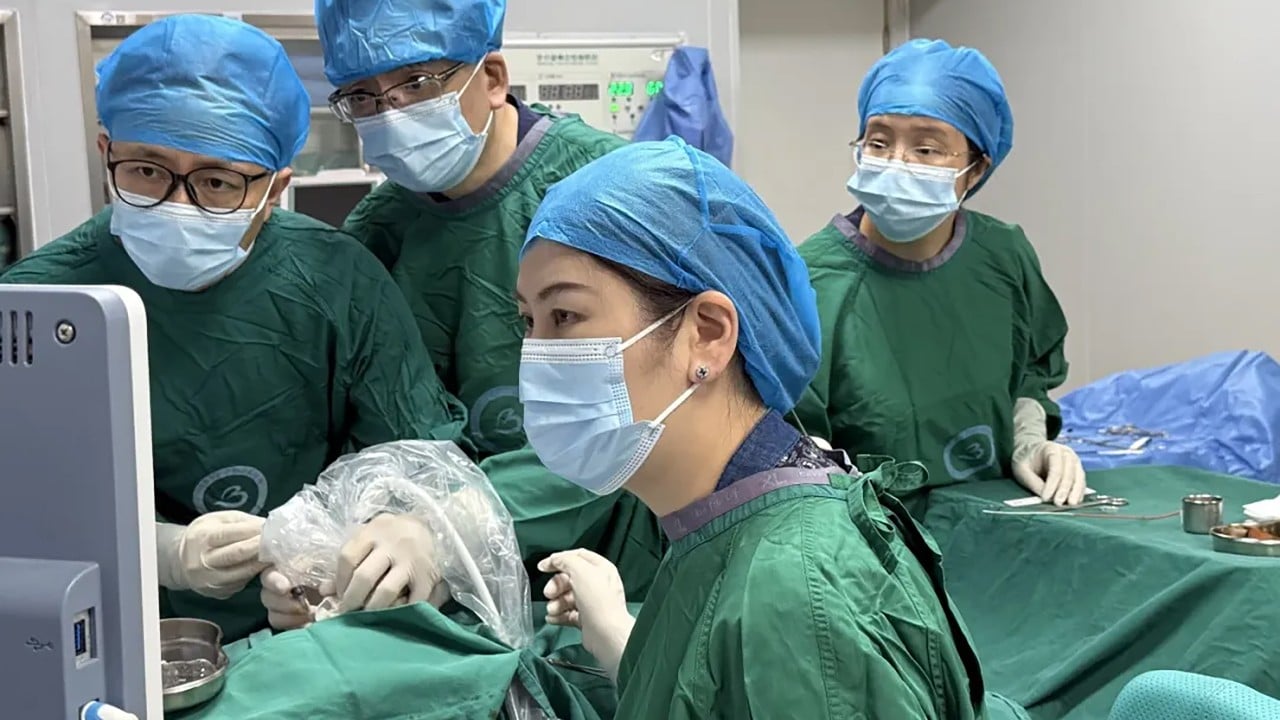
Every few months, a headline breaks about doctors performing some sort of science fiction medicine inside the womb. A needle pierces the amniotic sac. A miniature tumor shrinks. The internet erupts with collective awe, calling it a miracle, a triumph of human ingenuity, a watershed moment for modern obstetrics.
It is none of those things. It is triage disguised as progress.
When the news cycle breathlessly reports on fetal surgeons shrinking a lung tumor before birth using radiofrequency ablation or precise needle interventions, they are missing the forest, the trees, and the dirt the trees grow in. They want you to stare at the shiny needle and marvel at the steady hands of the surgeon. What they refuse to talk about is why we are waiting until a fetus develops a life-threatening mass before we intervene, and why our obsession with heroic late-stage interventions masks a systemic failure in predictive diagnostics.
I have watched neonatal intensive care units operate for over a decade. I have seen the frantic midnight scrambles, the exhausted specialists, and the families holding their breath while a surgical team performs acrobatics inside a pregnant uterus. It looks heroic. It feels historic. But from an engineering and systems perspective, treating a pathology at twenty-four weeks gestation with a needle is the medical equivalent of trying to fix a faulty foundation by welding the roof beams while the house is already sliding down a hill.
The Fallacy of the Intrauterine Spectacle
Let us strip away the sentimentality. Why did that lung tumor grow large enough to compress the fetal heart and cause hydrops in the first place? Because current prenatal screening models treat the first trimester as a waiting room rather than an active window for interception.
The lazy consensus in modern medicine says that when a congenital anomaly appears, our primary duty is to build better tools to fix it in utero. Better needles. Thener fiber-optic lasers. More precise ultrasound guidance. This is a trap. It assumes that fetal pathology is an act of God, an unpreventable lightning strike that we must simply learn to dodge with surgical dexterity.
That premise is lazy, and it is dangerous.
Congenital cystic adenomatoid malformations and bronchopulmonary sequestrations do not materialize out of thin air at week twenty. Their cellular precursors exist much earlier. Yet, our diagnostic protocols remain anchored to mid-pregnancy anatomy scans, catching structural disasters just as they cross the threshold from manageable anomalies to catastrophic emergencies.
When a surgeon uses a needle to shrink a mass in a twenty-two-week fetus, they are performing a rescue mission. They had to launch that mission because our preventative radar failed. Celebrating the needle without questioning the radar is like praising a trauma surgeon for pulling people out of a river while ignoring the fact that someone is throwing them off a bridge upstream.
What Real Advancement Looks Like
If we want to transform fetal medicine, we have to stop treating the womb like a submarine operating room and start treating early pregnancy as the primary site of metabolic and genetic surveillance.
Right now, cell-free DNA testing and early first-trimester structural markers give us whispers of what is to come. But we use them primarily for binary risk stratification: down syndrome or not down syndrome, compatible with life or termination. We treat these sophisticated molecular assays like glorified pregnancy tests.
Imagine a clinical reality where early circulating microRNA panels and high-resolution Doppler mapping at week ten flag aberrant vascular proliferation before a mass ever organizes into a macroscopic tumor. In that reality, fetal surgery with a needle becomes an obsolete emergency measure, replaced by targeted metabolic modulation or localized micro-interventions long before hydrops sets in.
We do not need bigger needles or sleeker laser fibers. We need a shift in arrogance. Surgeons love the theatre of the operating room. They love the high stakes of a beating fetal heart on an ultrasound monitor and the collective exhale of the scrub nurses when the needle is withdrawn. Prevention does not have that kind of cinematic flair. Prevention is boring. Prevention looks like a statistic that didn't happen.
The Downside of Our Heroic Fixes
Let us be completely honest about the dark side of this technology. Every time a hospital publicizes a successful in utero tumor ablation, it creates a distorted public perception. It whispers to prospective parents that modern medicine is an infinite safety net. Go ahead, have children later, ignore environmental risk factors, skip early molecular screenings—if something goes wrong, a surgeon with a needle will just reach inside and fix it.
That is a cruel delusion.
In utero interventions carry staggering risks. Premature rupture of membranes, chorioamnionitis, direct fetal injury, and emergency preterm delivery are the constant shadow of these procedures. For every viral headline about a baby saved in the womb, there are quiet failures where the intervention triggered catastrophic complications, resulting in severe prematurity or fetal demise. These stories rarely make the evening news because they ruin the narrative of inevitable technological salvation.
By glorifying the needle, we incentivize a reactive healthcare economy. We pour venture capital and grant money into procedural gadgets while preventative fetal therapies languish in underfunded academic labs.
The Question Nobody Is Asking
When people read these breakthrough stories, they ask: "How on earth did they fit a needle into a womb to save a baby?"
It is the wrong question entirely.
The question you should be asking is: "Why did we let the disease progress to a point where a needle inside a womb was our best remaining option?"
Until we shift our resources from late-stage heroics to ultra-early interception, these surgical miracles will remain what they truly are: expensive, high-risk monuments to our collective failure to catch problems when they were small enough to dissolve with a whisper instead of burning with a laser.
Stop cheering for the rescue. Start demanding better watchtowers.