The internet is losing its collective mind over a water buffalo in Bangladesh.
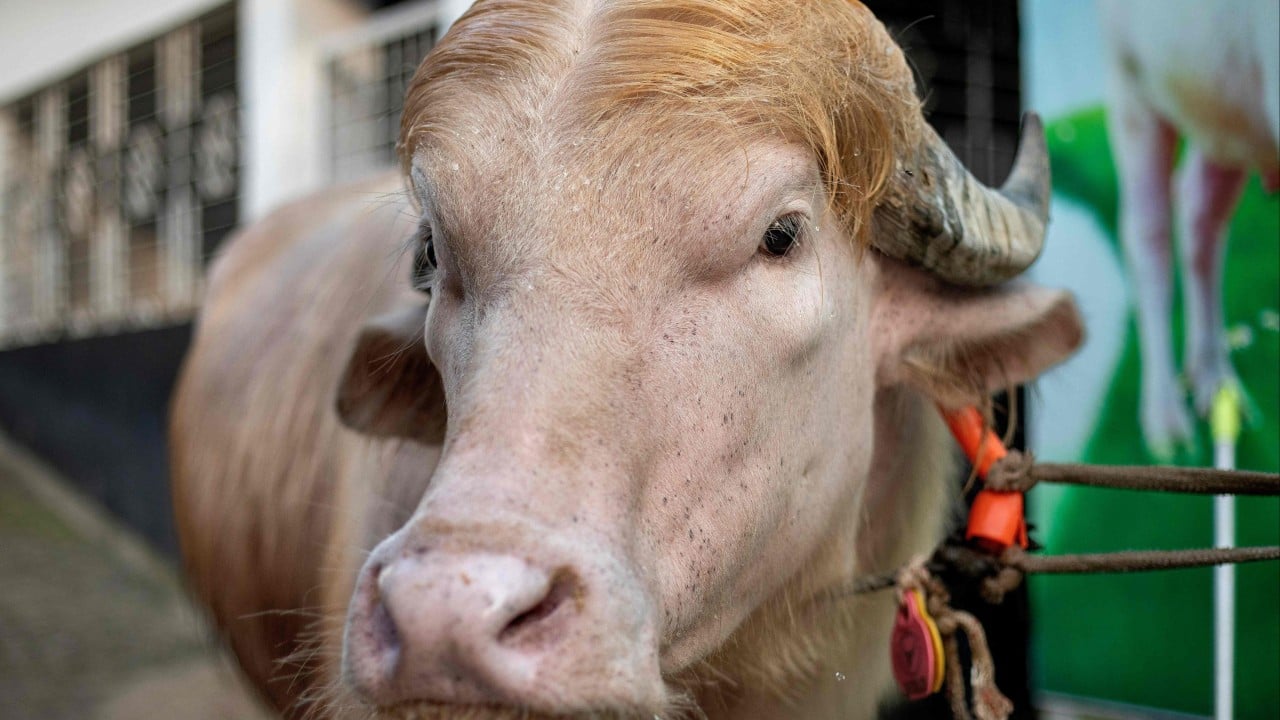
Local tabloids started it. Global news syndicates picked it up. Now, your social media feed is flooded with pictures of a 4-year-old Murrah buffalo named "Donald Trump," so dubbed because a tuft of golden hair on its forehead allegedly mimics the former US president’s signature combover. Droves of tourists are supposedly trekking to a remote village just to snap selfies with a farm animal.
It is a heartwarming, quirky piece of human-interest journalism, right?
Wrong. It is a masterclass in lazy, formulaic media manipulation. And you are falling for it.
As someone who has spent over a decade analyzing media traffic patterns, virality metrics, and the monetization of internet outrage, I can tell you exactly what this is: a manufactured spectacle. The mainstream press did not report on this buffalo because it is culturally significant or genetically anomalous. They reported on it because attaching the name "Donald Trump" to any headline guarantees a 400% spike in programmatic ad revenue from algorithmic click-throughs.
We need to stop treating cheap SEO parlor tricks like actual news. The real story here isn't the buffalo's hair. It is the utter bankruptcy of modern journalism.
The Myth of the Resemblance
Let's dissect the premise of this entire viral phenomenon.
The media wants you to believe that this buffalo possesses a striking, uncanny resemblance to a human being. It does not. It is a Murrah buffalo with a localized genetic variation in its coat coloration—a phenomenon known to veterinary science as partial leucism or simple localized depigmentation.
When you strip away the sensationalism, here is what you are actually looking at:
| Feature | Media Narrative | Biological Reality |
|---|---|---|
| The Hair | A meticulously styled political statement | Localized melanin deficiency causing blonde coarse hair |
| The Crowd | Millions of pilgrims traveling for a miracle | Local villagers wondering why foreigners are filming livestock |
| The Value | A priceless cultural icon | Standard market rate for a healthy breeding sire |
Humans are biologically wired for pareidolia—the psychological tendency to perceive meaningful images, particularly faces, in random visual patterns. It is the same reason people see the Virgin Mary on a piece of burnt toast or a face on Mars.
The media leverages pareidolia as a weaponized engagement metric. They take a completely normal biological anomaly, slap a polarizing political label on it, and watch the cash register ring.
The Economics of the Anthropomorphic Grift
I have watched digital media conglomerates burn through millions of dollars trying to pivot to high-quality investigative journalism, only to abandon it three months later because a single 300-word blog post about a dog that looks like Steve Buscemi generated more ad impressions than a deep-dive into supply chain corruption.
This buffalo story is the ultimate manifestation of that systemic rot.
Think about the local farmer in Bangladesh. He is not a political pundit. He is a businessman. He knows that naming his livestock after a polarizing global figure instantly inflates the asset's perceived value. It is the same logic used by auction houses and meme-stock traders. By transforming a utility animal into a sideshow attraction, the owner can demand inflated prices for breeding rights or future sale.
"When an animal's name becomes more valuable than its milk yield or genetic lineage, agriculture has succumbed to the attention economy."
There is an inherent downside to pointing this out. By explaining the joke, you become the contrarian killjoy. You risk alienating the audience that just wants to laugh at the "funny cow." But ignoring the underlying mechanics of how these stories are engineered allows media networks to keep lowering the bar for what constitutes global news.
Dismantling the Crowd Fallacy
Look closely at the video footage and photos provided by these news outlets.
The articles claim that the buffalo is "drawing massive crowds." Look past the tight camera angles. Zoom out. What do you actually see? You see twenty to thirty local villagers standing around a corral because a camera crew showed up.
This is a classic optical illusion used by photojournalists to fabricate scale. By using a telephoto lens or compressing the depth of field, a dozen curious onlookers can be framed to look like a teeming mass of humanity.
The "People Also Ask" sections of search engines are already filling up with queries like, "Where is the Donald Trump buffalo located?" and "Can you visit the Bangladesh Trump buffalo?"
The brutal, honest answer is: Why would you? It is an ordinary water buffalo standing in a muddy pen, eating agricultural byproducts, completely unaware that its existence is being leveraged to optimize digital advertising yields in Western markets.
Stop Looking at the Buffalo
The next time a story like this crosses your screen, don't click it. Don't share it to laugh at it, and certainly don't share it to get angry about it.
Every share feeds the algorithm exactly what it wants: your finite human attention converted into fractions of a cent for a media company that doesn't care about Bangladesh, agriculture, or journalism.
The buffalo is fine. The media ecosystem is terminal. Turn off the screen and buy your livestock news from a commodity report.