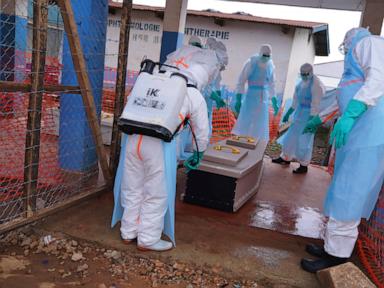
Fear sells better than context. When headlines scream that an Ebola transmission cycle is outpacing historical baselines, the public panics, global aid agencies fire up their fundraising machinery, and newsrooms rake in engagement. The narrative is always the same: a terrifying pathogen is mutating or moving faster than humanity can manage.
It is a comfortable, cinematic story. It is also fundamentally wrong.
Raw case numbers and transmission speed metrics tell you almost nothing about the intrinsic danger of a viral outbreak. High case growth early in an epidemic is rarely evidence of a hyper-efficient virus. More often, it is proof of diagnostic latency catching up to reality, paired with systematic misallocation of public health resources.
Panic-driven reporting creates a blind spot. While institutions scramble to fight the illusion of an unstoppable super-bug, they miss the boring, structural failures that actually drive localized transmission.
Velocity Is a Diagnostic Artefact, Not a Viral Superiority Metric
When health officials announce that an outbreak is spreading faster than previous events, they want you to imagine a pathogen tearing through populations at unprecedented speeds.
Look closer at the mechanics of disease surveillance.
During the initial phase of any viral event, surveillance systems suffer from severe baseline noise. Laboratories are unprepared, community contact tracing is non-existent, and early deaths are misattributed to endemic illnesses like malaria or typhoid. The moment a containment infrastructure kicks into gear, the surge in reported cases does not reflect a sudden spike in viral transmission. It reflects a spike in detection capabilities.
[Image of ebola virus structure]
Epidemiologists track the basic reproduction number ($R_0$), which estimates the average number of secondary infections produced by a single infected individual in a fully susceptible population. However, in real-time crisis management, decision-makers rely on the effective reproduction number ($R_t$), which accounts for real-world intervention and population immunity over time:
$$R_t = R_0 \cdot S(t)$$
Where $S(t)$ represents the proportion of the population that remains susceptible at time $t$.
When media outlets hype up rapid exponential growth, they confuse $R_t$ under unmonitored conditions with an inherent trait of the pathogen itself. A surge in case reports indicates that $S(t)$ was ignored for weeks due to inadequate early warning systems—not that the virus has acquired magical new powers of dispersion.
I have spent years watching international task forces dump tens of millions of dollars into high-visibility containment zones because a chart showed a steep curve. By the time those resources arrive on the ground, the initial outbreak wave in that specific cluster has already peaked due to natural behavioral adjustments by the local population. Meanwhile, three surrounding districts receive zero funding because their reported numbers look low, simply because no one is testing there yet.
The Lethality Paradox We Refuse to Address
The public believes that a fast-spreading virus is inherently more dangerous. Evolutionary biology demonstrates the exact opposite.
A virus requires a living host to replicate and spread. A pathogen that rapidly incapacitates or kills its host severely limits its own opportunities for transmission. Highly lethal strains of Ebola, such as the Zaire ebolavirus species, historically carry case fatality rates approaching 90% in untreated settings. That extreme virulence acts as an evolutionary dead end in low-density rural environments. The patient becomes bedridden almost immediately, drastically restricting their physical contact to immediate caregivers and healthcare workers.
When an outbreak appears to move at breakneck speed through a population, one of two things is actually happening:
- Amplification via Healthcare Failure: Infection is being artificially spread through improper infection control practices in triage centers and hospitals, turning medical facilities into super-spreading hubs.
- Nosocomial and Burial Vectors: Transmission is concentrated around specific social customs—such as traditional washings of deceased victims—rather than casual airborne or environmental contact.
The threat is rarely the pathogen's biological efficiency. The threat is operational breakdown.
By framing every fast-moving outbreak as a biological monster, international agencies shift the blame away from structural health system failures and onto the virus itself. It provides political cover for governments that spent decades underfunding basic medical infrastructure.
Dismantling the Myths Driving Outbreak Panic
The standard questions circulating during any health emergency are built on flawed premises. Public debate gets trapped in circular logic because people start with bad assumptions.
"Why is this strain spreading faster than previous ones?"
This question assumes genetic mutation is the primary engine of outbreak dynamics. It almost never is.
Viruses mutate constantly, but the vast majority of these genetic substitutions are neutral. They do not alter viral fitness, transmissibility, or clinical outcomes. When an outbreak expands rapidly, human geography, population density, mobility networks, and institutional delays are responsible for over 90% of the variance. Blaming a "new strain" is an easy out for public health leadership trying to explain away administrative delays in deploying basic PPE and contact tracers.
"Will current vaccines lose effectiveness against rapid outbreaks?"
Speed of spread has zero direct correlation with vaccine evasion. Antigenic drift occurs over time through selective pressure, not merely because a virus passes through a localized chain of hosts over a few weeks. Vaccines targeting stable viral proteins remain highly effective regardless of how rapidly cases are being logged by field hospitals.
"Should we shut down regional transit to stop the velocity?"
Blunt travel bans are a reactionary policy that consistently backfire. When you lock down borders during a high-velocity reporting phase, you do not stop the virus; you drive movement underground. People bypass official checkpoints, rendering contact tracing impossible and actively accelerating undetected spread into rural corridors.
The High Cost of Hyper-Intervention
There is a downside to challenging the rapid-spread narrative. Skepticism can be weaponized by bad actors to justify complete inaction or to starve frontline workers of necessary emergency funding.
Emergency funding mechanisms are tied to crisis metrics. If an international agency does not paint an epidemic as an unprecedented, fast-moving catastrophe, bureaucratic channels take months to release funds for basic diagnostic kits, clean water supplies, and protective gear.
The strategy of inflating the threat to trigger international aid works in the short term, but it destroys long-term credibility. When every new outbreak is branded as "the fastest on record," the public develops outrage fatigue. Communities stop listening to public health advisories altogether, treating critical medical warnings as institutional wolf-crying.
Where Resources Actually Belong
If you want to stop an outbreak in its tracks, stop looking at high-level case velocity charts and execute on basic containment hygiene.
- Abandon centralized emergency mega-hubs. Massive centralized containment units require transporting highly infectious patients across long distances, creating dozens of potential exposure events along the route.
- Fund micro-tier isolation capacity. Equip local primary care clinics with basic containment equipment and rapid point-of-care diagnostics so patients are isolated within hours of symptom onset, right where they live.
- Decentralize supply chains. Stop holding emergency medical stock in capital cities while waiting for epidemiological models to confirm an outbreak's trajectory. Pre-position infection control kits at the district level permanently.
- Pay local community health workers directly. The most effective contact tracing network is not an app or an international task force. It is the local health worker who knows every family in a five-block radius.
The myth of the unstoppable, high-velocity outbreak persists because it serves everyone involved. The media gets its apocalyptic headlines. Global health institutions get their emergency budgets approved. Local politicians get an excuse for crumbling health infrastructure.
An outbreak does not move faster because a pathogen becomes an invisible predator. It moves faster because we build systems that allow simple, predictable epidemiological mechanics to run wild—and then act surprised when the math plays out.