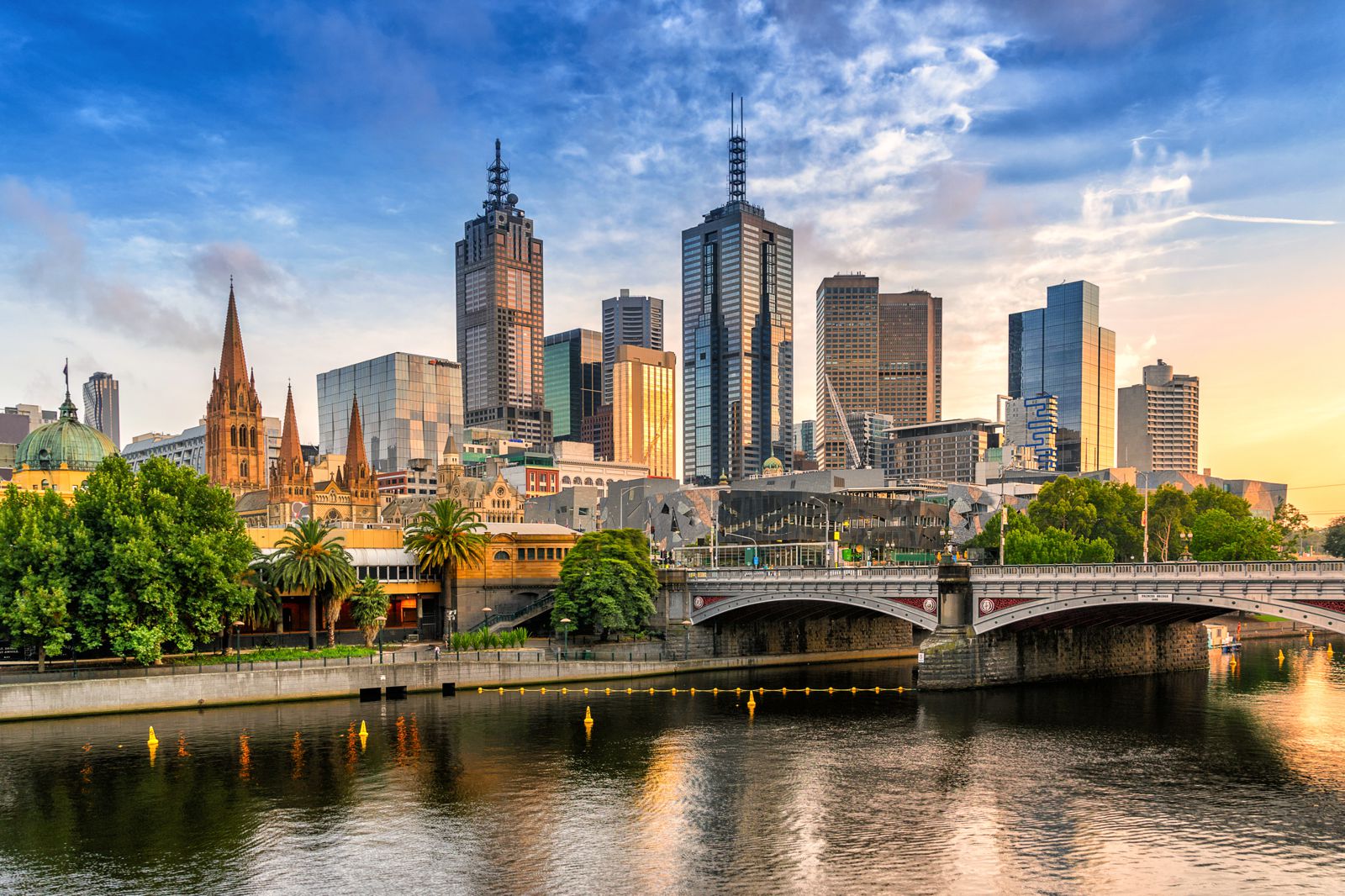
The air in Richmond smells like damp grass, spent beer, and something else tonight. Something older than the concrete arteries feeding into the Melbourne Cricket Ground.
Midnight. The stands are empty. The mighty, cathedral-like tiers rise into a bruised urban sky, swallowing the amber streetlamps of Punt Road. Down on the turf, where Australian rules footballers usually trade bone-rattling shoulder charges in the freezing mud, the ground crew is moving with surgical precision. They are painting lines. Not the familiar white arcs of an oval, but the harsh, razor-straight geometry of a gridiron. Fifty-yard markers. Hash marks. End zones. Don't miss our recent coverage on this related article.
For the locals walking their dogs along the Yarra River trail, the sight is mildly hallucinatory. For the National Football League, it is the execution of a multi-million-dollar logistical crusade.
Consider what happens next. To read more about the background of this, CBS Sports provides an informative summary.
Thousands of miles away from California, beneath a Southern Hemisphere sunrise, two American football franchises are about to treat a sacred Australian sporting shrine as their own personal Colosseum. The Los Angeles Rams and the San Francisco 49ers are bringing a California blood feud down under. It is billed as a regular-season clash, but everyone standing inside the stadium knows the truth. This is a mini Super Bowl disguised as an international marketing experiment.
Planes. Cargo holds filled with heavy-duty shoulder pads, specialized turf cleats, hydration telemetry systems, and custom playbooks printed on water-resistant paper. An entire ecosystem packed into shipping containers and flown across the Pacific Ocean.
Meet Marcus. He is a hypothetical equipment manager who has spent the last seventy-two hours running on three hours of sleep and high-octane flat white coffees from a pop-up shop on Flinders Lane. His hands are raw from uncrating helmets that smell of fresh lacquer and sweat. He doesn't care about geopolitics, global sports expansion, or television broadcast rights. He cares about whether the right size six-inch screw-in cleats are dry and ready for the linebacker who hits like a falling safe.
"We packed for a war," Marcus mutters, wiping a sleeve across his forehead as a forklift beeps rhythmically in the cavernous belly of the stadium's loading dock.
A war. Exactly. Because when division rivals step onto foreign soil, the traditional rules of engagement fracture. The 49ers and the Rams do not merely share a conference; they share a profound, visceral contempt born of decades of divisional warfare. Every snap is a chess match played at 20 miles per hour. Every collision sounds like a small car accident.
To understand why this matters to a city obsessed with cricket and footy, you have to look past the neon billboards and the corporate sponsors sipping pinot noir in the VIP suites. You have to look at the cultural collision happening in real time.
Australians understand hard hits. They grow up watching rugby league and Aussie rules. They respect athletes who throw their bodies into traffic without a second thought. But American football is different. It is a sport of stops and starts, of violent explosions of kinetic energy separated by moments of agonizing stillness. It is chess with armored bodies.
When the opening kickoff slices through the Melbourne night, tearing across the hallowed turf where cricket legends once batted for days, the sound will be alien. The sharp crack of a shoulder pad hitting carbon fiber. The guttural roar of a quarterback screaming Mike points at the linebackers. The rhythmic thud of massive bodies hitting the grass.
It is loud. It is terrifying. It is intoxicating.
For the NFL, this game is a calculated gamble. The league has spent years expanding its footprint, turning London and Munich into regular stops on its autumn tour. But Australia is a different beast. It is a sports-mad island nation with a proud, insular identity. You cannot simply drop American football into Melbourne and expect blind adoration. You have to earn it, yard by agonizing yard.
The players feel the weight of that mission, even if they try to block it out.
Picture a twenty-two-year-old rookie wide receiver from a university in the American South, stepping out of the team bus into the crisp Melbourne air. He has never left North America before. He has never seen a kangaroo outside of a nature documentary. Now, he is expected to run crisp 10-yard out routes on a foreign continent while eighty thousand screaming fans—most of them wearing neutral jerseys just hoping for a spectacle—watch his every move.
His stomach churns. The jet lag is a physical weight behind his eyes.
"Just catch the ball," he tells himself. "Just catch the damn ball."
That is the human core of this corporate juggernaut. Behind the multimillion-dollar television contracts, the prime-time broadcast windows designed for viewers waking up in Los Angeles, and the sleek social media highlight reels, there are young men dealing with profound physical exhaustion and immense performance anxiety.
The rivalry itself provides a gravitational pull. The Rams and the 49ers have traded blows for generations. From the Joe Montana era to the modern aerial wizardry of Sean McVay's offense, these teams know each other's heartbeat. They know the cadence of the snap counts. They know the subtle shifts in alignment that give away a blitz.
Moving that rivalry across the globe does not dilute the animosity; it supercharges it.
On game day, the transformation of the Melbourne Cricket Ground is absolute. The legendary members' pavilion, usually a bastion of conservative sartorial elegance where men wear tweed jackets and ties to watch a summer Test match, is flooded with fans draped in gold and crimson, or royal blue and sol. Pie floaters are swapped for stadium hot dogs loaded with mustard and onions. The local accent rings out in the concourses, blending seamlessly with the distinct twang of traveling West Coast fans who flew twenty hours just to see their team conquer a new frontier.
The referee blows the whistle.
The ball spirals through the Melbourne sky, cutting a clean arc against the gathering dusk.
Down on the sideline, a coach screams into his headset, his voice cracking with panic and adrenaline as the opposing offense lines up in a heavy formation.
The crowd holds its collective breath. A city built on cricket watches, transfixed, as twenty-two giants collide in the center of the universe.
And for one fleeting, electric night, Melbourne is the center of the football world.


