Silence fills a courtroom not with peace, but with weight. It is a heavy, suffocating pressure that settles over the wooden benches and the stoic faces of men and women sworn to weigh human fate. Outside, the world spins on its usual axis—cars honk, coffee shops chatter, headlines scroll across glowing screens. Inside, time slows to a crawl.
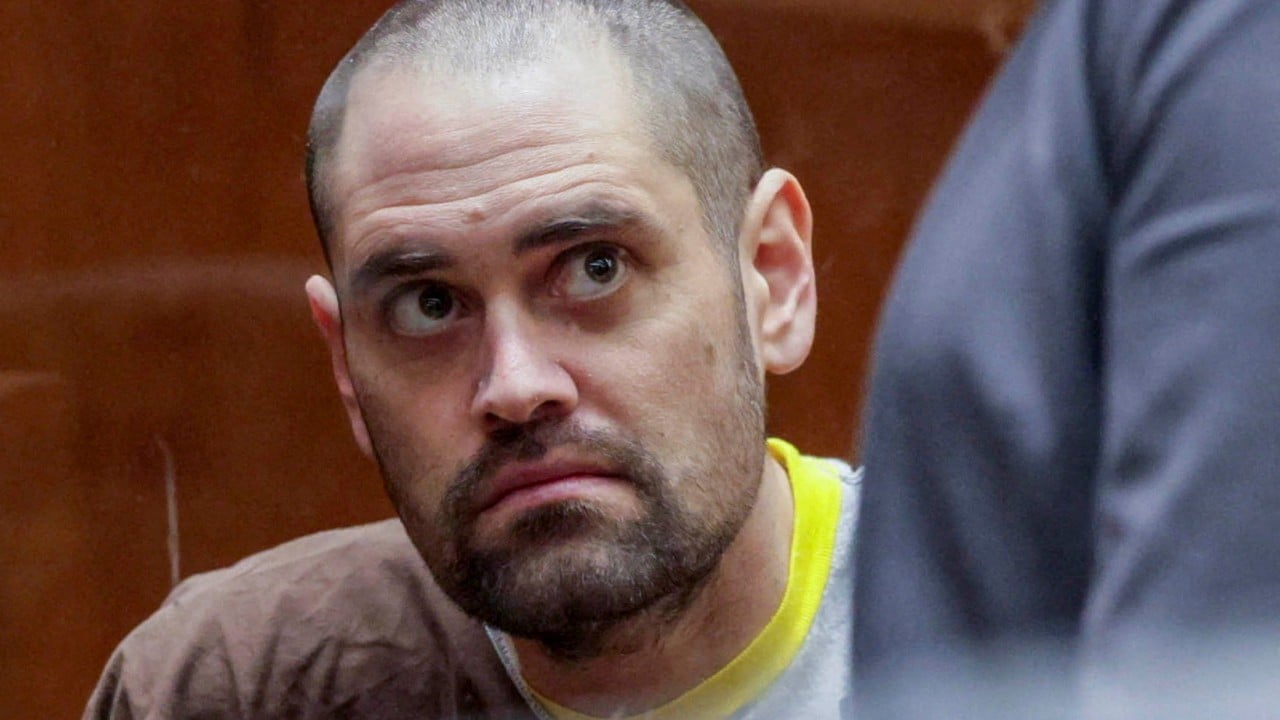
When the news breaks that the death penalty has been taken off the table in the trial of Nick Reiner, accused in the killing of his parents, the immediate reaction across the public square is fractured. Some feel a sharp, visceral surge of outrage, demanding the ultimate retribution for an unforgivable act. Others feel a quiet, shivering relief, recognizing that strapping a human being to a gurney does not resurrect the dead. But beneath the public noise lies a deeper, darker truth about how society handles the collision of unimaginable family tragedy and the machinery of criminal justice.
This is not just a story about a famous name or a Hollywood lineage. It is a mirror held up to our collective appetite for vengeance, our clumsy understanding of fractured minds, and the quiet desperation that can fester behind closed doors in homes draped in privilege and expectation.
Consider the ordinary house on an ordinary street. From the outside, the walls project stability. Framed photographs capture smiling vacations, milestones achieved, laughter frozen in time. Yet, human beings are notoriously adept at wearing masks. Behind polished mahogany doors, silent wars are fought every single day. Generations collide. Expectations crush fragile psyches. Mental illness creeps in like black mold, eating away at the drywall of familial love until nothing structural remains.
When that structure finally collapses, the violence is rarely sudden, even if it feels that way to the outside world. It is the culmination of years of unaddressed friction, unexpressed pain, and a profound inability to bridge the gap between who a parent expects their child to be and who that child is drowning in trying not to be.
In cases of parricide—the killing of one's own parents—the psychological horror is so absolute that our legal systems almost buckle under the weight. How do you prosecute a tragedy so unnatural? For decades, the knee-jerk reaction of the state has been maximum escalation. Eye for an eye. Blood for blood. The death penalty stands as the ultimate symbol of state-sanctioned finality, a promise that society can neatly excise a broken piece of itself and throw it into the fire.
Yet, stepping back from the executioner's threshold requires a different kind of courage.
To remove the death penalty is not to forgive. It is not to excuse. It is an admission that the state's role in a tragedy this profound should not be murder by appointment. When prosecutors decide against pursuing capital punishment, they are altering the entire physics of a trial. The courtroom shifts from a gladiatorial arena where the state fights for the right to kill, to something far more agonizing: an autopsy of a ruined life.
Without the looming shadow of the electric chair or the lethal injection chamber, the trial stops being about theater. It becomes about archaeology. Lawyers must dig through the strata of a broken mind, sorting through old journals, medical records, childhood trauma, and desperate text messages sent at three in the morning. They must ask uncomfortable questions about what happens when a human mind snaps under pressure, and where responsibility lies when biology and environment conspire to create a monster.
Let us be entirely clear about what mental illness looks like when it reaches its terminal velocity. It does not look like a movie villain plotting in the shadows. It looks like confusion. It looks like terror. It looks like a person trapped inside their own skull, convinced that everyone around them is an enemy, or feeling so detached from reality that the boundary between life and death blurs into total incoherence.
Families are often the last to see the cliff's edge because they are standing on it too. Parents, driven by love, fear, or the instinct to protect their reputation, often minimize symptoms, hide crises, or believe that discipline and affection will cure what is actually a neurological firestorm. They cover for their children until they can no longer cover for them. And sometimes, tragically, the child's illness metastasizes into violence that targets the very people who tried to shield them from the world.
When Nick Reiner's case reached the threshold of capital punishment, the legal system faced a crossroads that every modern society eventually encounters. Do we execute the broken product of a broken system, or do we lock them away forever in a cage of inescapable reflection?
The decision to spare a defendant from death does not satisfy the bloodlust of the internet comment sections. Social media thrives on simplicity. It demands binary answers: good and evil, monster and victim, executioner and executed. But human existence refuses to fit into those neat little boxes. Real life is messy, gray, and stained with blood that cannot be washed away by the state pushing a button.
By removing the death penalty, the state acknowledges the complexity of human suffering, even at its most horrific. It says that retribution has a limit. It admits that killing someone who was already mentally or emotionally dead inside accomplishes nothing except adding another body to the ledger of tragedy.
Think about what happens after the gavel falls. Whether a defendant spends the rest of their natural life behind concrete walls or enters a forensic psychiatric facility, the void left behind by the deceased remains untouched. Rob Reiner’s films, his cultural footprint, his presence in the cultural ether—these things persist. But the human being, the father, the mother—they are gone. No verdict, no sentence, no lethal injection can bring them back to Sunday dinner.
The trial proceeds without the specter of execution hanging over the proceedings, but the emotional temperature in the room remains scalding hot. Every witness testimony is a fresh raking of ashes. Every piece of evidence is a reminder of what was lost. The defense will argue chemistry, trauma, and the erosion of reason. The prosecution will argue culpability, choices, and the sacred value of the lives that were extinguished.
Both sides are right. And both sides are trapped in an inescapable nightmare.
This is the hidden cost of high-profile violence. It invites millions of spectators to consume another family's absolute worst day as entertainment, debate fodder, or moral philosophy. We judge from a safe distance. We pontificate on what we would have done, how we would have raised the child, how we would have spotted the warning signs. We wrap ourselves in the cozy blanket of our own perceived righteousness.
Yet, every parent reading about such a case feels a cold trickle of sweat down their spine. Every child who has ever screamed at their mother or father feels a sudden, sharp ache of empathy. We are all tethered to each other by the fragile threads of sanity and biology. We are all one catastrophic break away from the abyss.
The legal battle will grind forward through motions, testimonies, and closing arguments. Verdicts will be rendered. Sentences will be handed down. But the deeper questions raised by the case will linger long after the reporters pack up their cameras and leave the courthouse steps.
How do we love our children without enabling their destruction? How do we recognize the invisible rot of the mind before it roars into physical violence? And how do we build a justice system that balances the need for public safety with the sobering recognition of human frailty?
There are no easy answers. There are only trials, testimonies, and the quiet, unending grief of those left behind to pick up the pieces of a shattered name.
The courtroom door closes. The lights stay on. Inside, the work of mourning and judgment continues, far away from the cameras, beneath the heavy, unyielding weight of what cannot be undone.
Dust settles on the mahogany rail. Outside, the evening traffic moves on, indifferent to the ghosts that linger in the halls of justice.