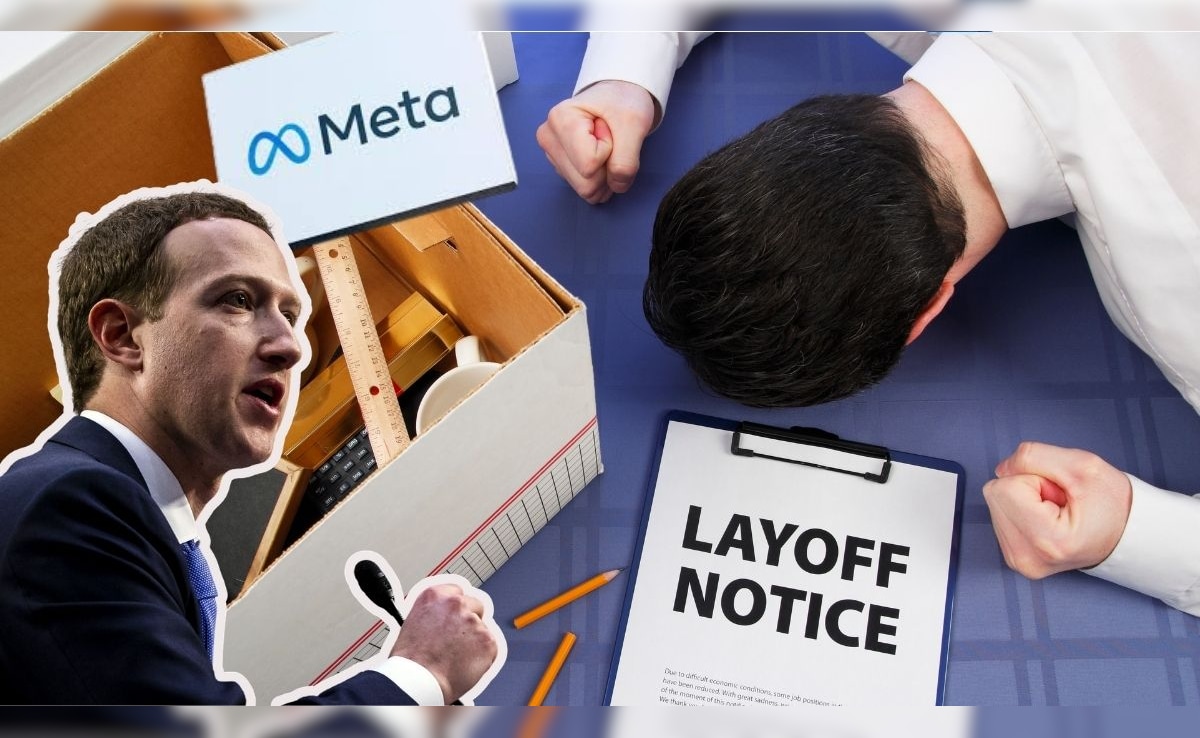
The headlines are weeping for a thousand lost jobs at Meta, framing the move as a desperate pivot to offset the eye-watering cost of GPUs. They are wrong. They are looking at the balance sheet through a 20th-century lens that views headcount as a metric of health. In the post-efficiency era of Big Tech, headcount is often a metric of bloat, and these layoffs aren't a sign of weakness—they are a clinical, necessary pruning of the legacy tree to feed the AI roots.
Mainstream financial reporting loves a "struggle" narrative. It's easy to sell. "Zuckerberg spends billions on H100s while shown the door to loyal workers." It’s dramatic. It’s also intellectually lazy. If you think a company with Meta’s cash flow is firing people because they can't afford the electricity bill for Llama 4, you don’t understand how $100 billion companies operate. Read more on a similar issue: this related article.
These layoffs are about the Unit of Output per Employee. For a decade, Silicon Valley operated on the "more is more" philosophy. If you had a problem, you hired 500 engineers to solve it. That era died in 2023. We are now in the era of the Force Multiplier.
The GPU-to-Human Ratio
The cost of AI isn't "crowding out" human capital. It is replacing the specific type of human capital that Meta no longer needs. When a company spends tens of billions on compute, they aren't just buying hardware; they are buying the ability to automate tasks that used to require middle management and "internal coordination" specialists. More journalism by Mashable highlights related views on the subject.
The "Nearly Thousand" figure being tossed around is a rounding error for a firm of Meta's size. It’s noise. The signal is where those cuts are happening: in the layers of organizational sediment that have settled over years of hyper-growth. I have watched tech giants burn through millions in "productivity" while their actual product velocity slowed to a crawl because of too many stakeholders. Zuckerberg realized that 10 elite engineers backed by $500 million in compute are worth more than 1,000 mediocre ones hampered by a labyrinth of Slack channels.
The Misconception of "Record Spending"
Critics point to Meta's CapEx and scream "unsustainable." They ask, "When will the AI ROI manifest?"
The premise of the question is flawed. You don't ask a general when the ROI on their tanks will manifest during the middle of a war. You buy the tanks or you lose the territory. Meta is currently engaged in a land grab for the foundational architecture of the next thirty years of the internet. Open-sourcing Llama wasn't a charity move; it was a tactical strike to ensure that Meta's standards become the industry's plumbing.
To maintain that lead, you need a lean, high-pressure environment. You don't need a thousand people who are still trying to figure out how to optimize "Facebook Stories" for the fifth year in a row. You need the capital to secure the next batch of Blackwell chips from NVIDIA.
Dismantling the "People Also Ask" Consensus
Is Meta in trouble?
The short answer: No.
The brutal answer: Meta is healthier than it has been in five years precisely because it stopped trying to be a social club. The "Year of Efficiency" wasn't a one-time event; it was a permanent shift in DNA. The market rewarded Meta with a trillion-dollar valuation because Zuckerberg proved he could kill his darlings. If the stock price dips on layoff news, it’s a buying opportunity created by people who don’t understand that talent density is superior to talent volume.
Why are they hiring and firing at the same time?
This confuses the uninitiated. How can you lay off 1,000 people while aggressively recruiting for AI roles?
Because talent is not fungible. You cannot simply "retrain" a mid-level project manager from the Instagram Ad-Sales support team to build a distributed training kernel for a trillion-parameter model.
Imagine a scenario where a shipping company replaces its fleet of sailboats with a single nuclear-powered cargo ship. Do they keep the 500 guys who know how to tie knots and hoist sails? No. They fire them and hire five nuclear engineers.
It’s not a "layoff." It’s a Tech-Stack Migration.
Is AI spending a bubble?
The "bubble" talk comes from people who haven't looked at the integration of AI into Meta’s ad auction system. This isn't speculative "Metaverse" tech—which, let's be honest, was a premature bet. This is core utility. AI-driven creative tools and targeting algorithms are already driving higher CPMs. The "spending" is an investment in the engine that prints the money.
The Hidden Advantage of Leaner Teams
There is a psychological benefit to these cuts that the "Compassionate Leadership" crowd hates to admit: The removal of the safety net.
When a team is overstaffed, the "social loafing" effect takes hold. People spend 40% of their time justifying their existence through status updates and cross-functional meetings. When you cut the headcount and increase the compute power, you force a radical focus.
- Decision Velocity: Fewer people means fewer approvals.
- Ownership: When there are only three people on a project, there is nowhere to hide.
- Resource Allocation: Every dollar not spent on a redundant salary is a dollar that goes into the R&D of generative models that will eventually render the original job obsolete anyway.
The "Cost of Talent" Fallacy
The common argument is that layoffs damage morale and make it harder to hire the "best."
The "best" actually want to work where the action is. Top-tier AI researchers don't care about the HR policies regarding the layoff of 900 people in the Reality Labs division. They care about how many H100s they can access and whether they can ship code without it being vetted by twenty different committees.
By cutting the "thousand," Meta is actually making itself more attractive to the 100 people who actually matter.
The Brutal Reality of the AI Transition
We have to stop pretending that every job in tech is sacred. Most roles in large tech companies are "connective tissue" that only exists because the company is too big.
If Meta wanted to be "nice," they would keep everyone and slowly bleed out as more nimble, AI-native startups ate their lunch. By choosing the "harsh" path, they are ensuring the survival of the organism.
The downside? Yes, it's cold. Yes, it's transactional. If you are looking for a lifelong "work family," don't work for a company that is trying to solve AGI. The stakes are too high for sentimentality.
Why the Analysts are Wrong about Meta's "Pivot"
The "Pivot to AI" is often described as a shift away from Social Media. It's not. It's an upgrade to the definition of Social Media.
Social Media 1.0 was about Connection.
Social Media 2.0 was about Attention.
Social Media 3.0 (Meta's current target) is about Synthetic Agency.
You don't build Synthetic Agency with a bloated workforce of legacy employees. You build it with a massive capital outlay and a small, elite group of researchers. The "thousand" who were let go were simply the wrong tools for the new job.
The Playbook for the Rest of the Industry
If you are running a company and watching Meta, don't look at the layoffs as a warning. Look at them as an instruction manual.
- Identify the Bloat: If a task can be even 20% automated by current LLMs, that role is already dead; you just haven't stopped paying the salary yet.
- Redirect the Capital: Do not "save" the money from layoffs. Reinvest it immediately into infrastructure. The goal is not to have a higher profit margin today, but to have a higher barrier to entry tomorrow.
- Ignore the Optics: The press will call you a villain. The market will eventually call you a genius.
The narrative that Meta is "struggling" to balance its books is a fairy tale for people who want to believe that the old way of working is still viable. It isn't. The "record spending" on AI isn't a burden—it’s the engine. The layoffs aren't a tragedy—they’re the exhaust.
Stop asking when the layoffs will end. Start asking when the remaining employees will finally be outnumbered by the GPUs. That is when the real scale begins.
Forget the thousand. Watch the chips.