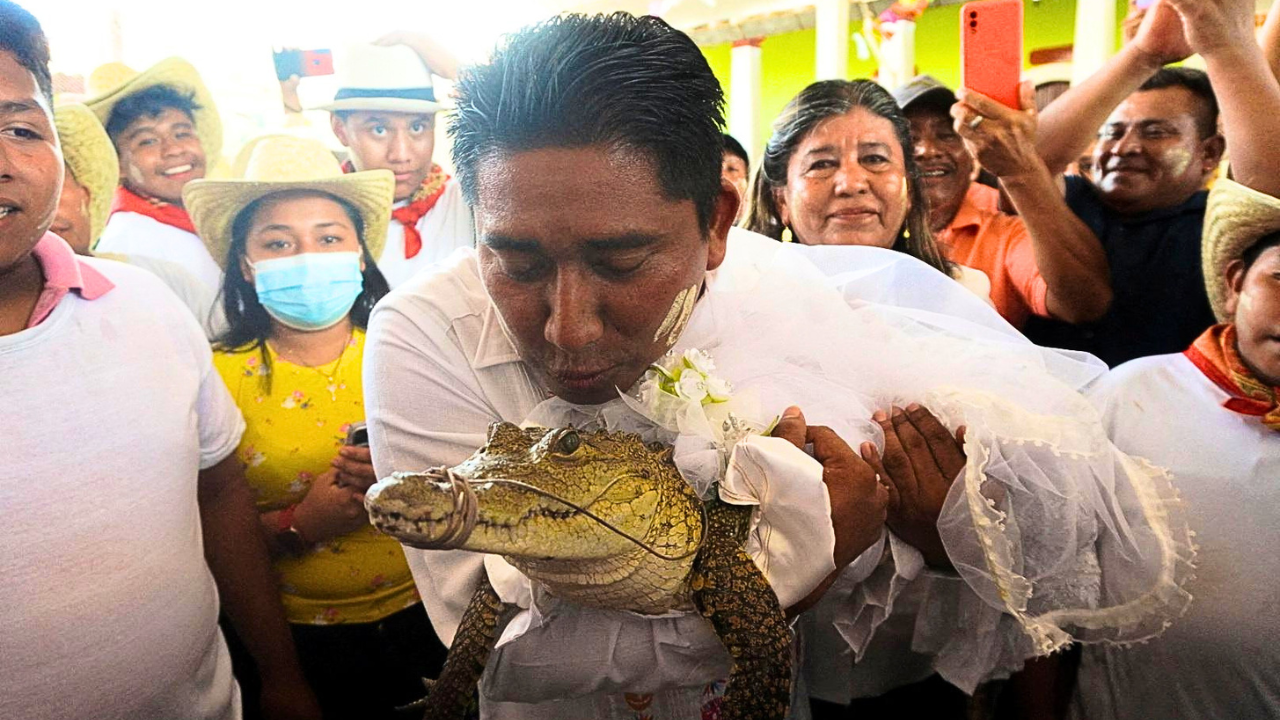
Every summer, images flood the internet of a politician in southern Mexico kissing a live caiman wrapped in a white bridal gown. Western onlookers mock it on social media. They label it a bizarre stunt or a backward spectacle.
They are missing the entire point.
In the coastal town of San Pedro Huamelula, nestled in Oaxaca, this is not a joke. It is a 230-year-old sacred pact. When the mayor pledges eternal love to a reptile named Miguelana Estela del Mar Zavaleta Ramirez, he is not losing his mind. He is executing a vital political and spiritual duty that keeps his community alive.
To understand why this happens, you have to look past the surreal sight of a reptile in sequins and see the deep history of survival, indigenous diplomacy, and environmental balance driving every single vow.
The Forgotten Treaty Behind the Reptile Bride
The ceremony is not some random animal-worshiping cult. It is a living history book.
Centuries ago, the Chontal and the Huave (also known as the Ikoots) indigenous groups were locked in a bloody conflict over territory and resource rights. The Chontal lived inland, while the Huave controlled the wealthy fishing grounds along the Oaxacan coast.
Peace only came through a strategic royal marriage. A Chontal king wedded a Huave princess, ending the war and blending their economies.
Today, the mayor steps into the shoes of that ancient Chontal king. The caiman represents the Huave princess, affectionately dubbed La Niña Princesa (the princess girl).
[Chontal King (The Mayor)] <-- Marriage Pact --> [Huave Princess (The Caiman)]
When the mayor swears fidelity to the caiman, he is renewing an active peace treaty between two distinct cultures.
Three Days of Intense Ritual and Ritual Clothing
This ceremony requires days of grueling community effort. The town’s local historian, Jaime Zarate, notes that the ritual marks the absolute pinnacle of their annual patron saint festivities for Saint Peter the Apostle.
The caiman is treated with the highest level of royal hospitality. A local woman chosen as the godmother oversees the bride's extensive wardrobe. Over three days of intense street festivals, the reptile is dressed in three distinct, heavily detailed outfits.
- The Zoque Dress: A vibrant, multicolored traditional skirt paired with hand-embroidered floral patterns.
- The Indigenous Tunic: A local garment layered with bright ribbons, sequins, and elaborate headpieces.
- The Bridal Gown: The final white wedding dress used for the official civil ceremony at the town hall.
Before the wedding, caretakers parade the reptile from house to house. Residents take her into their arms, dancing with her to traditional brass bands.
Yes, her snout is securely bound with twine. It is a practical safety measure. Caimans are unpredictable predators, and nobody wants a premarital mishap involving a lost finger during a community dance.
Why the Ritual Controls the Local Economy
If you ask a local fisherman or farmer why they care so much about this wedding, they will talk about the economy. They believe the marriage directly impacts their survival.
During the ceremony, a veteran fisherman named Joel Vasquez traditionally throws a massive net over the crowd. He shouts out prayers for a massive catch, asking for prosperity, balance, and survival.
To the Chontal people, the caiman represents Mother Earth and the water deities. By marrying her, the mayor secures a metaphysical contract for:
- Immediate rain to break the brutal southern Mexican heat.
- Rapid germination of corn and crop seeds.
- Calm coastal waters filled with enough fish to feed every family.
It is a public accountability ritual. Former Mayor Victor Hugo Sosa famously stated during his own ceremony, "I accept responsibility because we love each other. That is what is important." The town demands this level of commitment from their leaders. If the crops fail or the fish disappear, the burden falls squarely on the leader who failed to honor the pact.
How Western Observers Distort Indigenous Realities
Mainstream media loves to sensationalize the final kiss. Cameras zoom in as the mayor leans down to plant a kiss right on the caiman's bound snout.
But for the residents of San Pedro Huamelula, the kiss is secondary. It is just a quick seal on a massive, serious contract. The real focus is on the communal continuity. In an era where climate change threatens small agricultural communities and indigenous languages are fading, this wedding is an act of fierce cultural preservation.
It resists the outside world's push to homogenize everything. The townspeople do not care if global audiences find it strange. They see an interconnected world where human survival is bound to the health of the swamps, the forests, and the oceans.
Action Steps for Cultural Travelers
If you want to witness this event firsthand instead of watching distorted clips online, you need to approach it with absolute respect.
- Time Your Visit: The festival peaks around late June and early July, coinciding with the feast of Saint Peter the Apostle.
- Ditch the Judgment: Do not show up treating the event like a freak show. Treat it with the same quiet reverence you would accord to a high-mass cathedral service or a state funeral.
- Support the Local Economy: San Pedro Huamelula is small. Skip the major international hotel chains in distant cities. Spend your money directly with local street vendors, small indigenous artisans, and family-run diners.
This is not a media stunt. It is a blueprint for living alongside nature, signed in blood centuries ago and renewed every year with a wedding dress and a kiss.