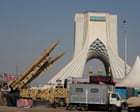
Every major newsroom on the planet is currently hyperventilating over the exact same script. Sirens wail, interceptors streak across the night sky, diplomats issue stern warnings at emergency sessions, and commentators reach for terms like escalation ladder and unprecedented strike. They want you to stare at the flashing lights in the sky and panic. They want you to believe this is a Hollywood thriller unfolding in real time where a single stray projectile triggers total systemic collapse.
It is a completely lazy, technologically illiterate narrative.
If you spend your time tracking the daily ticker of intercepted drones and retaliatory salvos, you are missing the entire architecture of modern statecraft. Wars are no longer decided by who has the louder rhetoric or the flashiest payload video. They are won, lost, and managed entirely through logistics, fiscal stamina, and the brutal math of cost-asymmetric attrition.
I have spent years watching defense analysts and market strategists misread these exact theater dynamics, treating high-end geopolitical friction like a schoolyard brawl rather than an ongoing balance sheet audit. When Jordan intercepts incoming threats or Washington authorizes heavy strikes, the headline-chasers scream about the brink of Armageddon. Meanwhile, the actual operators on the ground are calculating burn rates, missile stocks, and supply chain bottlenecks that dwarf any political speech delivered in a capital city.
Let us dismantle the core falsehood driving every emergency broadcast right now: the idea that missile volume equals military capability.
The Cost Asymmetry Trap
Look at the sheer economics of modern aerial defense. This is the part of the equation that the mainstream media completely glosses over because it does not fit the dramatic narrative of an imminent apocalypse.
When a state launches a volley of low-cost loitering munitions or basic ballistic systems, it is not just attempting to hit a physical target. It is executing a financial exhaustion strategy. An interception system relying on high-tier interceptors costs millions of dollars per shot. The incoming threat often costs a tiny fraction of that amount.
If you repeat this exchange over weeks and months, the winner is not determined by who has the most aggressive posture. It is determined by who runs out of inventory first.
Defense economists have been sounding the alarm on this math for years, yet cable news keeps pretending that every single launch represents a localized doomsday scenario. When Jordan steps in to secure its airspace, it is participating in a logistical shield that protects more than just territory; it protects the fragile supply lines of the entire region. The missile strikes launched by the United States are often less about reshaping the geopolitical map and more about resetting a depleted inventory baseline or signaling industrial capacity to rival powers.
Stop viewing these exchanges through the lens of emotional escalation. View them through the lens of a corporate supply chain under severe stress.
The Myth of Sudden Strategic Shifts
Another favorite trope of the panic-peddlers is the notion that a single night of heavy strikes changes the fundamental reality of the Middle East overnight.
Geopolitics does not work like a software update. Power structures, deterrence thresholds, and energy corridors are massive, sluggish oil tankers. They do not turn on a dime because a military command center authorized a heavier payload than usual on a Tuesday night.
What we are witnessing right now is not a sudden descent into chaos, but the noisy, grinding continuation of a long-term structural stalemate. Every actor involved knows the boundaries of the sandbox. Iran understands the limits of its conventional projection. Washington knows the staggering political and economic cost of a prolonged quagmire. Regional partners like Jordan are playing a high-stakes balancing act to insulate their domestic economies from total shock.
The media loves to frame every incident as a zero-sum game where one side wins and the other faces total ruin. Reality is far more boring and far more cynical. It is a persistent war of attrition where both sides probe for weaknesses in the other's logistics, intelligence networks, and domestic political endurance.
The Real Vulnerability
If you want to understand where this is actually heading, stop looking at the radar screens tracking incoming ordnance. Look at foreign exchange reserves, domestic inflation rates, and oil futures.
The real pressure points in modern protracted conflicts are entirely financial and social. Can a government maintain internal stability while diverting billions into interceptors? Can a regional trade hub absorb the rising cost of insurance and shipping lane rerouting without triggering domestic unrest? These are the metrics that matter. A state can weather a hundred high-profile missile strikes if its fiscal foundation is solid. Conversely, a state can collapse from the inside out without a single bomb dropping on its capital if its currency craters and its supply chains disintegrate.
The mainstream analysts want you to focus on the noise because noise generates clicks, panic, and political theater. They want you to believe we are standing on a knife-edge of total destruction because fear is the easiest product to sell.
Clear out the noise. Look at the balance sheets. The next time you see a breaking news alert screaming about an unprecedented escalation, ask yourself a simple question: Who is paying for the inventory, and how long can they afford to keep the lights on?
The answers to that question will tell you everything you need to know about the future of the region long before the smoke clears.