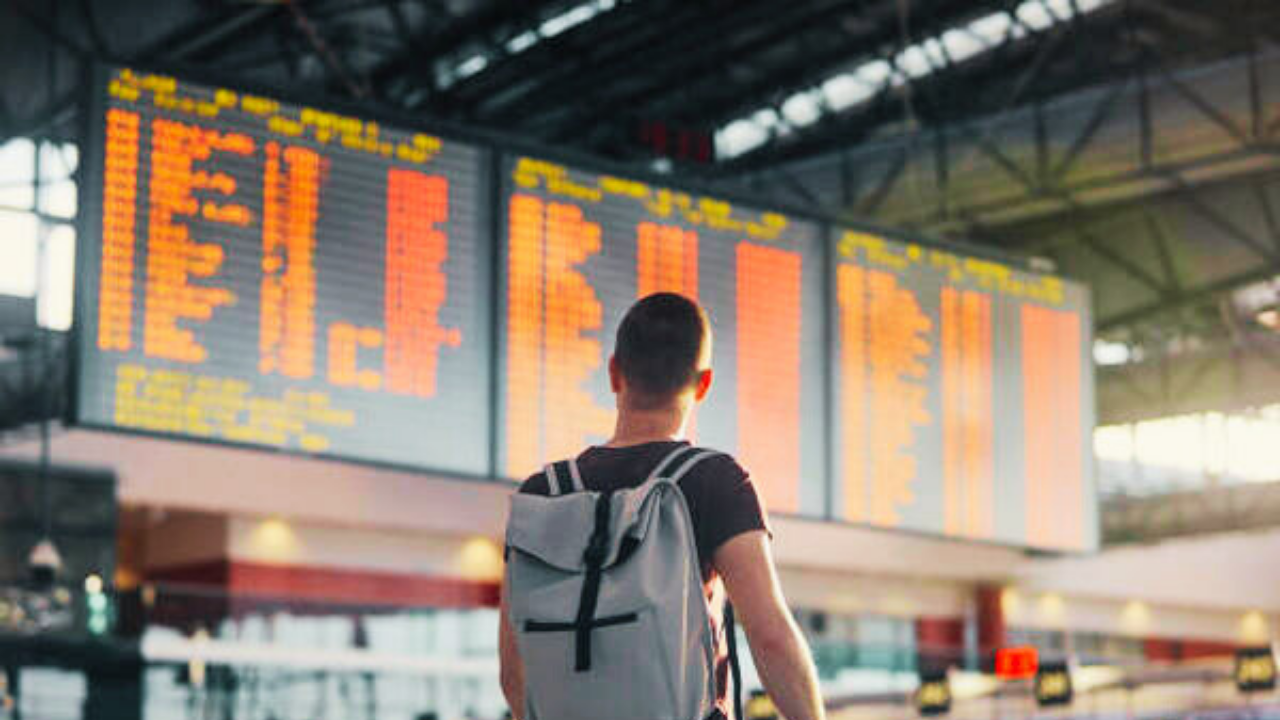
The sight of a departures board flickering from "Canceled" to "On Time" at Amman’s Queen Alia International or Beirut’s Rafic Hariri is more than just a logistical update. It’s a collective exhale. When the airspace over the Middle East starts to breathe again, the ripples are felt from London to Singapore. We’ve seen this cycle repeat lately—sudden closures, frantic rerouting, and then the tentative, fragile resumption of service. If you’re holding a ticket or planning a trip, you need to understand that "back to normal" is a relative term in global aviation today.
The recent reopening of skies over Jordan, Iraq, and Lebanon provided a much-needed pressure valve for a system on the brink of a nervous breakdown. After a period of intense geopolitical friction caused a complete halt in several key corridors, the first departures aren’t just flights. They’re tests of a very shaky status quo.
The Massive Logistics of a Closed Sky
Aviation doesn't just stop; it hemorrhages money and time. When the Middle East shuts down, even partially, it's not just local travelers who feel the sting. Look at the geography. The region acts as the world’s primary transit hub connecting Europe to Asia and Africa.
When a carrier like Emirates or Qatar Airways can't use certain waypoints, they don't just wait. They reroute. A flight from Dubai to London that usually takes seven hours might suddenly take nine because it has to skirt around restricted zones. That extra two hours isn't just an inconvenience for the person in 14B. It means tons of extra jet fuel, additional crew hours that might push them over legal limits, and a complete mess for connecting schedules.
During the most recent peak of the turmoil, the industry saw a scramble for alternative paths. Planes were pushed into narrower, more crowded lanes over Saudi Arabia, Egypt, and Turkey. This isn't just a headache; it's a safety and efficiency nightmare for air traffic controllers who are suddenly managing a 30% increase in traffic overnight.
The "slight relief" we're seeing now is the result of these corridors tentatively reopening. It's a reprieve, not a solution. Amman's reopening is a big deal because it’s a critical junction for regional traffic. But just because the gates are open doesn't mean the stress is gone. Airlines are still playing a high-stakes game of "Wait and See."
The Cost of a Canceled Ticket
When the flights stop, the bills start. For the average traveler, a canceled flight is a refund or a rebooking. For a carrier, it's a financial black hole. Every hour an Airbus A380 sits on the tarmac, it’s costing thousands in parking fees and lost revenue.
But there’s a deeper cost—the erosion of trust. If you're a business traveler with a meeting in Dubai or a family heading to Thailand via Qatar, you're looking at the news and wondering if you'll actually get there. This uncertainty is why the first few departures after a shutdown are so scrutinized. They’re a signal to the world that, for now, the gears are turning again.
Why Some Airlines Fly While Others Stay Grounded
The divide between how different airlines respond to these situations is stark. You’ll notice that while regional giants like Flydubai or Royal Jordanian are often the first to resume service, Western carriers like Lufthansa or United might wait days or even weeks longer.
This isn't just about being cautious. It's about risk management and insurance. A carrier based in the Middle East often has a different risk tolerance and a more direct line of communication with local civil aviation authorities. They might have more granular, real-time data on exactly which patches of sky are safe.
Western airlines, meanwhile, have to answer to different regulatory bodies—the FAA in the US or EASA in Europe. These organizations often take a broader, more conservative view of safety. If there’s even a 1% chance of a stray projectile or a sudden closure, they’d rather keep their planes on the ground in Frankfurt or London.
This creates a weird, disjointed reality for travelers. You might see a Royal Jordanian flight taking off for the same destination that a Lufthansa flight was just canceled for. It’s frustrating. It’s confusing. But it’s the reality of how global aviation manages conflict.
The Real Impact on Your Travel Insurance
Don't assume your "standard" travel insurance policy has your back during geopolitical unrest. Most policies have specific exclusions for "acts of war" or "civil unrest." If your flight is canceled because of a closure in the Middle East, you’re often at the mercy of the airline’s own rebooking policy rather than an insurance payout.
If you're traveling through this region, you need to read the fine print on your "Force Majeure" clauses. I’ve seen countless travelers get stuck in transit hubs because they thought their premium credit card insurance would cover a three-day hotel stay. In many cases, it won’t if the cause is a regional conflict.
A Sky Under Constant Revision
The reopening of airspace in Iraq or Lebanon isn't a permanent fix. It’s a dynamic, hour-by-hour decision-making process. Air traffic controllers use a system called NOTAMs (Notice to Air Missions) to communicate these changes instantly.
In recent weeks, we’ve seen NOTAMs being issued and rescinded within hours. This level of volatility is why you can’t trust a flight schedule more than a day in advance right now.
Consider the case of Erbil or Baghdad. These are vital nodes for traffic between Europe and India. When Iraq closes its sky, that traffic has to go south over the Arabian Peninsula or north over Turkey. The North corridor is already strained because of the ongoing situation in Ukraine and Russia. Basically, we’re running out of sky.
This "global aviation turmoil" isn't a single event. It’s a compounding crisis. Every new closure puts more pressure on the remaining open routes. When a small window opens—like the one we’re seeing now—it’s like a dam finally letting some water through. It helps, but the reservoir behind it is still dangerously full.
What to Do If You're Stuck
If you find yourself caught in one of these sudden shutdowns, your first move shouldn't be to call the airline's customer service line. You’ll be on hold for four hours. Your first move should be the airline's app or their social media team. Digital platforms are usually updated faster than the people on the phones can keep up with.
- Check the Flight Path: Use tools like FlightRadar24 to see if planes are actually flying the route you’re booked on. If you see other airlines diverting, yours likely will too.
- Book the "In-Between": If your long-haul flight is canceled, don't just wait for the next one. Look for regional hubs that are still operating. Sometimes getting to a nearby country and catching a different carrier is faster than waiting for your original airline to sort out its mess.
- Stay Near the Airport: If things are volatile, don't head to a hotel two hours away. Once the sky reopens, things move fast. You don't want to miss a surprise "re-departure" because you were stuck in traffic.
The Fragile State of the Middle East Sky
The reality is that we're living in a time where the "freedom of the skies" is a myth. Airspace is a sovereign asset, and it’s being used as a tool of geopolitics more than ever. The relief we’re seeing today is welcome, but it’s also a reminder of how easily the world’s most important travel arteries can be pinched shut.
For anyone traveling in 2026, the Middle East will continue to be the biggest variable in your itinerary. Whether you're flying through Doha, Dubai, or Istanbul, you're relying on a complex web of diplomacy to keep those engines turning. The first departures after a crisis are a good sign, sure. But they’re not a guarantee of a smooth ride tomorrow.
Expect more disruptions. Build extra time into your connections. Most importantly, stay informed by looking at the actual flight data, not just the "On Time" status on your boarding pass. The sky is reopening, but it’s doing so with a heavy dose of caution.
Keep your apps updated and your bags light. If you're heading through a major hub like Dubai or Istanbul this week, double-check your airline's specific policy on "unforeseen regional events." Knowing exactly what they owe you in terms of rebooking—before you're standing in a line of 500 people—is the only way to keep your sanity.