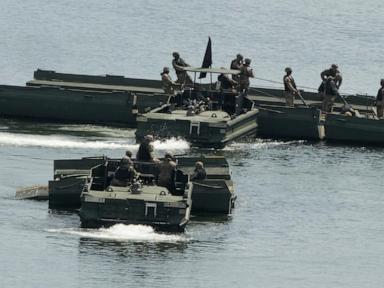
Foreign policy pundits are losing their minds over Washington cutting joint military exercises on the Korean Peninsula. The lazy consensus in Washington and Seoul claims that every canceled computer simulation or battalion maneuver signals the unraveling of the United States-South Korea security umbrella. Analysts scream about deterrence. They warn of an emboldened Pyongyang. They treat decades-old mobilization routines as holy scripture.
They are entirely wrong.
The obsession with routine military theater is masking a rotting strategic reality. The alliance does not depend on tens of thousands of troops playing war games in the mud to prove its worth. In fact, clinging to bloated, ritualistic exercises has become a crutch that prevents both nations from facing modern defense economics.
The Myth of Perpetual Mobilization
Let us define the core misunderstanding. Defense analysts treat military exercises as a direct proxy for deterrence capability. If the drills shrink, deterrence apparently evaporates. This is an absurd conflation of bureaucracy and combat power.
I have watched defense bureaucracies spend millions of dollars on scripted, highly choreographed field exercises that simulate mid-20th-century total war while ignoring 21st-century asymmetric threats. When an alliance measures its strength by how many tanks it can roll across Gyeonggi Province on a schedule, it stops thinking about actual deterrence. Real deterrence is dynamic, unpredictable, and anchored in advanced technology and integrated command structures. It is not found in an 11-day calendar event that opposing militaries have spent decades learning how to safely monitor and bypass.
Imagine a scenario where the United States and South Korea stop measuring alliance health by the volume of fuel burned in joint maneuvers, and instead audit actual operational readiness, cyber resilience, and missile defense integration. The panic over scaling back these drills reveals a deep-seated lack of imagination among foreign policy elites who cannot conceive of cooperation outside the traditional Cold War template.
The Real Cost of Complacency
The defense establishment loves to ignore the friction these exercises cause. Critics frame recent White House pushback solely as a diplomatic concession or an erratic impulse. They completely gloss over the structural hazard of moral hazard.
When Seoul relies indefinitely on an oversized American military footprint to rehearse basic defense operations, it stunts its own strategic maturation. South Korea boasts one of the most advanced economies and technologically sophisticated industrial bases on earth. Yet, the persistent crutch of massive joint drills has allowed domestic political classes to chronically underinvest in independent force multiplication and regional responsibility.
As defense analysts like those at prioritization think tanks point out, Washington is overstretched globally. Assets diverted to constant Pacific posturing strain supply chains and strain munitions stockpiles that are urgently needed elsewhere. Pretending that the US military can maintain unlimited, high-tempo theater-level exercises without breaking its back is sheer delusion.
Dismantling the Alliance Anxiety Industry
Let us address the frequent questions raised by terrified establishment commentators.
Does cutting drills invite aggression from North Korea? History says no. Pyongyang’s provocations correlate with its own internal political cycles and technological milestones, not whether an annual command post exercise features twelve field maneuvers instead of twenty. North Korea responds to real capabilities, economic leverage, and strategic positioning, not the presence or absence of scripted battalion drills.
Does scaling back exercises signal abandonment? Only if you define an alliance purely by physical hand-holding. True strategic integration survives changes to training schedules. If the security architecture of the Pacific region collapses because a few field exercises are trimmed, then the alliance was a house of cards to begin with.
The real danger to the US-South Korea relationship is not a reduction in military pageantry. The danger is a shared refusal to modernize.
Stop mourning the theater. Start building an alliance that actually matches the demands of the current century instead of reenacting the past one.