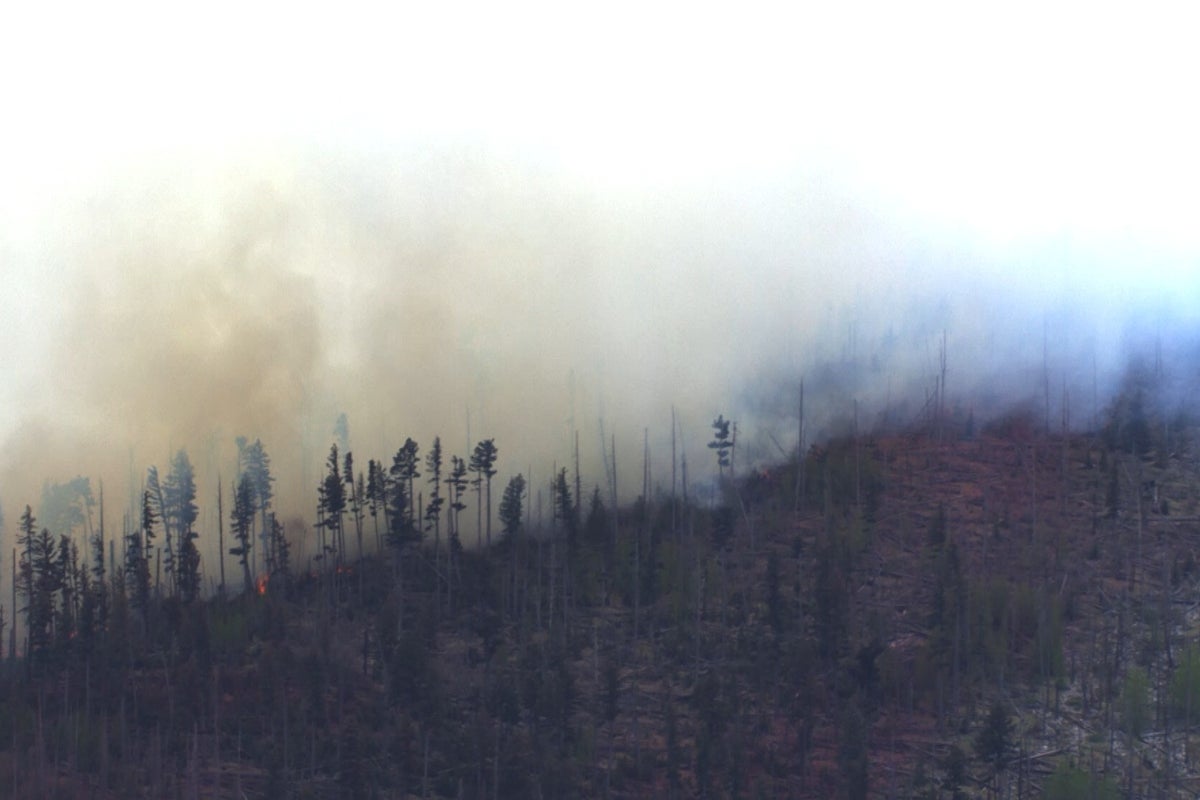
A horrific aviation accident in the mountains of New Mexico just shattered a long-held illusion. For years, the aviation industry treated electronic warfare testing as a background nuisance—an annoying blip on a pilot's digital map or a minor glitch in the cockpit. We assumed the safety buffers built into commercial and medical flights would always protect human life.
We were wrong. Don't forget to check out our previous post on this related article.
A preliminary report from the National Transportation Safety Board (NTSB) details a lethal chain of events on May 14, where electronic jamming from a military missile range severely disrupted a medical transport flight shortly before it slammed into a mountainside. The crash killed all four people on board: two pilots and two flight nurses. It also ignited a massive wildfire in the Capitan Mountains that took nearly a month to completely extinguish.
This isn't an isolated tech glitch over a war zone. It happened right here in the United States, inside domestic airspace, on a routine medical evacuation flight. It exposes a massive, systemic flaw in how our civil aviation infrastructure interacts with expanding military testing. If you want more about the context of this, TIME provides an excellent summary.
The Midnight Disconnect Over White Sands
The aircraft, a Beechcraft King Air twin-engine turboprop, took off shortly before midnight from Roswell Air Center on what should have been a quick, routine leg to Sierra Blanca Regional Airport in Ruidoso.
The flight crew knew the military was running electronic warfare exercises. The Federal Aviation Administration (FAA) had issued a public warning that the White Sands Missile Range would be actively jamming GPS signals that night. The advisory warned that satellite signals could become completely unreliable within a massive 240-mile radius. The destination airport sat less than 70 miles from the epicenter of that dead zone.
Just after midnight, the illusion of safety dissolved.
Air traffic controllers noticed the plane was flying 1,000 feet higher than assigned. When alerted, the pilots responded with words that are becoming terrifyingly common in modern cockpits: they had completely lost GPS capability.
The situation was dynamic, chaotic, and messy. According to the NTSB data, three other planes in the immediate vicinity were simultaneously screaming into their radios about a total loss of GPS navigation.
Realizing the severity of the blackout, the approach controller scrambled to contact military operations to issue a "stop buzzer" request—an industry emergency protocol to force the military to shut down its jammers immediately.
The military complied. Two minutes later, the aircraft's automated tracking data snapped back to life, updating every few seconds instead of leaving massive, minute-long gaps in the flight path. The system was working again. But the relief didn't last.
The Fatal Illusion of Going Visual
What happened next is the crux of the entire investigation, and it highlights a psychological trap that catches even highly experienced aviators.
Because the GPS failed, the crew requested a traditional, ground-based Instrument Landing System (ILS) approach. But at 12:08 a.m., the pilots radioed that they had the lights of Ruidoso in sight. They told controllers they could cancel their instrument flight plans and land visually.
With the crew reporting visual contact with the ground, air traffic control gave the military the green light to turn the jammers back on.
It was a moonless night in a rugged, dark mountain range. Veteran pilots will tell you that seeing the distant twinkling lights of a town does not mean you can see the massive, pitch-black mountain ridge sitting directly between your windshield and the runway.
The King Air began descending toward the airport. Suddenly, automated systems showed the aircraft trying to climb aggressively. It wasn't fast enough. The plane struck the jagged mountainside at 9,950 feet—just 230 feet below the summit.
Flight Timeline - May 14
------------------------------------------------------------
11:50 PM | Takeoff from Roswell Air Center
12:01 AM | Crew reports "lost GPS capability" due to jamming
12:05 AM | Air Traffic Control requests military shutdown
12:07 AM | Jamming stops; GPS data updates normalize
12:08 AM | Crew reports "visual on Ruidoso," switches to visual
12:10 AM | Jamming resumes; aircraft descends into terrain
The NTSB noted a disturbing detail in the data: the onboard GPS altitude reading was showing the aircraft roughly 600 feet higher than it actually was compared to ground-based radar.
When electronic warfare jammers or spoofers scramble a receiver, they don't just blank out the screen. Sometimes, they feed the aircraft subtly corrupted data. If those pilots looked at their backup digital screens for even a split second to verify their altitude in the dark, they were looking at a lie.
The Real Issue the Industry is Ignoring
The standard defense from aviation authorities is simple: pilots shouldn't rely solely on GPS. We have old-school radio beacons, ground radar, and visual rules for a reason. If the satellite signal drops, fly the airplane manually.
But that argument is completely out of touch with how modern flight decks actually operate.
GPS isn't just a digital map on a screen anymore. It is the absolute foundation for almost every automated safety net in the sky. When a military jammer overpowers a satellite signal, it doesn't just disable navigation. It triggers a cascading failure across multiple systems:
- Terrain Awareness and Warning Systems (TAWS): The very system designed to scream "Pull Up!" when a mountain approaches relies heavily on GPS positioning to cross-reference terrain databases.
- ADS-B Surveillance: The automated tracking that lets controllers see exact altitudes and positions drops into massive lag loops.
- Autopilot and Flight Management: Digital systems can drop offline or behave erratically when their internal time clocks and location inputs are desynchronized.
The aviation community has been sounding the alarm on this for years. Organizations like the Aircraft Owners and Pilots Association (AOPA) have repeatedly pushed the FAA to limit domestic jamming tests, arguing that relying on printed text warnings in confusing pre-flight briefings isn't a real safety strategy. Reports of domestic civilian flights experiencing severe GPS interference have skyrocketed, yet the testing schedules keep expanding.
Immediate Steps to Protect Your Flight
If you are an active pilot navigating domestic airspace, you cannot afford to treat electronic testing alerts as minor issues. The New Mexico tragedy proves that military interference can turn a routine flight fatal in a matter of seconds. You must change how you plan and execute flights when electronic testing is active.
First, stop treating electronic testing advisories as background noise during your pre-flight routine. If your route takes you anywhere near a designated testing zone, assume your satellite navigation will completely fail or, worse, lie to you. Explicitly map out alternative, ground-based VOR (VHF Omnidirectional Range) routing before you ever start the engines.
Second, monitor your digital systems for early warning signs of signal degradation. Check your Flight Management System’s sensor page to monitor your Estimated Position Uncertainty (EPU). If that number spikes, or if your automated tracking data starts showing unexplained gaps, don't wait for total system failure.
Immediately tell air traffic control you are experiencing interference and request they initiate emergency protocols to tell the military to "stop buzzer".
Finally, never let the comfort of a glowing town in the distance trick you into abandoning your instrument flight rules in mountain territory. If you lose satellite signals on a dark night, rely on the ground-based Instrument Landing System. Do not drop your safety margins to hurry onto the ground. Acknowledge that the system is under stress, keep your altitude high, and let ground radar guide you home safely.


