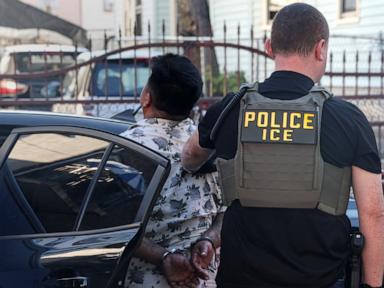
Every few months, a predictable headline cycles through major newsrooms. It points out that while Immigration and Customs Enforcement (ICE) deports the undocumented relatives of active-duty troops, the Pentagon is simultaneously spending millions to recruit from immigrant communities.
The mainstream press treats this as a shocking moral contradiction. A smoking gun of government hypocrisy.
They are wrong. Not because the deportations aren't happening, and not because the military isn't desperate for bodies. They are wrong because they are viewing two entirely separate bureaucratic machines through a single, emotional lens. When you look at the actual statutory mechanics, military recruitment metrics, and federal immigration law, the "hypocrisy" vanishes. What replaces it is a cold, structural reality that most journalists either don't understand or deliberately ignore to drive clicks.
The Lazy Consensus of Federal Hypocrisy
The standard media framing relies on a simple, gut-punch juxtaposition. On one side, you have a decorated infantryman fighting overseas while his spouse or parent faces removal proceedings back home. On the other, you have Army and Navy recruiters setting up booths at cultural festivals, offering accelerated citizenship pathways to green card holders.
To the casual reader, the federal government looks schizophrenic. Why would Uncle Sam beg immigrants to bleed for the flag while kicking their families out the back door?
Because "the federal government" is not a single person with a unified conscience. It is a sprawling collection of competing statutory mandates.
Under Title 8 of the U.S. Code, the Department of Homeland Security (DHS) and ICE are legally bound to enforce immigration statutes passed by Congress. Under Title 10, the Department of Defense (DoD) is legally bound to maintain force readiness and meet congressionally mandated end-strength numbers. Neither agency has the legal authority to rewrite the other's rulebook. Expecting ICE to halt enforcement because the Pentagon has a recruiting shortfall is like expecting the IRS to forgive your taxes because you bought a Treasury bond. The systems do not talk to each other, and by design, they aren't supposed to.
I have spent years watching policy analysts and legal teams bang their heads against this exact wall. They treat executive branch friction as a PR failure rather than a feature of constitutional separation. When you treat a statutory collision as a moral failing, you propose useless solutions—like demanding better "messaging" from the Pentagon—instead of looking at the actual levers of power.
What the Data Actually Says About Immigrant Recruiting
To understand why the Pentagon courts immigrant communities despite the political optics, you have to look at the brutal math of the All-Volunteer Force.
The U.S. military is facing its worst recruiting crisis since the draft ended in 1973. According to Pentagon data, roughly 77% of young Americans between the ages of 17 and 24 are ineligible to serve without a waiver. They are disqualified due to obesity, drug use, criminal records, or failing to meet basic academic standards on the Armed Services Vocational Aptitude Battery (ASVAB).
Now compare that pool to legal immigrants.
Data from the Center for Naval Analyses (CNA) and Pentagon accession reports consistently show that non-citizen recruits—specifically Lawful Permanent Residents (green card holders)—outperform their native-born peers across almost every metric that matters to a commander.
- Attrition rates: Non-citizen recruits are significantly less likely to wash out during basic training or their first term of enlistment. In many cohorts, their first-term attrition rate is nearly half that of native-born recruits.
- Waiver requirements: Immigrant applicants require fewer moral and medical waivers. They tend to have lower rates of obesity and fewer disqualifying criminal infractions.
- Language and cultural utility: In an era of great-power competition, the DoD desperately needs native speakers of critical languages. You cannot teach a 19-year-old from Ohio fluent Mandarin, Tagalog, or Arabic in six months at the Defense Language Institute. You can recruit someone who already speaks it.
The Pentagon isn't targeting immigrant communities out of progressive altruism or PR vanity. They are doing it because, purely from a human-capital standpoint, green card holders are the highest-performing, lowest-risk demographic available in a shrinking recruitment pool.
Dismantling the "Automatic Citizenship" Myth
If you ask the average person on the street how military immigration works, they will tell you that joining the Army gets you and your family immediate citizenship.
That is false. And this misconception is where the media's outrage machine gets most of its fuel.
Let's define the terms precisely, because the legal distinctions are where lives get ruined.
First, undocumented immigrants cannot enlist. Period. Under 10 U.S.C. § 504, enlistment is strictly limited to U.S. citizens, U.S. nationals, and Lawful Permanent Residents (green card holders). The only historical exception in modern times was the Military Accessions Vital to the National Interest (MAVNI) program, which allowed certain non-immigrants with critical medical or language skills to enlist. That program was effectively shuttered in 2016 due to security vetting bottlenecks.
Second, service member citizenship does not grant automatic amnesty to relatives. Under Section 329 of the Immigration and Nationality Act (INA), active-duty service members can apply for expedited naturalization—often bypassing the standard residency waiting periods. However, once that soldier becomes a citizen, their ability to sponsor relatives is still governed by standard family-based immigration laws.
If a soldier's spouse or parent entered the country without inspection (EWI), or has a prior deportation order, naturalization does not magically erase those bars to admissibility.
This is where Parole in Place (PIP) comes in—a discretionary policy managed by U.S. Citizenship and Immigration Services (USCIS). PIP allows certain undocumented immediate relatives of active-duty service members and veterans to remain in the U.S. and apply for work authorization and adjustment of status without leaving the country.
Here is the catch that critics miss: PIP is discretionary, case-by-case, and applies only to those who entered without inspection. If a soldier's spouse overstayed a visa, or has certain criminal convictions, PIP doesn't apply. When ICE detains or deports a military family member, it is rarely because the system "forgot" their relative was in uniform. It is usually because the relative fell outside the narrow statutory boundaries of PIP, and ICE lacked the prosecutorial discretion—or the political will—to ignore a standing removal order.
The Questions Nobody Is Asking
When readers search for news on military deportations, they usually type variations of the same flawed queries: Why doesn't the military stop ICE from deporting families? or Are veterans being deported after serving?
Let's strip the sentimentality out of both questions and look at the raw mechanics.
Why doesn't the Pentagon stop ICE?
Because the Secretary of Defense has zero operational control over the Department of Homeland Security. Asking the Pentagon to stop a deportation is like asking a hospital administrator to dismiss a traffic ticket. The DoD can—and occasionally does—submit letters of support attesting to a service member's character and operational readiness. Beyond that, the military has no legal standing in an immigration court. If you want ICE to stop deporting military relatives, stop yelling at Army recruiters and start looking at the House and Senate Judiciary Committees. Only Congress can amend the INA to create a statutory shield for military families.
Why are veterans deported?
This is the uncomfortable truth that advocacy groups often gloss over. Under current law, a non-citizen veteran who commits an "aggravated felony" as defined by immigration law—a category that includes non-violent offenses like certain drug charges or theft—faces mandatory deportation after serving their criminal sentence. Because they never completed their naturalization paperwork while in uniform (often due to bureaucratic delays or simply assuming their discharge papers made them citizens), they remain legally classified as aliens. Once convicted, the military cannot save them. The uniform does not confer permanent immunity from Title 8.
The Unspoken Downside of the Pentagon's Strategy
To look at this honestly, you have to acknowledge the risk in the Pentagon's current approach. Recruiting heavily from immigrant communities while failing to secure statutory protections for their families isn't just a PR headache—it is an operational vulnerability.
Imagine a scenario where a young Specialist is deployed to Eastern Europe or the Indo-Pacific. Halfway through a nine-month rotation, he gets a call that his mother has been placed in removal proceedings in Texas.
What happens to his focus? What happens to unit cohesion?
Military readiness depends on a basic social contract: the service member focuses on the mission, and the institution takes care of their family back home. That is the entire reason the military funds Tricare, on-base housing, and Family Readiness Groups. When the federal government simultaneously recruits an immigrant and threatens their household with deportation, it breaks that contract. It introduces a massive distraction into the ranks that no amount of resilience training can fix.
Furthermore, word travels fast in tight-knit immigrant communities. Recruiters already struggle to overcome cultural skepticism about military service. Every high-profile deportation of a military spouse acts as an anti-recruiting campaign that costs the DoD far more than its marketing budget can repair.
How to Actually Fix the Collision
If we stop treating this as a moral outrage and treat it as a structural failure, the solutions become obvious—even if they are politically unpalatable to both sides of the aisle.
First, automate naturalization at basic training. Right now, green card holders have to navigate a maze of USCIS forms, background checks, and command signatures to get their citizenship. Thousands fall through the cracks and leave the service without ever taking the oath. Naturalization should be an automatic, default step of graduating from Basic Combat Training or Boot Camp, processed before a recruit ever hits their first duty station. If you are cleared to handle a rifle and hold a security clearance, you are cleared to be a citizen.
Second, codify Parole in Place into federal law. Leaving military family protections to the shifting executive whims of different administrations creates chaos. One president expands prosecutorial discretion; the next president rescinds it overnight. Congress needs to pass a clean statutory carve-out under the INA that shields immediate relatives of active-duty personnel from removal, barring serious violent felonies.
Third, decouple recruiting marketing from immigration promises. Recruiters need to be brutally transparent about what service can and cannot do for a recruit's extended family. Selling the dream of "serving to save your family" when the legal framework cannot guarantee that outcome is malpractice.
Stop Blaming the Wrong Machine
The next time you see an article expressing shock that the Pentagon is recruiting immigrants while ICE deports their relatives, recognize it for what it is: outrage bait built on a fundamental misunderstanding of how the U.S. government operates.
The Pentagon isn't being hypocritical. It is fighting for survival in a labor market where three-quarters of native-born youth can't pass the physical or the entrance exam. And ICE isn't going rogue. It is executing the exact statutory mandates Congress wrote decades ago and refuses to update.
Until lawmakers in Washington decide whether they value border enforcement mechanics more than military force readiness, these two agencies will keep colliding. And the people caught in the wreckage will continue to be the ones wearing the uniform.