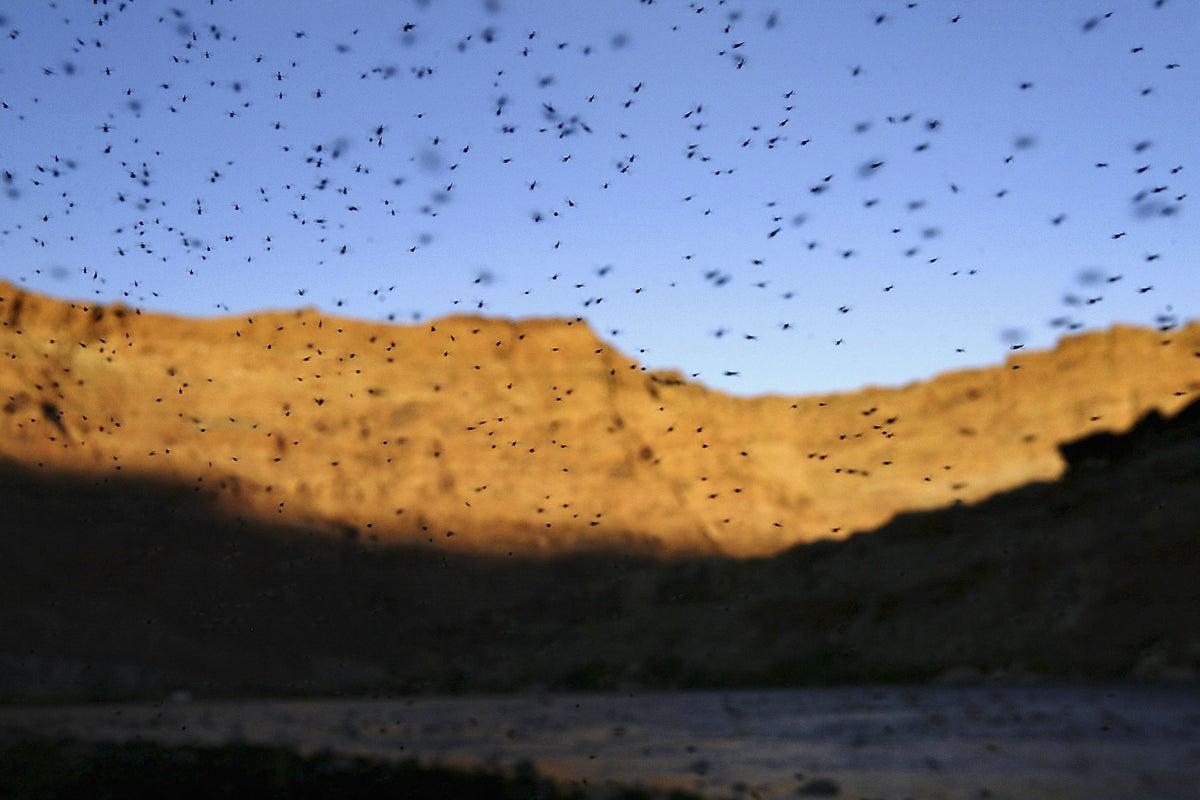
Everyone loves a mosquito-free backyard. Pour a gin and tonic, flip on the patio lights, and enjoy a warm summer evening without a single whine near your ear or an itchy welt on your ankle. The headlines celebrate the quiet. They call it a lucky break, an unexpected dry-weather bonus, a strange meteorological gift.
They are dead wrong. Meanwhile, you can find other stories here: Why the Fight Over Strait of Hormuz Service Fees Changes Global Shipping.
When a notoriously resilient, hyper-adapted blood-sucking pest suddenly vanishes from entire regions of the United States, you are not witnessing a victory. You are witnessing an ecological collapse in slow motion.
The lazy consensus in mainstream media frames these localized population crashes as a public health win. Fewer bugs mean fewer bites, which means lower transmission rates for West Nile or Zika, right? Stop right there. That line of thinking treats nature like a messy kitchen that finally got a deep clean. It ignores the brutal reality of trophic webs. Mosquitoes are not anomalies; they are the baseline currency of aquatic and terrestrial food chains. When that currency evaporates, everything else goes bankrupt with it. To see the complete picture, we recommend the recent analysis by The Washington Post.
The Great Disappearance Myth
Let us look at the actual data rather than the comforting fiction that nature is simply taking a holiday. Across parts of the Southwest and the Gulf Coast, extreme heatwaves and hyper-arid droughts have fundamentally broken the reproductive cycle of Aedes and Culex populations.
Here is the mechanism the talking heads miss. Mosquito larvae are aquatic. They need standing water, but they also need a functional temperature window. When ambient temperatures shatter historical norms and ponds literally bake into concrete-like mud, the water vanishes before the larvae can pupate. Alternatively, the water heats up to lethal thermal thresholds, cooking the next generation alive in the shallows.
It sounds like a good thing until you trace out the consequences.
I have spent years analyzing ecological disruption metrics for municipal vector control boards and environmental risk firms. I have seen taxpayers cheer when mosquito counts drop by eighty percent in a single season. Then, twelve months later, local fisheries collapse because dragonfly nymphs, aquatic beetles, and small amphibians—which rely on mosquito larvae as their primary caloric intake—starve to death.
If you wipe out the bottom of the food web, the top follows. Songbirds, bats, and migratory waterfowl do not magically find alternate takeout menus. They decline.
Dismantling the Public Health Complacency
People ask a very simple question when they hear about dropping insect numbers: "Why are we crying over a blood-sucking parasite?"
The premise of the question is flawed. It assumes mosquitoes exist purely to annoy humans. That anthropocentric arrogance is precisely why public health messaging fails so miserably.
Let us be precise about the biology. Out of thousands of mosquito species worldwide, only a tiny fraction target humans. The rest are specialized pollinators, nutrient recyclers, and critical vectors of energy transfer. Male mosquitoes do not bite; they feed exclusively on nectar. They are legitimate pollinators for many nocturnal plants and orchids that bees ignore.
When you lose mosquitoes, you lose a massive chunk of nocturnal pollination. You disrupt seed sets for wild flora. You starve the swallows that sweep through the twilight sky.
Furthermore, the vacuum left by one species rarely stays empty. Imagine a scenario where a dominant mosquito species gets wiped out by a severe drought, leaving behind an empty ecological niche. Nature hates a vacuum. That space gets colonized by opportunistic generalists or even more aggressive vectors that might be harder to control and deadlier to human populations once the rains finally return.
Celebrating a temporary drop in mosquito populations is like celebrating a sudden drop in your body temperature when you actually have hypothermia. It feels comfortable for a second, but your system is failing.
The Economics of Vector Panic
Municipalities spend billions annually on chemical fogging, larvicides, and public awareness campaigns. When a dry year crashes the local mosquito population naturally, city councils pat themselves on the back and reallocate those budgets to road paving or police pensions.
That is shortsighted financial malpractice.
When the climate violently swings back—as it invariably does from extreme drought to torrential atmospheric rivers—the dormant eggs in the soil hatch en masse. Because the predatory populations that normally keep them in check were decimated during the prior famine year, the rebound is explosive. You get a super-generation of mosquitoes with zero natural resistance pressure from depleted predators.
Suddenly, the city is facing an unprecedented vector surge, the emergency pesticide stockpiles are low because funding was cut, and public health departments are scrambling to issue emergency warnings. I have watched local governments blow millions in emergency appropriations trying to play catch-up against a biological tidal wave they thought they had beaten permanently.
What You Should Actually Do
If you want to manage pests responsibly without breaking the ecological machinery of your local backyard, stop treating your yard like a sterile military base.
Stop buying indiscriminate broad-spectrum insecticides that kill every crawling and flying organism within a hundred-foot radius. You are slaughtering beneficial predatory insects while barely denting the hardy mosquito eggs tucked away in damp soil.
Instead, focus on precision management:
- Target the actual breeding zones: Dump standing water in saucers, gutters, and old tires weekly. Do not spray your entire lawn with chemical poison.
- Inoculate your water features: If you have a pond, stock it with native fish or use biological larvicides containing Bacillus thuringiensis israelensis (Bti). Bti is a targeted bacterial protein that kills only mosquito and blackfly larvae, leaving frogs, fish, and birds completely unharmed.
- Build predator habitat: Install bat houses and bird feeders. Invite the natural predators back into your ecosystem so they can do the heavy lifting for free.
Stop hoping for environmental collapse just to get a weekend free of bug bites. The silence of the insects is not peace. It is an alarm bell.