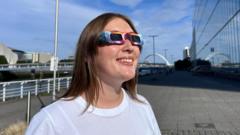
You checked Amazon yesterday. Your local hardware store sold out last Tuesday. Now every major retailer shows backorder notices, and panic is setting in. Everyone is hunting for certified solar eclipse glasses, and finding a pair feels like winning a small lottery.
Relax. You don't actually need them to experience the event.
When millions of people realize that safety gear is vanishing from shelves weeks before a major celestial alignment, a predictable rush happens. Prices on resale sites spike to ridiculous levels. Counterfeits flood the market, putting eager stargazers at genuine risk of eye damage. Honestly, the obsession with specialized cardboard shades misses half the fun. You can view the entire phenomenon safely using household items you already own, or by shifting your perspective entirely away from direct staring.
The Reality of ISO 12312-2 Compliance
Let's address safety first because nobody wants to mess up their vision. Real solar eclipse glasses meet a specific international standard known as ISO 12312-2. They block out essentially all harmful ultraviolet and infrared light while filtering out intense visible light to a comfortable level.
Counterfeiters know this. They slap fake certification labels onto flimsy plastic frames with dark plastic film that looks convincing. Looking at the sun through unverified filters bought from sketchy online marketplaces is a terrible gamble. If you bought cheap pairs from a random third-party seller last night, throw them away. Your retinas are worth more than a twenty-dollar gamble.
When store shelves empty out, desperate people make mistakes. They grab welder's glass without checking the shade number, or they double up on sunglasses. Neither option works. Standard sunglasses let in thousands of times too much light, even if you wear three pairs at once.
Build a Pinhead Projector in Five Minutes
You learned about pinhole cameras in elementary school, and physics hasn't changed since then. You don't need fancy optics to project an image of the sun onto a flat surface.
Grab a cereal box, a piece of aluminum foil, a needle, and a sheet of white paper. Cut a square out of one end of the box lid. Tape a piece of foil over that hole, then poke a tiny, clean hole through the foil with your needle. Tape your white paper inside the bottom of the box opposite the foil. Turn your back to the sun, position the box over your shoulder so sunlight enters the foil hole, and look through the other cutout. You will see a crisp, inverted projection of the crescent sun right there on the paper.
This method turns crowds into communities. Instead of standing in silence with dark glasses glued to your face, people gather around simple cardboard boxes, pointing out sunspots and tracking the shadow's progress together. It is interactive, cheap, and completely foolproof.
Use Nature to Your Advantage
The most memorable part of a total eclipse isn't staring blindly at a tiny bright ring in the sky. It is what happens to the world around you.
Look down at the ground beneath a leafy tree. Every single gap between the leaves acts as a natural pinhole projector. You will see hundreds of tiny crescent suns dancing on the sidewalk, the grass, and even the side of your car. No glasses required. You just walk outside, look at the pavement, and soak in the surreal visual physics playing out under your feet.
Temperature drops rapidly. Birds get confused and head to roost. Shadows sharpen into bizarre geometric lines. These environmental changes hit you harder when you aren't squinting through a piece of cardboard held tightly against your face.
Alternatives Hiding in Your Kitchen
If paper boxes feel too crafty, look around your kitchen. A colander works brilliantly. Stand on your porch, hold a standard metal pasta strainer overhead, and look at the shadow it casts on the ground or a piece of poster board. You will get dozens of miniature eclipse projections all at once.
Even your hands can do the trick. Cross your outstretched fingers waffle-style over one another, leaving small gaps between your knuckles. The spaces between your fingers cast a grid of shadows that project the shifting solar disk onto the pavement below. You carry your viewing equipment with you everywhere you go.
What Happens When You Give Up the Glasses
Panic-buying stems from marketing hype that tells you there is only one right way to experience an astronomical event. Retailers love a shortage because it drives urgency.
When you skip the hunt for sold-out paper frames, you free yourself from the logistics of compliance. You stop worrying about whether your filters have microscopic scratches. You stop fighting traffic to pick up a shipment that got delayed at a sorting facility.
Grab a colander, raid your recycling bin for a shoebox, or just watch the shadows shift under the nearest oak tree. You will get a better view, a safer experience, and zero shipping anxiety.


