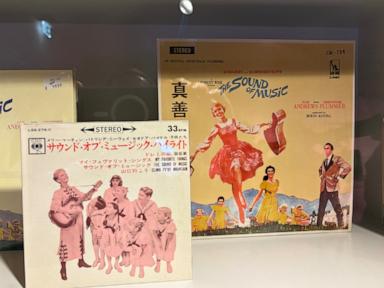
Cultural tourism assets rarely scale purely on narrative nostalgia; their economic viability relies entirely on institutional architecture, intellectual property geography, and localized supply chain integration. The opening of the Sound of Music museum in Salzburg marks a critical case study in how heritage tourism shifts from passive site-seeing to active intellectual property monetization. For decades, the cinematic adaptation of the von Trapp family story generated millions in indirect economic value for Salzburg through municipal walking tours and private bus excursions, yet captured minimal direct gate revenue for a dedicated, centralized permanent collection. Deconstructing this development reveals the operational mechanics of converting historical friction into a structured cultural asset.
The Dual Heritage Divergence
A fundamental analytical error in cultural tourism analysis is treating source material and cinematic adaptations as equivalent intellectual properties. The historical reality of the von Trapp family choir and their subsequent emigration diverges sharply from the 1965 Robert Wise film starring Julie Andrews.
The historical trajectory involved a genuine naval captain, a strict patriarchal household, a convent interlude, and a genuine musical enterprise that toured Europe before fleeing the Anschluss. Conversely, the cinematic asset introduced dramatized political subplots, compressed timelines, and specific melodic frameworks engineered by Rodgers and Hammerstein.
Heritage sites operating within popular culture face a structural choice: optimize for historical fidelity or monetize cinematic recognition. The new museum in Salzburg resolves this tension through a bifurcation strategy. It separates the documentary archive of the real family from the theatrical production design of the Hollywood adaptation. This separation maximizes the total addressable market. It captures the general tourist seeking theatrical immersion while satisfying the demographic seeking biographical accuracy.
The economic implications of this divergence are straightforward. Historical fidelity attracts academic and low-yield cultural tourists with low per-visitor spend. Cinematic recreation commands higher ticket elasticity, retail conversion rates, and corporate event booking potential. By housing both under a single institutional framework, the asset diversifies its revenue streams against fluctuations in cinematic popularity.
The Spatial Economics of Salzburg Heritage Tourism
Salzburg operates as a constrained urban tourism market. The historic center, the Altstadt, features rigid zoning laws, high real estate acquisition costs, and limited infrastructural capacity for high-volume foot traffic. Any new cultural institution must navigate these spatial constraints without degrading the visitor experience or triggering municipal pushback regarding over-tourism.
Integrating a museum of this scale into the existing urban fabric requires analyzing visitor flow mechanics. Traditional Salzburg tours suffer from spatial bottlenecks around Mirabell Palace, the nonnberg Convent, and Hellbrunn Palace. These locations function as unmonetized open-air exhibits where municipal infrastructure bears the maintenance cost while private tour operators capture the margin.
The establishment of a centralized physical museum alters the value chain by creating a proprietary node within the walking circuit. Instead of tourists dispersing value exclusively to third-party guides and municipal transit, the museum captures primary gate receipts and secondary retail spend.
This infrastructure deployment follows a classic asset-clustering model. By anchoring visitors in a controlled indoor environment during peak weather volatility, the institution smooths out seasonal revenue curves that typically plague European Alpine tourism.
The Value Capture Architecture
To understand the financial sustainability of the institution, one must deconstruct its revenue streams into three distinct categories: direct ticket yield, auxiliary intellectual property licensing, and integrated retail monetization.
Direct ticket yield is governed by demand elasticity during the European summer peak versus winter contraction. To manage this, operators deploy dynamic pricing models and timed-entry ticketing to maximize throughput without exceeding fire safety and spatial comfort thresholds.
Auxiliary intellectual property monetization involves negotiating rights access with studio stakeholders, estate descendants, and municipal tourism boards. The museum does not merely display artifacts; it curates an experiential narrative. This narrative depends on authorized multimedia usage rights, costume replicas, and interactive audio-visual installations that bypass standard museum fatigue.
Retail integration represents the highest-margin segment of the operating model. Unlike traditional art museums where gift shops sell prints and academic texts, a cinematic heritage museum converts emotional resonance into branded physical merchandise. The product assortment is engineered to target cross-generational buyers, leveraging nostalgia among aging baby boomers while introducing the property to younger demographics via digital touchpoints.
Operational Bottlenecks and Structural Risks
Every high-profile cultural asset faces specific operational vulnerabilities that can compromise long-term valuation. For this institution, three primary risks dominate the risk matrix.
First, intellectual property dependency creates high revenue concentration. If consumer affinity for the 1965 film experiences a structural decline among emerging demographic cohorts, top-line revenue contracts unless secondary programming expands. Mitigating this risk requires continuous educational outreach and corporate partnerships that refresh the property's cultural relevance.
Second, capacity constraints in the Salzburg Altstadt limit expansion potential. Unlike suburban theme parks or sprawling American historical estates, a downtown European museum cannot easily scale physical square footage to accommodate surging demand. Growth must come from yield optimization, extended operating hours, and digital expansion rather than increased physical footprint.
Third, labor and curation overhead in high-cost European jurisdictions exert constant margin pressure. Maintaining authentic archival materials requires strict climate control, security protocols, and specialized conservation personnel. These fixed costs remain static regardless of seasonal visitor volume fluctuations.
Strategic Forecast and Long-Term Viability
The launch of the Sound of Music museum in Salzburg is not merely a cultural addition; it is a masterclass in capturing uncaptured economic rent from a legacy intellectual property. By transforming fragmented, unmonetized outdoor sightseeing into a centralized, indoor, high-yield institutional asset, the stakeholders have realigned the local tourism value chain.
The forward strategy for the institution requires shifting from passive exhibition to active community programming, corporate hospitality leasing, and digital-physical hybrid exhibits. Operators who successfully integrate these revenue vectors will insulate themselves against macroeconomic travel shifts and secure long-term asset appreciation in an increasingly competitive global tourism market.