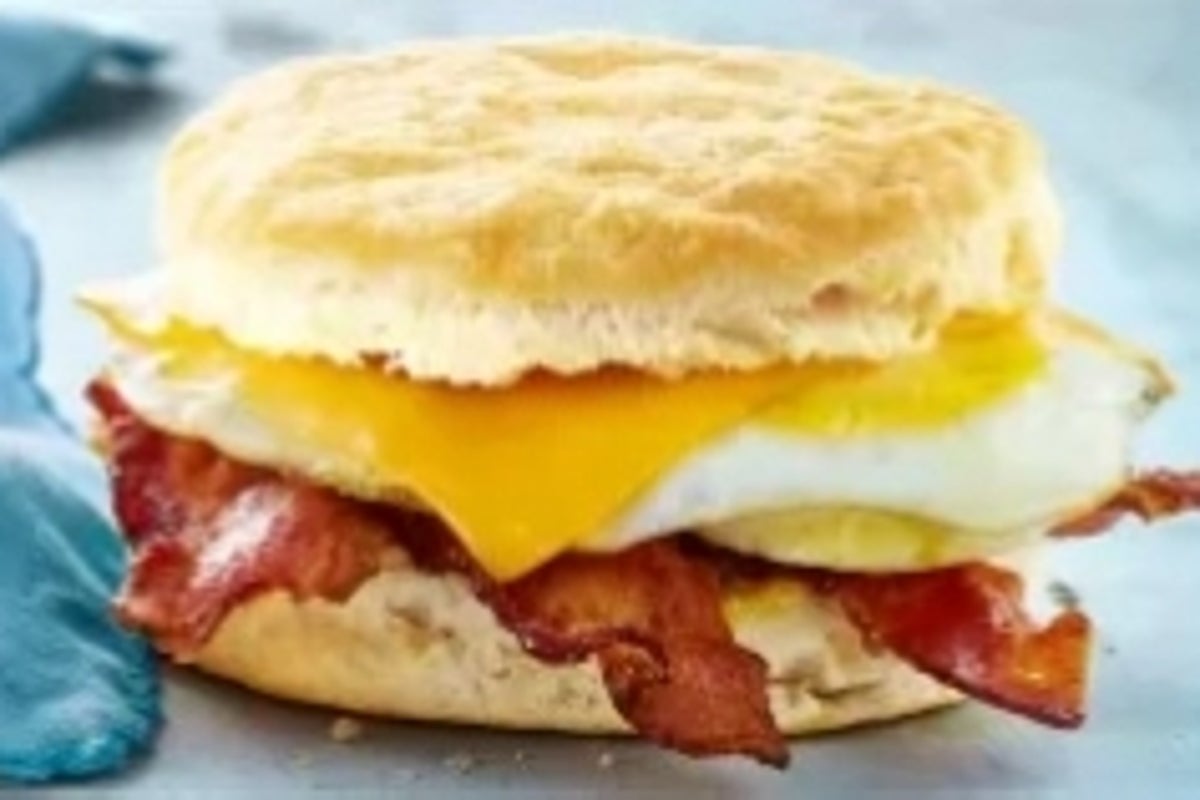
Dawn arrives slowly in the humid stillness of the American South. Before the sun burns through the mist, there is a very specific kind of quiet—the kind that smells of damp pine, cooling asphalt, and the sharp, unmistakable promise of fried chicken and biscuits.
For decades, the morning commute has been dictated by a familiar routine. Millions of drivers pull into identical drive-thru lanes across the country, greeting the glowing golden arches or the cheerful, rehearsed cadence of a nationwide chicken giant. We accept the paper bag, the lukewarm coffee, and the predictable hash brown because speed is convenient, and convenience is king. We stopped tasting our breakfast a long time ago. We just consume it. You might also find this similar story interesting: The Brutal Economic Reality Behind Longmeadow And Television Horticulture.
Then, there are places where things still happen differently.
Picture a cramped kitchen at five o’clock on a Tuesday morning. The air is heavy with the scent of unbaked flour and melting butter. A woman named Clara—hypothetical, but modeled after hundreds of kitchen veterans who have worked these shifts for decades—is standing over a stainless-steel table. Her hands are coated in flour up to her wrists, moving with a rhythm born of thirty years of repetition. She isn't operating a computerized conveyor belt or pulling a frozen patty from a vacuum-sealed plastic bag. She is cutting biscuits by hand. As discussed in recent coverage by Refinery29, the implications are significant.
This is the hidden world of regional fast-food royalty, a landscape dominated not by coast-to-coast corporate footprints, but by stubborn tradition, fiercely guarded recipes, and an almost militant devotion to freshness.
While the undisputed titans of fast-food breakfast battle for national dominance with massive advertising budgets and standardized menus, a quiet challenger has been steadily rewriting the rules of the morning meal. It is a regional chain—specifically, Tudor’s Biscuit World—operating primarily within the rugged, winding valleys of West Virginia, along with select pockets of Ohio and Kentucky. In a market obsessed with scale, they have chosen concentration. In an industry addicted to freezing, they still bake from scratch multiple times a day.
To understand why this relatively localized chain consistently outscores massive global competitors in customer satisfaction metrics, you have to look past the marketing and examine the mechanics of genuine comfort food.
Consider what happens when you bite into a standard mass-produced breakfast sandwich. The bread is often uniform, soft, and slightly sweet, engineered in a distant laboratory to withstand transport and extended shelf life. The cheese melts into a predictable film. It fills the stomach, but it leaves the memory entirely untouched.
Now, imagine the alternative
The Morning Ritual We Abandoned For Convenience
lifestyle
The alarm rings at six. The bedroom is cold, the floorboards biting against bare feet, and the day stretches out like a blank, intimidating canvas. Most of us negotiate with ourselves for five minutes before surrendering to the inevitable gravity of the morning. We pull on a coat, stumble into a car, and enter the sterile, fluorescent-lit purgatory of a drive-thru lane.
We do this because speed has become our default god. We trade flavor for efficiency. A greasy brown paper bag is handed through a sliding window, containing a sandwich engineered by a food scientist to dissolve in the mouth with minimal effort. It is functional. It gets the job done. It fills the void until lunch.
But occasionally, a different kind of morning demands attention.
Imagine walking into a small brick building in the humid predawn hours of the American South. The air does not smell of stale exhaust and industrial grease. It smells of melting butter, scorching cast iron, and the sharp, comforting bite of aged cheddar mingling with the sweet promise of sorghum.
In a culture obsessed with national ubiquitously scaled empires, we have largely forgotten that the best things in life are often stubbornly, defiantly local. Consider the quiet dominance of regional culinary institutions. While massive global giants fight a brutal, billion-dollar war for morning market share—tweaking drive-thru timers down by single seconds and testing synthetic flavor profiles in boardrooms—a humble Southern chain called Pal’s Sudden Service quietly achieves what multi-billion-dollar corporations can only dream of.
Operating in just three states—primarily Tennessee and Virginia—this localized powerhouse consistently outranks heavyweights like McDonald's and Chick-fil-A in consumer satisfaction polls.
How does a regional player with a footprint smaller than a single county in Los Angeles defeat brands that feed hundreds of millions of people daily?
The answer lies in a radical rejection of modern scale.
To understand why people will idle their cars in a winding queue for twenty minutes just to taste a biscuit, you have to look at the philosophy of the kitchen. Most modern fast food is assembly-line architecture. Ingredients are shipped frozen, stored in bins, and re-heated or dropped into vats of oil by automated timing systems. The human element is reduced to a mechanical transaction: punch the order, hand over the bag, collect the payment, repeat.
At Pal's, the process feels less like an industrial plant and more like an organized ballet. The structures themselves are architectural anomalies—bright blue roofs, giant fiberglass hot dogs, hamburgers, and french fries bursting through the walls like cartoon characters greeting you in broad daylight. It is whimsical, deliberately detached from the corporate minimalism that has flattened modern American architecture into shades of gray and beige.
More importantly, the food is made with a relentless dedication to freshness that defies the logistics of modern corporate expansion.
Consider the Frenchie Fries. They are not the uniform, chemically treated shoestrings found under the golden arches. They are hand-cut, skin-on rounds of potato, seasoned with a proprietary spice blend that tastes faintly of secret herbs and midnight diners. When you bite into one, it has the crunch of a potato chip and the interior fluffiness of a baked potato. It is a texture that cannot survive a thirty-minute drive across a sprawling suburb. It demands to be eaten immediately, hot from the fryer, wrapped in simple white paper.
This brings us to the invisible stakes of what we eat for breakfast.
Every meal is a vote for the kind of world we want to inhabit. When we choose the hyper-efficient, utterly placeless global chain, we are voting for consistency above all else. We are choosing the comfort of knowing that a breakfast sandwich in Seattle tastes identical to a breakfast sandwich in Miami.
But when we choose the local, the regional, the geographically restricted, we are acknowledging that place matters. We are admitting that distance changes flavor, that soil and climate and local pride leave a fingerprint on the food we consume.
There is a cost to this local devotion, of course. It requires patience. It requires geographical limitation. You cannot order a Pal's Frenchie Fry in New York or London. You have to go there. You have to travel through the winding mountain roads of Appalachia, past green rolling hills that catch the morning mist, until you find that bright blue roof standing out against the horizon like a beacon.
And that scarcity is its greatest asset.
In a world where everything is available everywhere all the time, true luxury is scarcity. It is the understanding that some experiences cannot be franchised away into oblivion without losing their soul.
When you unwrap that paper wrapper in the passenger seat of your car, watching the steam rise into the cold morning air, you aren't just eating breakfast. You are participating in a tradition that survived the homogenizing sweep of globalization. You are tasting the stubborn persistence of local flavor in a world that tries desperately to make everything taste like everything else.
The engine idles. The steering wheel is cold. But the first bite tells you everything you need to know about why some things are worth traveling for.