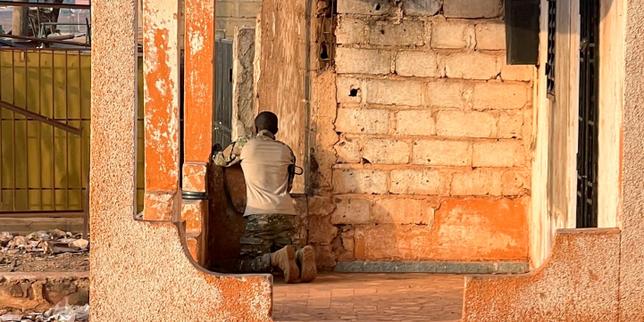
The dust in Kati doesn’t just sit on the ground. It hangs. It clings to the windshields of the aging taxis and settles into the deep creases of the elders' hands. Usually, this dust witnesses the mundane: the clatter of a morning market, the distant hum of the military base, or the rhythmic thumping of millet being ground for the day’s first meal. But last Saturday, the dust carried the scent of cordite and the weight of a country’s shifting soul.
Kati is not just a town. It is the symbolic heartbeat of Malian power, a garrison city sitting a mere fifteen kilometers from the capital, Bamako. When Kati trembles, the presidential palace in Koulouba feels the vibration. On that Saturday morning, Kati didn't just tremble. It bled. Read more on a related issue: this related article.
Twenty-three people. That is the number currently etched into the official ledgers. Twenty-three lives extinguished in a coordinated strike that signaled a terrifying evolution in a decade-long conflict. To the world, they are a statistic in a scrolling news ticker. To those standing in the red dirt of Kati, they are empty chairs at dinner tables and voices that will never again join the evening call to prayer.
The Anatomy of an Ambush
The attack was not a random burst of chaos. It was a calculated symphony of violence, a joint offensive by forces linked to both the CSP (the Tuareg separatist coalition) and elements associated with jihadist groups. This alliance—once unthinkable given their differing ideologies—represents a marriage of convenience that has turned the northern and central regions of Mali into a labyrinth of insecurity. Additional analysis by Reuters explores comparable perspectives on the subject.
Picture a young man named Amadou. He isn't a real person, but he is every person who lived through that hour. He is the shopkeeper who heard the first motorcycle engines. In Mali, the sound of a lone motorcycle is the sound of a neighbor. The sound of fifty motorcycles, synchronized and fast, is the sound of a death sentence.
The attackers arrived with the sunrise. They targeted the military installations, but bullets do not have eyes. They do not distinguish between a uniform and a school shirt. The assault was relentless. Heavy weaponry echoed through the streets, shattering the windows of homes where families were just beginning to wake. By the time the smoke cleared, the "garrison town" was a graveyard for twenty-three souls.
The Invisible Stakes of a Fractured Land
To understand why Kati matters, you have to look at the map—not the one on your phone, but the one written in the history of the Sahel. For years, the conflict was "up there." It was a problem for the desert reaches of Timbuktu and Gao. It was a distant fire that the people of the south watched with a mix of sympathy and detachment.
That detachment is gone.
The proximity of this attack to Bamako is a psychological hammer blow. It suggests that the security perimeter the government has fought to maintain is becoming porous. When the battle reaches the gates of the capital’s protector, the narrative of "containment" falls apart. This wasn't just an attack on people; it was an attack on the concept of safety itself.
The alliance between the CSP and jihadist factions is the most chilling development of all. Imagine two bitter rivals who realize they hate the referee more than they hate each other. The Tuareg separatists want an independent state in the north; the jihadists want a different kind of order altogether. Yet, for a Saturday in Kati, their goals aligned perfectly: to prove that the state is fragile.
A Cycle Written in Red Dirt
Mali has seen its share of upheaval. Since the 2020 and 2021 coups, the military junta has promised a return to sovereignty and security. They brought in new partners, shifted alliances, and took a hard line against the insurgency. For a while, the rhetoric of "total victory" filled the airwaves.
But rhetoric is a poor shield against a rocket-propelled grenade.
The tragedy in Kati exposes the gap between political messaging and the lived reality of the Malian people. The state’s reliance on military force alone has created a pressure cooker. When you focus entirely on the front lines, you sometimes forget that the front lines are moving. They are moving toward the schools, the markets, and the quiet streets of towns that thought they were safe.
The human cost is measured in more than just the dead. It is measured in the displacement. Every time a town like Kati is hit, another thousand people decide that the village they’ve lived in for generations is no longer a home. They pack what they can carry—a cooking pot, a radio, a few scraps of clothing—and head toward the city. Bamako grows larger, more crowded, and more anxious. The fabric of rural life is being unraveled, one thread at a time.
The Weight of the Aftermath
In the days following the attack, the silence returned to Kati, but it was a different kind of silence. It was the silence of a house after a scream.
Investigators move through the debris. They count the casings. They photograph the charred remains of vehicles. They try to piece together the "how" and the "who," while the families are left with the "why."
There is a specific kind of grief that comes with a conflict this long. It isn't sharp and sudden anymore; it is a dull, aching exhaustion. The people of Mali are not just mourning twenty-three individuals; they are mourning the years they have lost to this instability. They are mourning the children who have grown up knowing nothing but the threat of the "men on motorcycles."
The international community watches from a distance, issuing statements of condemnation that feel increasingly hollow to the people on the ground. Strategic analysts talk about the "deteriorating security situation in the Sahel" as if it were a weather pattern they were observing from a satellite.
Back in Kati, the dust is settling again. It covers the bloodstains on the pavement and the holes in the walls. It settles on the caskets as they are lowered into the earth. Life will technically go on, because it must. The markets will reopen. The taxis will run. But the people will keep one ear turned toward the horizon, listening for the sound of engines.
The sun sets over the garrison town, casting long, jagged shadows across the barracks. The air is cool, but the tension remains, a static charge that refuses to dissipate. Somewhere in the dark, the survivors are trying to sleep, knowing that the distance between the front line and their front door has just vanished.