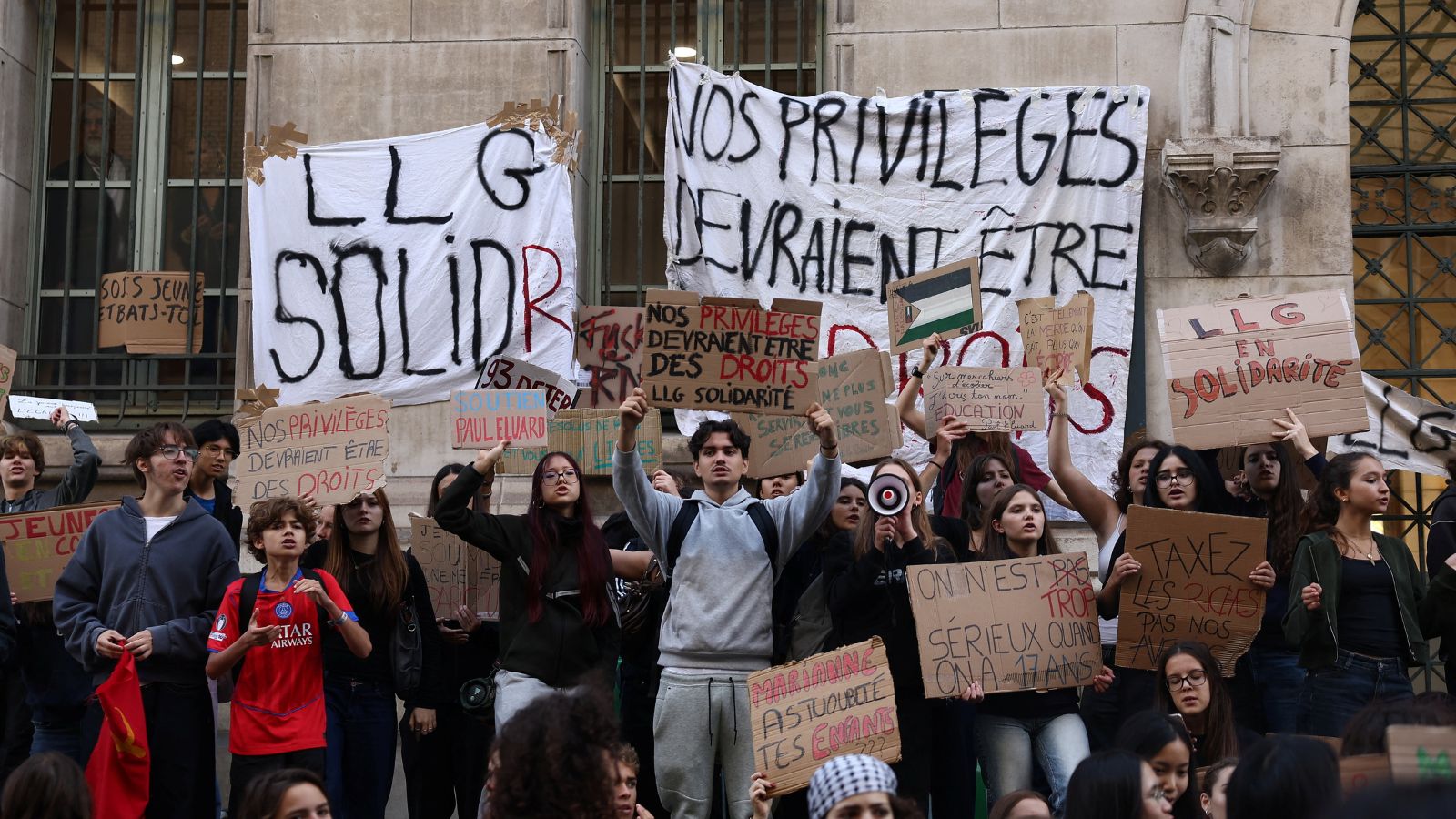
The coffee in the corner bistro on Boulevard Saint-Michel was still hot when the first acrid breath of burning tires drifted through the open door.
It was 6:45 on a Tuesday morning in Paris. The metal shutters of the nearby tabac were halfway down, rattling violently against their tracks. Inside the café, the espresso machine hissed, a familiar, comforting sound that was suddenly swallowed by a rising, rhythmic roar from the top of the street.
Hundreds of backpacks. Hundreds of worn-out sneakers. Hundreds of young voices chanting in unison, turning the historic asphalt into an arena.
Across France, the alarms were ringing. Not the digital chimes beside a suburban bed, but the heavy, historical alarm of student blockades and street protests. To an outsider glancing at a news ticker, it looked like routine theater. Just another Tuesday in a nation perpetually at war with its own calendar. But stand on that pavement, breathe in the biting gray smoke of overturned bins, and the reality shifts. This is not about a single disrupted class. This is about a fundamental collision between an anxious generation and the machinery of the state.
Consider what happens when a government tries to reform education budgets and teacher staffing ratios while classrooms are already bursting at the seams. On paper, it looks like a spreadsheet adjustment. A neat column of numbers designed to balance accounts in Paris. On the ground, in a high school in the 13th arrondissement where thirty-four teenagers share a room built for twenty-four, those numbers translate to silence. They translate to lost futures, unguided hours, and a growing conviction that the social contract is fraying at the edges.
The students are angry. They are also terrified.
Meet a hypothetical student named Léa, seventeen years old, standing behind a barricade constructed from discarded wooden pallets and plastic recycling bins. Her hands are stuffed deep into the pockets of an oversized puffer jacket to keep out the November chill. She has a physics exam in three days that she knows she cannot adequately prepare for, because her teacher has been absent for a month, and the administration simply stopped finding substitutes.
"They talk about excellence," Léa says, her breath pluming in the cold air as police sirens wail in the distance. "We talk about survival. There are no desks for us. There are no books. How are we supposed to build a life when the foundation is collapsing?"
Her voice is steady, though her fingers tremble slightly. She is not a professional agitator. She is a teenager who has spent the last two years watching inflation eat her family's grocery budget, watching the climate deteriorate on the evening news, and watching her local school system shrink into a ghost of what it once was.
The protests did not materialize out of a vacuum. They are the cumulative weight of exhaustion.
When the French educational authorities announced further restructuring—vague promises of efficiency paired with tangible cuts to administrative and support staff—the response was swift and organized through encrypted messaging apps. Within forty-eight hours, dozens of lycées from Marseille to Lille found their gates chained shut. Benches were dragged across entrances. Banners reading Our future is not disposable were unfurled from third-story windows.
Traffic ground to a halt. Delivery trucks idled, their drivers tapping their steering wheels in mounting frustration. Commuters cursed under their breath, checking their phones for train delays and metro closures.
This is the eternal paradox of French civil disobedience. It inconveniences the very people who might otherwise sympathize. The commuter missing a meeting is annoyed; the parent scrambling for emergency childcare is stressed. Yet, beneath the friction lies a deeper cultural understanding. In France, the street is an extension of parliament. When institutional channels feel blocked, the pavement becomes the only ballot box left open.
The historical echoes are deafening. Walk these same neighborhoods, and you can almost hear the ghosts of May 1968, or the massive pension strikes of recent years. The choreography is identical. The police in their heavy riot gear form a quiet, metallic wall at the end of the block. The youth shout slogans that have been recycled through decades of struggle.
Yet something feels different this time. The anxiety driving today's youth is less about political ideology and more about existential precarity. They look at the housing market, at the rise of algorithmic surveillance, at the looming shadow of ecological collapse, and they see an establishment playing bureaucratic games while the house burns.
By mid-morning, the police moved in.
There was no grand battle, no cinematic clash. Just the methodical, heavy-booted advance of security forces clearing the barricades with industrial precision. Tear gas stung the eyes of lingering bystanders. The acrid smell replaced the scent of fresh croissants. Students scattered into side alleys, their laughter ringing out alongside their frustration, a reminder of their youth amid the heavy armor of the state.
By noon, the municipal street sweepers arrived. They hosed down the ash, scooped up the broken plastic, and restored the normal flow of traffic. The illusion of order returned to the boulevard.
But beneath the surface, nothing was solved.
The underlying grievances remain unaddressed, simmering in faculty rooms and student dormitories across the republic. The budget remains balanced on paper, but the human cost is mounting silently.
Back at the corner bistro, the waiter wiped down the marble table, sweeping away the light dusting of soot that had settled there from the morning's fires. He looked out at the quiet street, shook his head slowly, and went back inside to pour another cup of coffee. The machine hissed. The city waited for the next alarm.


